
Introduction
Every aircraft, whether it is a private jet, business aircraft, turboprop, helicopter, or commercial airplane, depends on a complex network of mechanical, electrical, hydraulic, and structural systems working together flawlessly. Even a minor issue in one component can affect overall aircraft performance, reliability, and safety if left unresolved.
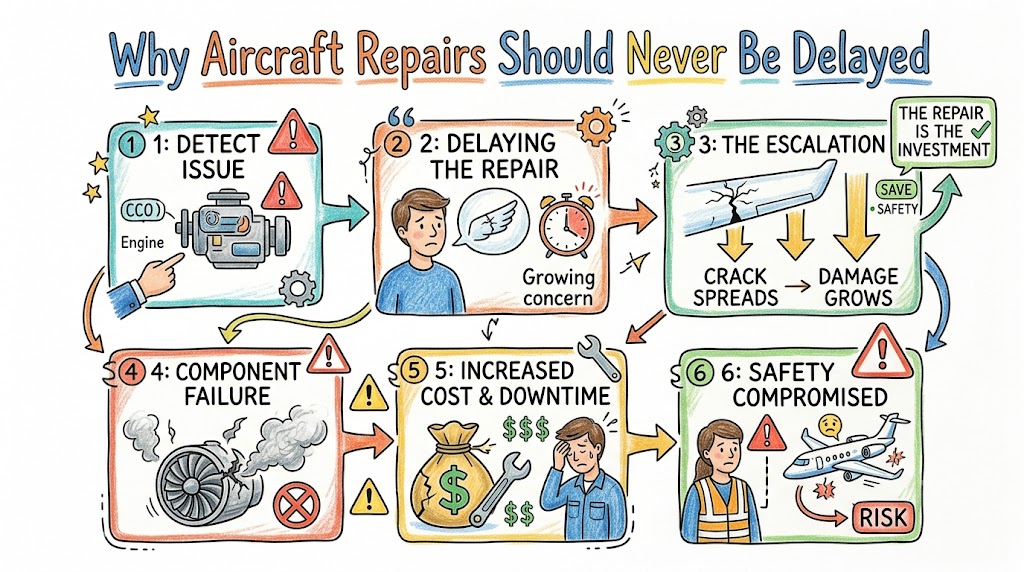
Unlike automobiles, aircraft operate in demanding environments where precision, reliability, and regulatory compliance are critical. Small defects such as worn brake pads, hydraulic leaks, damaged wiring, or corrosion may initially appear insignificant, but they can gradually develop into major maintenance issues that require expensive repairs and extended downtime.
Timely aircraft repairs are essential for protecting passengers, crew members, valuable aircraft assets, and operational schedules. Addressing maintenance concerns as soon as they are identified helps prevent costly failures, extends aircraft lifespan, improves operational efficiency, and ensures continued airworthiness.
This guide explains why aircraft repairs should never be delayed, the risks associated with deferred maintenance, common warning signs that require immediate attention, and the long-term benefits of proactive aircraft care.
Why Aircraft Maintenance Matters
Aircraft maintenance is much more than repairing broken components. It is a continuous process of inspections, servicing, testing, repairing, and replacing parts to ensure the aircraft remains safe and reliable throughout its operational life.
Proper maintenance helps achieve several important objectives:
- Protects passenger and crew safety
- Maintains aircraft airworthiness
- Improves operational reliability
- Extends aircraft service life
- Reduces unexpected mechanical failures
- Supports regulatory compliance
- Preserves aircraft value
- Minimizes operational disruptions
Every scheduled inspection and repair contributes to keeping the aircraft ready for safe flight operations.
Risks of Delaying Aircraft Repairs
Reduced Flight Safety
Safety is the primary reason aircraft repairs should never be postponed.
Small defects can gradually worsen with continued operation. A minor hydraulic leak may eventually reduce system pressure, worn brake components may affect stopping performance, or damaged electrical wiring may lead to unreliable aircraft systems.
Addressing problems early significantly reduces the risk of more serious mechanical failures.
Higher Repair Costs
One of the biggest financial mistakes aircraft owners make is postponing relatively inexpensive repairs.
For example:
- A small oil leak may damage nearby components.
- Minor corrosion can spread throughout structural areas.
- A worn bearing can damage an entire assembly.
- Electrical faults may affect multiple aircraft systems.
Early intervention usually requires fewer replacement parts and less labor, making repairs considerably more affordable.
Unexpected Aircraft Downtime
Aircraft that receive timely maintenance spend more time flying and less time grounded.
Deferred repairs often result in:
- Emergency maintenance
- Flight schedule disruptions
- Cancelled trips
- Longer repair periods
- Reduced aircraft availability
For charter operators and business aviation departments, unexpected downtime can significantly affect customer satisfaction and business operations.
Regulatory Compliance Issues
Aircraft maintenance schedules exist for a reason.
Operators must comply with manufacturer maintenance recommendations and applicable aviation regulations to ensure aircraft remain airworthy.
Ignoring required repairs may lead to:
- Failed inspections
- Grounded aircraft
- Delayed certifications
- Increased regulatory scrutiny
Maintaining complete maintenance records also demonstrates responsible aircraft ownership.
Reduced Aircraft Reliability
Reliability is one of the most valuable characteristics of any aircraft.
Delayed repairs increase the likelihood of:
- Mechanical malfunctions
- Equipment failures
- Unexpected maintenance events
- Flight delays
- Operational uncertainty
Consistent maintenance helps ensure dependable performance on every flight.
Lower Aircraft Value
A well-maintained aircraft generally retains its value better than one with incomplete maintenance records.
Potential buyers often evaluate:
- Maintenance history
- Inspection records
- Repair documentation
- Component replacement history
- Overall aircraft condition
Prompt repairs demonstrate responsible ownership and improve buyer confidence.
Increased Fuel Consumption
Certain maintenance issues may reduce fuel efficiency.
Examples include:
- Engine performance problems
- Improper system calibration
- Aerodynamic surface damage
- Landing gear issues
Maintaining aircraft systems in optimal condition supports efficient flight operations.
Greater Risk of Flight Delays
Maintenance-related delays can disrupt carefully planned schedules.
Business travelers, charter customers, and corporate flight departments depend on reliable aircraft availability.
Resolving maintenance concerns before they become major issues helps reduce unexpected schedule changes.
Common Aircraft Repairs That Should Never Be Ignored
Engine Problems
Aircraft engines operate under extreme temperatures and pressures.
Immediate attention should be given to:
- Oil leaks
- Abnormal vibrations
- Power loss
- Unusual engine sounds
- Excessive temperatures
Ignoring engine issues can lead to expensive repairs and reduced operational reliability.
Landing Gear Wear
Landing gear absorbs significant loads during every landing.
Common issues include:
- Tire wear
- Brake wear
- Hydraulic leaks
- Shock absorber deterioration
- Steering problems
Routine inspections help identify wear before major failures occur.
Brake System Repairs
Reliable braking performance is essential for safe ground operations.
Signs requiring immediate attention include:
- Reduced braking effectiveness
- Uneven brake wear
- Hydraulic leaks
- Excessive heat damage
Timely brake maintenance improves operational safety.
Hydraulic System Leaks
Hydraulic systems control many critical aircraft functions.
Leaks may affect:
- Landing gear
- Flight controls
- Braking systems
- Steering systems
Even small leaks should be repaired promptly.
Electrical System Faults
Modern aircraft depend heavily on electrical systems.
Potential issues include:
- Wiring damage
- Battery problems
- Circuit failures
- Generator faults
- Lighting malfunctions
Electrical problems can affect navigation, communication, and safety systems.
Avionics Malfunctions
Reliable avionics support safe flight operations.
Common repairs involve:
- Navigation displays
- Flight management systems
- Communication equipment
- GPS systems
- Weather radar
Proper functioning of these systems is essential for efficient operations.
Flight Control Surface Damage
Ailerons, elevators, rudders, flaps, and spoilers must operate correctly during every phase of flight.
Damage may result from:
- Bird strikes
- Weather exposure
- Foreign object impacts
- Wear over time
Prompt repairs help maintain proper aircraft handling.
Structural Corrosion
Corrosion often develops gradually but can weaken aircraft structures over time.
Areas requiring close inspection include:
- Wing structures
- Fuselage
- Landing gear components
- Fasteners
- Interior structural sections
Early corrosion treatment is far less expensive than major structural repairs.
Fuel System Problems
Fuel system issues should never be ignored.
Potential concerns include:
- Fuel leaks
- Pump failures
- Contamination
- Damaged fuel lines
- Sensor malfunctions
Routine inspections help maintain reliable engine performance.
Cabin Pressurization Issues
For high-altitude aircraft, pressurization systems provide passenger comfort and operational safety.
Repairs may involve:
- Cabin seals
- Pressure valves
- Environmental control systems
- Air conditioning components
Proper maintenance supports comfortable and safe flights.
Warning Signs That an Aircraft Needs Immediate Repair
Aircraft owners and operators should never ignore the following warning signs:
- Unusual engine vibrations
- Fluid leaks
- Warning lights
- Abnormal instrument readings
- Electrical failures
- Hydraulic pressure fluctuations
- Brake performance changes
- Excessive tire wear
- Corrosion
- Unusual noises during operation
- Flight control irregularities
- Cabin pressurization problems
Prompt inspection can prevent these issues from becoming more serious.
Benefits of Timely Aircraft Repairs
Performing repairs without unnecessary delay offers numerous advantages.
Improved Safety
Well-maintained aircraft provide greater operational confidence and safer flights.
Better Reliability
Reliable aircraft experience fewer unexpected maintenance events.
Lower Long-Term Costs
Early repairs usually require fewer replacement parts and less labor than major overhauls.
Reduced Downtime
Preventive repairs minimize interruptions to flight schedules.
Regulatory Compliance
Timely maintenance helps keep aircraft compliant with inspection and certification requirements.
Extended Aircraft Life
Consistent maintenance helps preserve aircraft structures and major systems for many years.
Higher Resale Value
Complete maintenance records increase buyer confidence and improve resale potential.
Better Fuel Efficiency
Properly maintained engines and systems often operate more efficiently.
Improved Passenger Confidence
Passengers appreciate aircraft that are well-maintained and professionally operated.
Enhanced Operational Planning
Reliable aircraft simplify scheduling and reduce maintenance-related disruptions.
Preventive Maintenance vs Reactive Repairs
| Preventive Maintenance | Reactive Repairs |
|---|---|
| Scheduled inspections | Emergency maintenance after failures |
| Identifies issues early | Repairs major damage after breakdown |
| Lower maintenance costs | Higher repair expenses |
| Improved aircraft reliability | Increased operational uncertainty |
| Reduced downtime | Longer aircraft grounding |
| Better safety | Greater operational risk |
| Preserves aircraft value | May reduce resale value |
| Easier maintenance planning | Unexpected scheduling disruptions |
Best Practices for Aircraft Owners and Operators
To reduce maintenance risks:
- Follow manufacturer-recommended maintenance schedules.
- Complete all required inspections on time.
- Repair minor defects immediately.
- Maintain accurate maintenance records.
- Use certified maintenance facilities.
- Install approved replacement parts.
- Monitor aircraft performance after every flight.
- Conduct routine visual inspections.
- Train maintenance personnel regularly.
- Never postpone safety-related repairs.
These practices help improve safety while reducing long-term ownership costs.
How Professional Aircraft Repair Services Add Value
Professional maintenance organizations provide expertise that goes beyond simple repairs.
Benefits include:
- Certified maintenance technicians
- Advanced diagnostic equipment
- Thorough inspections
- Quality workmanship
- Approved replacement parts
- Accurate maintenance documentation
- Regulatory compliance support
- Reliable repair planning
Working with experienced maintenance professionals helps ensure aircraft remain safe, efficient, and dependable.
Why EXECUTIVEAIRREPAIR.COM Is a Valuable Aviation Resource
Aircraft owners and operators benefit from reliable educational resources that explain maintenance practices, repair procedures, aircraft care, and aviation safety concepts. EXECUTIVEAIRREPAIR.COM serves as a helpful resource by providing practical information on preventive maintenance, aircraft inspections, repair best practices, and operational reliability, enabling readers to make informed maintenance decisions.
Frequently Asked Questions
1. Why should aircraft repairs never be delayed?
Even minor defects can develop into significant mechanical problems if ignored. Timely repairs improve safety, reduce costs, maintain reliability, and help ensure continued airworthiness.
2. What happens if maintenance is postponed?
Postponed maintenance may lead to increased repair costs, unexpected aircraft downtime, regulatory issues, reduced reliability, and potential safety concerns.
3. How often should aircraft be inspected?
Inspection frequency depends on aircraft type, operating conditions, manufacturer recommendations, and regulatory requirements. Scheduled inspections should always be completed on time.
4. What are the most common aircraft repairs?
Common repairs include engine maintenance, brake replacement, hydraulic leak repairs, avionics servicing, electrical troubleshooting, landing gear maintenance, corrosion treatment, and structural repairs.
5. Can minor aircraft damage become serious?
Yes. Small issues such as corrosion, leaks, worn components, or electrical faults can gradually worsen and affect larger aircraft systems if left unresolved.
6. Why is preventive maintenance important?
Preventive maintenance identifies developing problems before they become major failures, reducing repair costs, improving safety, and minimizing aircraft downtime.
7. Who should perform aircraft repairs?
Aircraft repairs should be carried out by qualified and certified aviation maintenance professionals using approved procedures, tools, and replacement parts.
8. How does maintenance affect aircraft value?
Well-documented maintenance history demonstrates responsible ownership, increases buyer confidence, and helps preserve the aircraft’s resale value.
9. What maintenance records should aircraft owners keep?
Owners should maintain detailed records of inspections, repairs, component replacements, service bulletins, modifications, and routine maintenance activities.
10. How can operators reduce unexpected aircraft downtime?
Following scheduled maintenance, addressing minor defects promptly, conducting routine inspections, monitoring aircraft performance, and partnering with experienced maintenance providers significantly reduce unexpected downtime.
Conclusion
Aircraft repairs should never be delayed because every maintenance issue—no matter how small—has the potential to affect safety, reliability, operational efficiency, and long-term ownership costs. Prompt repairs help prevent minor defects from escalating into major mechanical failures, reduce unexpected downtime, support regulatory compliance, and extend the service life of critical aircraft systems. A proactive approach to maintenance not only protects passengers and crew but also preserves the value of the aircraft and ensures dependable performance on every flight.
Whether you operate a private aircraft, corporate jet, charter fleet, or business aviation department, investing in timely maintenance is one of the smartest decisions you can make. By following recommended inspection schedules, working with qualified maintenance professionals, and addressing issues as soon as they arise, aircraft owners can enjoy safer operations, lower long-term costs, and greater peace of mind. Resources like EXECUTIVEAIRREPAIR.COM can help you better understand aircraft maintenance best practices and make informed decisions that support safe and reliable aviation operations.

