
Introduction
Owning a private aircraft is both a significant investment and a long-term responsibility. Whether you operate a piston aircraft, turboprop, helicopter, or business jet, maintaining your aircraft is essential for ensuring safety, reliability, regulatory compliance, and preserving its value. Unlike automobiles, aircraft operate in demanding environments where even minor maintenance issues can affect performance, safety, and operational readiness.
A well-planned maintenance program helps aircraft owners avoid unexpected repairs, reduce downtime, extend component life, and manage maintenance costs more effectively. Instead of reacting to problems after they occur, proactive maintenance planning ensures inspections, servicing, and repairs are completed at the right time based on regulatory requirements, manufacturer recommendations, and actual aircraft usage.
What Is Private Aircraft Maintenance Planning?
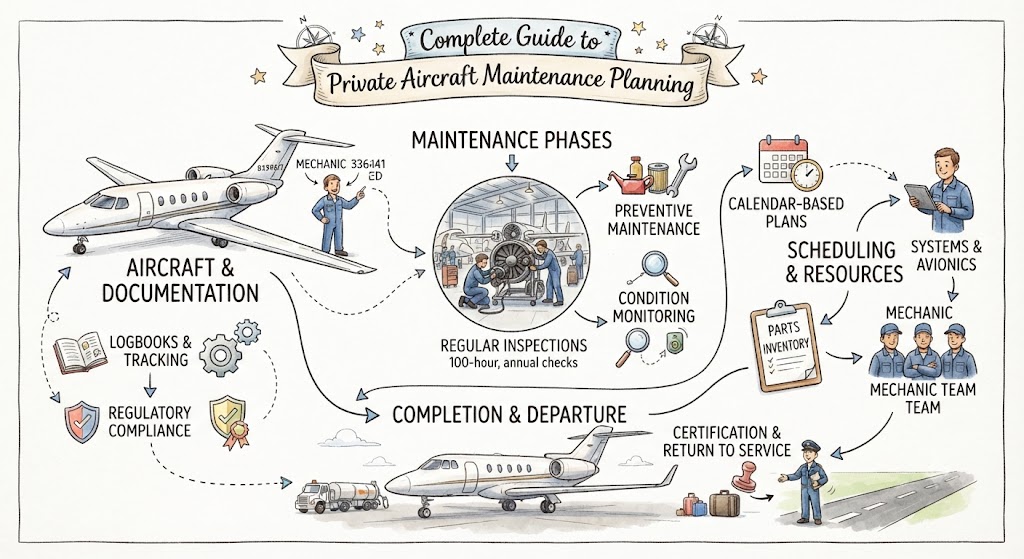
Private aircraft maintenance planning is the process of organizing, scheduling, documenting, and managing all required maintenance activities throughout an aircraft’s operational life.
Rather than waiting for mechanical problems to occur, maintenance planning creates a structured schedule that includes inspections, servicing, repairs, component replacements, and compliance requirements.
An effective maintenance plan generally includes:
- Routine inspections
- Preventive maintenance
- Scheduled servicing
- Component tracking
- Regulatory compliance
- Maintenance documentation
- Budget forecasting
- Long-term overhaul planning
Good planning allows aircraft owners to operate more confidently while minimizing unexpected maintenance events.
Why Every Aircraft Owner Needs a Maintenance Plan
Aircraft maintenance planning is about much more than regulatory compliance. It is a proactive approach that protects both passengers and the owner’s investment.
Improves Flight Safety
Routine inspections help identify wear, corrosion, loose hardware, fluid leaks, and other issues before they become larger problems.
Reduces Unexpected Downtime
Planned maintenance minimizes unscheduled repairs that could ground an aircraft unexpectedly.
Protects Aircraft Value
A well-maintained aircraft with complete maintenance records is generally more attractive to prospective buyers.
Simplifies Budgeting
Scheduled maintenance allows owners to anticipate costs rather than facing unexpected repair bills.
Supports Regulatory Compliance
Proper planning helps ensure required inspections and maintenance activities are completed on time.
Extends Component Life
Routine servicing can improve the longevity of engines, avionics, landing gear, and other critical systems.
Types of Aircraft Maintenance
Understanding different maintenance categories helps owners develop a more effective maintenance strategy.
Preventive Maintenance
Preventive maintenance focuses on servicing components before failures occur. Examples include lubrication, filter changes, corrosion prevention, and replacing worn parts during scheduled intervals.
Benefits
- Improves reliability
- Reduces emergency repairs
- Extends equipment life
Scheduled Maintenance
Scheduled maintenance is performed according to calendar dates, flight hours, operating cycles, or manufacturer recommendations.
Typical activities include:
- Annual inspections
- Engine servicing
- Landing gear inspections
- Avionics testing
- System lubrication
Corrective Maintenance
Corrective maintenance addresses problems identified during inspections or reported by pilots.
Examples include:
- Replacing faulty components
- Repairing structural damage
- Correcting electrical faults
- Repairing hydraulic leaks
Unscheduled Maintenance
Unexpected failures sometimes occur despite careful planning.
Examples include:
- Bird strikes
- Tire damage
- Avionics failures
- Lightning strikes
- Unexpected mechanical issues
Predictive Maintenance
Modern aircraft increasingly use condition-monitoring technologies that help maintenance teams identify potential failures before they occur through trend analysis and system monitoring.
Condition-Based Maintenance
Rather than replacing components solely based on time, condition-based maintenance evaluates the actual health of equipment before maintenance decisions are made.
Key Components of an Aircraft Maintenance Plan
An effective maintenance plan covers every major aircraft system.
Airframe Maintenance
Regular inspections help identify corrosion, cracks, loose fasteners, structural fatigue, and surface damage.
Engine Maintenance
Engine maintenance typically includes:
- Oil inspections
- Filter replacement
- Compression checks
- Borescope inspections where appropriate
- Vibration analysis
- Performance monitoring
Landing Gear
Landing gear inspections often include:
- Tire condition
- Brake wear
- Hydraulic components
- Shock absorbers
- Retraction systems where applicable
Avionics Maintenance
Modern avionics require routine testing to ensure navigation, communication, and flight systems continue operating reliably.
Electrical Systems
Electrical inspections may include:
- Battery condition
- Wiring integrity
- Circuit protection
- Lighting systems
- Charging systems
Fuel System
Fuel system inspections help detect contamination, leaks, damaged lines, and worn seals that could affect aircraft performance.
Hydraulic Systems
Hydraulic components should be inspected for:
- Fluid condition
- Hose integrity
- Pressure performance
- Actuator operation
Cabin and Interior
Although not directly related to flight performance, maintaining cabin interiors contributes to passenger comfort and protects long-term aircraft value.
Exterior Protection
Routine washing, paint maintenance, and corrosion prevention help preserve both appearance and structural integrity.
Regulatory Compliance and Maintenance Requirements
Aircraft maintenance planning should always align with applicable aviation regulations and manufacturer recommendations.
Compliance generally includes:
- Required inspections
- Airworthiness requirements
- Maintenance documentation
- Service bulletins
- Airworthiness directives, where applicable
- Approved maintenance procedures
- Accurate maintenance records
Owners should work with qualified maintenance professionals to ensure all applicable requirements are met for their specific aircraft.
Aircraft Maintenance Scheduling Best Practices
Successful maintenance planning combines regulatory requirements with operational needs.
Best practices include:
- Schedule inspections well in advance.
- Coordinate maintenance with planned downtime.
- Track flight hours accurately.
- Monitor maintenance due dates.
- Review maintenance records regularly.
- Address minor issues promptly.
- Maintain communication with maintenance providers.
Creating an Aircraft Maintenance Budget
Maintenance expenses vary based on aircraft type, age, utilization, and operating environment.
Typical budget categories include:
- Routine inspections
- Labor
- Replacement parts
- Engine maintenance
- Consumables
- Tire replacement
- Brake servicing
- Avionics repairs
- Paint and corrosion control
- Unexpected repairs
Setting aside a dedicated maintenance reserve can help manage unplanned expenses more effectively.
The Importance of Accurate Maintenance Records
Complete maintenance records provide valuable information throughout an aircraft’s life.
Documentation should include:
- Inspection reports
- Maintenance logbooks
- Component replacement history
- Service bulletins completed
- Repair documentation
- Airworthiness records
Well-maintained records support compliance, simplify maintenance planning, and can improve resale value.
Preventive Maintenance Tips for Aircraft Owners
Owners can support long-term aircraft reliability by:
- Keeping the aircraft clean.
- Protecting against corrosion.
- Monitoring tire condition.
- Maintaining battery health.
- Checking fluid levels.
- Following recommended operating procedures.
- Addressing small issues before they grow.
- Storing the aircraft appropriately.
- Maintaining complete documentation.
- Working with experienced maintenance providers.
Signs Your Aircraft May Need Immediate Maintenance
Aircraft owners should seek prompt maintenance if they notice:
- Unusual engine vibration
- Fluid leaks
- Warning indications
- Brake performance changes
- Avionics malfunctions
- Abnormal engine sounds
- Fuel system irregularities
- Electrical issues
- Excessive corrosion
- Performance changes during flight
Prompt evaluation can help prevent more significant issues from developing.
Choosing the Right Aircraft Maintenance Provider
Selecting the right maintenance partner is an important part of long-term aircraft ownership.
Consider factors such as:
- Technician qualifications
- Experience with your aircraft model
- Maintenance capabilities
- Parts availability
- Communication
- Quality control
- Turnaround time
- Reputation
- Documentation practices
- Customer support
Common Aircraft Maintenance Mistakes
Owners can avoid unnecessary costs by steering clear of common errors, including:
- Delaying scheduled inspections
- Ignoring minor defects
- Poor recordkeeping
- Using unapproved replacement parts
- Choosing providers based only on price
- Skipping preventive maintenance
- Waiting for failures before taking action
Technology Improving Aircraft Maintenance
Modern maintenance planning increasingly relies on digital tools that improve efficiency and visibility.
Examples include:
- Digital maintenance tracking systems
- Electronic logbooks
- Predictive maintenance software
- Engine health monitoring
- Maintenance planning software
- Digital inspection reporting
These technologies help owners stay organized and make informed maintenance decisions.
Aircraft Maintenance Planning Checklist
A practical maintenance checklist includes:
- Review maintenance schedule monthly.
- Track flight hours accurately.
- Verify inspection due dates.
- Monitor engine performance.
- Inspect tires and brakes.
- Check fluid levels.
- Review maintenance records.
- Address discrepancies promptly.
- Plan annual maintenance budgets.
- Work with qualified maintenance professionals.
Reactive Maintenance vs Planned Maintenance
| Feature | Reactive Maintenance | Planned Maintenance |
|---|---|---|
| Approach | Repairs after failure | Scheduled prevention |
| Safety | Higher operational risk | Improved reliability |
| Downtime | Often unexpected | Better controlled |
| Budgeting | Less predictable | Easier to forecast |
| Component Life | May be reduced | Often extended |
| Operational Readiness | Less consistent | More dependable |
| Maintenance Scheduling | Unplanned | Organized |
| Record Management | Often fragmented | Structured |
| Inspection Planning | Reactive | Proactive |
| Cost Control | More variable | Better managed |
| Aircraft Availability | Can be interrupted | Typically improved |
| Compliance Management | More challenging | Easier to maintain |
| Owner Confidence | Lower | Higher |
| Long-Term Value | May be affected | Better preserved |
| Overall Efficiency | Lower | Higher |
Sample Annual Maintenance Timeline
| Timeframe | Typical Activities |
|---|---|
| Monthly | Visual inspections, fluid checks, record review |
| Quarterly | Tire, brake, battery, and system inspections |
| Semiannual | Detailed system evaluations and servicing |
| Annual | Comprehensive inspection and maintenance |
| Flight-Hour Milestones | Scheduled servicing based on aircraft utilization and manufacturer recommendations |
Frequently Asked Questions
1. Why is maintenance planning important for private aircraft?
Maintenance planning helps improve safety, supports compliance, reduces unexpected downtime, and protects the long-term value of the aircraft.
2. What is preventive aircraft maintenance?
Preventive maintenance involves routine servicing and inspections designed to identify and address wear before it develops into larger problems.
3. How often should an aircraft be inspected?
Inspection frequency depends on the aircraft type, manufacturer recommendations, operational use, and applicable regulatory requirements.
4. What factors influence maintenance costs?
Aircraft age, utilization, operating environment, component condition, labor, parts availability, and the scope of required work all influence maintenance costs.
5. Why are maintenance records important?
Accurate records help demonstrate compliance, support future maintenance planning, simplify troubleshooting, and can enhance resale value.
6. Can aircraft owners perform maintenance themselves?
Certain limited owner-performed maintenance tasks may be permitted depending on applicable regulations and aircraft type, but many maintenance activities must be completed by appropriately qualified personnel.
7. What happens if scheduled maintenance is delayed?
Delaying maintenance can increase operational risks, affect compliance, and potentially lead to more extensive repairs.
8. How can owners reduce aircraft downtime?
Planning maintenance in advance, tracking inspection schedules, and addressing minor issues early can help minimize downtime.
9. What is predictive maintenance?
Predictive maintenance uses data and condition monitoring to identify potential issues before they result in component failures.
10. How do I choose a maintenance provider?
Look for experienced technicians, appropriate certifications, strong communication, quality documentation, and a reputation for reliable service.
Conclusion
Effective private aircraft maintenance planning is the foundation of safe, reliable, and efficient aircraft ownership. By combining scheduled inspections, preventive maintenance, accurate recordkeeping, and proactive budgeting, owners can reduce unexpected downtime, extend component life, and better protect the value of their aircraft. A structured maintenance plan also helps ensure that maintenance activities are completed in accordance with manufacturer recommendations and applicable regulatory requirements, giving owners greater confidence in every flight.

