
Introduction
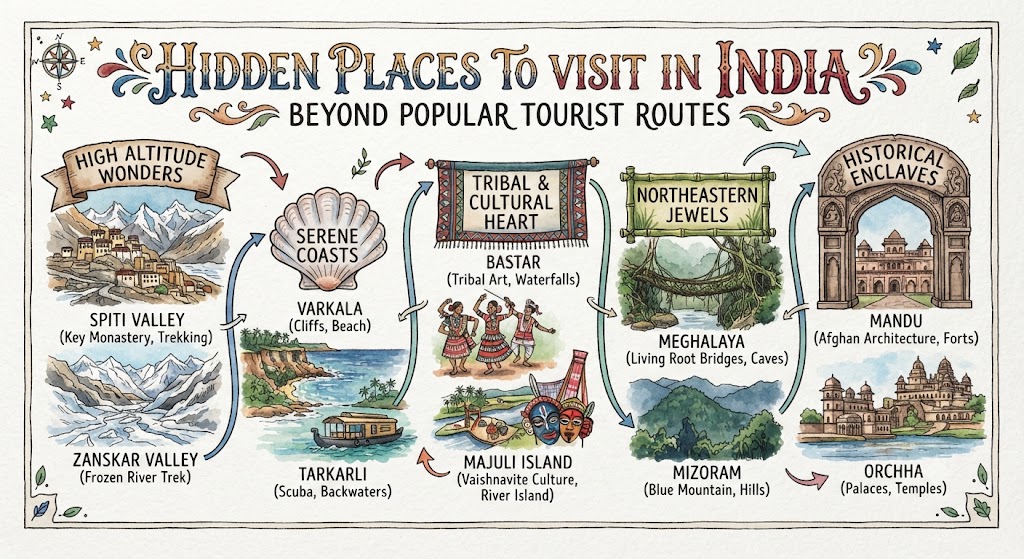
India’s best-known destinations attract travellers for good reasons, but some of the country’s most rewarding experiences are found away from established tourist routes. Beyond crowded hill stations, famous beaches and heavily visited monuments are remote valleys, river islands, forest villages, heritage settlements and rural communities where travel moves at a slower pace.
Exploring hidden places to visit in India is not only about finding locations with fewer visitors. It is also about understanding local lifestyles, eating regional food, staying in community-run accommodation and spending enough time to appreciate a destination rather than rushing through it.
This guide introduces a selection of lesser-known destinations across different parts of India. They offer experiences ranging from Himalayan landscapes and cultural monasteries to riverine villages, ancient forts and peaceful countryside. Some are suitable for families, while others require patience, flexible planning or basic trekking experience.
HolidayLandmark can support this type of journey by helping travellers research destinations, compare local experiences, discover homestays and understand transport, seasonal conditions and nearby attractions. Since remote destinations often have limited infrastructure, careful planning and respectful behaviour are especially important.
Destination Overview
India’s hidden destinations are spread across mountains, forests, river valleys, plateaus and coastal regions. They are not connected by one fixed tourist circuit, so travellers should choose a region and build a focused itinerary instead of attempting to cover distant places in a single trip.
| Destination | State or Region | Main Experience | Suggested Stay |
|---|---|---|---|
| Ziro Valley | Arunachal Pradesh | Tribal culture and rice landscapes | 3–4 days |
| Majuli | Assam | River-island culture and monasteries | 2–3 days |
| Tirthan Valley | Himachal Pradesh | Forest walks and mountain villages | 3–4 days |
| Chaukori | Uttarakhand | Himalayan views and slow travel | 2–3 days |
| Gurez Valley | Jammu and Kashmir | Remote valley landscapes | 3–4 days |
| Gandikota | Andhra Pradesh | Gorge scenery and historic fort | 1–2 days |
| Aharbal | Jammu and Kashmir | Waterfalls and forest trails | 1–2 days |
| Gwaldam | Uttarakhand | Forests, orchards and mountain views | 2–3 days |
| Dong Valley | Arunachal Pradesh | Remote village and sunrise trek | 2–3 days |
| Sinthan Top and nearby villages | Jammu and Kashmir | High-altitude road journey | 1–2 days |
These destinations differ greatly in climate, accessibility and accommodation. Travellers should check road conditions, local permits and transport availability before departure.
Why Explore Hidden Places in India
Lesser-known destinations allow travellers to experience India beyond familiar sightseeing routes. Many of these locations preserve strong connections between landscape, culture and everyday life.
Fewer crowds and a slower pace
Remote valleys and villages usually offer more space for walking, observing local life and enjoying nature. However, fewer crowds may also mean limited public transport, basic accommodation and fewer restaurants.
Meaningful cultural experiences
Traditional architecture, agricultural practices, crafts, festivals and local food often remain an important part of daily life in smaller destinations. Travellers who stay in homestays may learn more than those who visit briefly.
Nature-based travel
Many hidden destinations are surrounded by forests, rivers, mountains or farmland. They are suitable for walking, birdwatching, photography, cycling and guided trekking.
Support for local communities
Using local guides, family-run homestays, village transport and regional food services can direct more tourism income towards residents.
Better opportunities for responsible travel
Smaller destinations encourage travellers to think more carefully about waste, water use, cultural behaviour and the effect of tourism on local communities.
Best Hidden Places to Visit in India
Ziro Valley, Arunachal Pradesh
Ziro is a broad plateau in Arunachal Pradesh known for green agricultural landscapes, pine-covered hills and the culture of the Apatani community. The official state tourism platform describes Ziro as one of the oldest towns in Arunachal Pradesh and places it within a wider travel circuit through the region.
Travellers can explore village areas, walk beside cultivated fields and learn about local building styles, food and farming traditions. The landscape is especially suitable for slow travel, photography and cultural observation.
Talley Valley Wildlife Sanctuary lies outside Ziro and is associated with forest biodiversity and trekking opportunities. Travellers planning longer walks should use an experienced local guide and confirm access conditions before leaving.
Suggested duration: Three to four days
Suitable for: Nature lovers, photographers, cultural travellers and couples
Travel advice: Arunachal Pradesh may require travel permits. Confirm requirements before departure and avoid entering agricultural land or photographing residents without permission.
Majuli, Assam
Majuli is a river island in the Brahmaputra and one of Assam’s most important cultural destinations. It is known for its Satras, performance traditions, mask-making, dance forms and rural landscapes. Assam Tourism also notes the availability of bamboo cottages and homestays, making it suitable for community-based travel.
Visitors can spend time at cultural institutions, observe craft traditions and explore villages by bicycle or local transport. The island’s atmosphere is shaped by waterways, farmland and seasonal river conditions.
Majuli is best explored slowly. A rushed day trip may not provide enough time to understand its cultural and geographical character.
Suggested duration: Two to three days
Suitable for: Cultural travellers, families, cyclists and photographers
Travel advice: Ferry services and road access may be affected by river and weather conditions. Keep extra time in the itinerary.
Tirthan Valley, Himachal Pradesh
Tirthan Valley offers a quieter alternative to heavily visited hill destinations in Himachal Pradesh. The valley is associated with riverside settlements, mountain trails and access to forest areas near the Great Himalayan National Park region.
Himachal Tourism identifies trekking routes in the Tirthan area and notes that trout are found in the Tirthan River. Fishing and long treks may require permissions, local guidance or suitable equipment.
Travellers can stay in village guesthouses, take short nature walks and visit nearby settlements rather than treating the valley only as an adventure base.
Suggested duration: Three to four days
Suitable for: Couples, families, walkers and nature travellers
Travel advice: Mountain roads can be slow. Avoid packing too many distant attractions into one day.
Chaukori, Uttarakhand
Chaukori is a quiet hill destination in Uttarakhand’s Kumaon region. It is surrounded by forests and is known for broad views of Himalayan peaks. Uttarakhand Tourism describes it as an idyllic destination with snow-covered mountains, valleys, deodar trees and rhododendrons.
Unlike larger hill towns, Chaukori is better suited to rest, short walks, sunrise views and slow exploration. It can be combined with places such as Bageshwar, Baijnath or other Kumaon settlements, depending on road conditions.
Suggested duration: Two to three days
Suitable for: Families, senior travellers, couples and photographers
Travel advice: Carry essential medicines and cash because services may be limited outside larger towns.
Gurez Valley, Jammu and Kashmir
Gurez is a remote mountain valley known for the Kishanganga River, traditional wooden houses and the distinctive Habba Khatoon peak. The regional tourism corporation also identifies the valley’s trekking, camping, fishing and river-based adventure possibilities.
The journey to Gurez is an important part of the experience, passing through high mountain landscapes. Access can change with weather, road conditions and local regulations.
Travellers should plan several nights rather than attempting a rushed visit. Local guides can help with village routes, cultural understanding and outdoor activities.
Suggested duration: Three to four days
Suitable for: Experienced road travellers, photographers and nature lovers
Travel advice: Check current permissions, identification requirements and road accessibility before travelling.
Gandikota, Andhra Pradesh
Gandikota is known for its dramatic gorge landscape beside the Penner River and its historic fortified settlement. Andhra Pradesh Tourism describes it as one of the state’s notable geological formations and explains that the name combines words associated with a gorge and a fort.
Visitors can explore the fort area, observe the gorge from marked viewpoints and combine the trip with nearby heritage or temple destinations. The landscape is open and exposed, so midday heat can be tiring.
Suggested duration: One to two days
Suitable for: Road trippers, heritage travellers and photographers
Travel advice: Wear strong footwear, carry water and remain behind safe viewing points near the gorge.
Aharbal, Jammu and Kashmir
Aharbal is known for its waterfall, forest surroundings and access to trekking areas. The regional tourism authority identifies it as a base for outdoor activities including photography, horse riding and trekking towards alpine areas.
The destination works well for travellers who prefer forest landscapes over busy commercial hill stations. Aharbal can be visited as a day trip, but an overnight stay allows more time for walking and enjoying the quieter atmosphere.
Suggested duration: One to two days
Suitable for: Families, nature travellers and walkers
Travel advice: Rocks near waterfalls can be slippery. Stay within safe areas and follow local instructions.
Gwaldam, Uttarakhand
Gwaldam lies between the Garhwal and Kumaon regions and is surrounded by forested landscapes and orchards. Uttarakhand Tourism presents it as a green mountain destination that offers a peaceful base for exploring nearby settlements.
It suits travellers who want mountain views, village walks and an unhurried stay. It can also form part of a longer Kumaon or Garhwal itinerary.
Suggested duration: Two to three days
Suitable for: Slow travellers, families, couples and nature lovers
Travel advice: Public transport may be infrequent, so arrange return travel in advance.
Dong Valley, Arunachal Pradesh
Dong is a small village near Walong in eastern Arunachal Pradesh. It is known for its remote location, mountain scenery and early sunrise views. Arunachal Tourism describes it as a settlement near the Lohit River, surrounded by pine forests and snow-covered mountains.
Reaching the sunrise viewpoint generally involves an early walk, so travellers should use a local guide and carry a torch, water and warm clothing.
The area is better suited to patient travellers who are comfortable with long road journeys and simple facilities.
Suggested duration: Two to three days in the Walong area
Suitable for: Adventure travellers, photographers and remote-destination explorers
Travel advice: Confirm permits, accommodation and road conditions well before departure.
Sinthan Top and Nearby Villages, Jammu and Kashmir
Sinthan Top is a high mountain pass on the route connecting parts of the Kashmir region with Kishtwar. It is less visited than major resort destinations and offers wide mountain views. Regional tourism information notes that snow can make the route inaccessible during parts of the year.
The journey should be treated as a scenic road experience rather than a destination with extensive tourist infrastructure. Travellers can combine it with nearby towns and villages while avoiding unnecessary rushing.
Suggested duration: One to two days
Suitable for: Road travellers and landscape photographers
Travel advice: Weather changes quickly at high altitude. Confirm road status locally and avoid travelling after dark.
Things to Do
Stay in a locally managed homestay
Homestays can provide access to regional meals, village knowledge and everyday community life. Choose accommodation that clearly communicates facilities, house rules and meal arrangements.
Take guided village walks
A local guide can explain farming systems, architecture, crafts and oral traditions that visitors may otherwise overlook.
Try regional food
Instead of searching only for familiar restaurant menus, ask homestay hosts about seasonal dishes, locally grown ingredients and traditional preparation methods.
Explore on foot
Short walks through villages, orchards, riverbanks and forest edges often reveal more than fast-paced sightseeing. Always ask permission before entering private land.
Learn about local crafts
Majuli’s mask-making traditions, Himalayan weaving, bamboo work and regional woodcraft are examples of skills that can be better understood through direct interaction with artisans.
Photograph responsibly
Ask before photographing residents, religious rituals, homes, agricultural work or children. A beautiful location does not remove the need for consent.
Join suitable adventure activities
Guided trekking, cycling, angling and camping may be available in some destinations. Confirm weather, permissions, equipment and operator experience before participating.
Suggested Travel Itinerary
Because the destinations are spread across India, they should not be combined into one continuous trip. The following itinerary focuses on Ziro Valley and Majuli in Northeast India.
Day One: Reach Ziro
Arrive in Ziro and settle into a local homestay. Spend the evening walking through the surrounding landscape and discussing village etiquette with the host.
Day Two: Explore Ziro’s Villages
Visit village areas with a local guide. Learn about local architecture, agriculture and food traditions. Keep the afternoon relaxed for photography or a short nature walk.
Day Three: Nature and Cultural Experiences
Take a guided excursion towards nearby natural areas or explore additional settlements. Avoid adding a long trek unless fitness, permits and weather are suitable.
Day Four: Travel Towards Assam
Begin the road journey towards Assam and stay overnight near a practical transport centre. Allow buffer time because mountain travel can be slow.
Day Five: Continue to Majuli
Travel towards the ferry point and cross to Majuli when services are operating. Check into a bamboo cottage or homestay and take a short evening walk.
Day Six: Explore Majuli
Visit selected Satras and craft communities with a knowledgeable guide. Try regional food and spend time understanding the island’s cultural traditions.
Day Seven: Rural Exploration and Departure
Explore nearby villages by bicycle or local transport before returning towards Jorhat or continuing through Assam.
Best Time to Visit
The best time depends on the region. Himalayan valleys, river islands and plateau destinations follow different seasonal patterns.
| Season | Typical Conditions | Suitable Experiences | Travel Advice |
|---|---|---|---|
| Spring | Pleasant in many hill and valley regions | Walking, village stays, photography | Carry layers for changing temperatures |
| Summer | Comfortable in higher regions but hot in plains | Mountain travel and high-altitude routes | Avoid exposed midday walks in hot areas |
| Monsoon | Green landscapes with possible heavy rain | Slow travel and cultural stays | Expect landslides, ferry disruption and slippery trails |
| Autumn | Clearer skies in many regions | Photography, trekking and village visits | Reserve accommodation during local festivals |
| Winter | Cold in mountains, pleasant in some southern areas | Heritage travel and low-altitude exploration | Some high roads may close because of snow |
For Ziro and Majuli, seasonal rain can affect roads and ferry services. Gurez, Dong and Sinthan Top may become difficult or impossible to reach during heavy snowfall. Gandikota is generally more comfortable outside periods of intense heat.
How to Reach and Travel Locally
By air
Most hidden destinations require a road or ferry journey after reaching the nearest major airport. Guwahati and Dibrugarh can support travel towards parts of Assam and Arunachal Pradesh, while Srinagar provides access to several Kashmir-region destinations.
By train
Rail connections are useful for reaching gateway towns, but the final part of the journey often requires taxis, shared vehicles or buses.
By road
Road travel is central to most offbeat itineraries. Journey times can be long because of mountain terrain, weather, road repairs and limited transport frequency.
Local transportation
Depending on the destination, travellers may use:
- Shared taxis
- Local buses
- Hired vehicles
- Ferries
- Bicycles
- Walking routes
- Homestay-arranged transport
Avoid relying entirely on app-based transport in remote areas.
Accommodation and Homestays
Accommodation ranges from simple homestays and government guesthouses to small hotels and eco-lodges. Luxury facilities should not be expected in every destination.
Budget travellers
Choose basic homestays, shared guesthouses or small lodges near transport points. Confirm whether hot water, meals and mobile connectivity are available.
Families
Look for private rooms, attached bathrooms and easy road access. Families with young children should avoid accommodation that requires difficult walking routes.
Couples
Village cottages and small nature stays can provide privacy and peaceful surroundings. Confirm transport for evening returns.
Solo travellers
Stay in recognised accommodation where hosts can assist with local routes and transport. Share the itinerary with someone before remote excursions.
Cultural travellers
Family-run homestays often provide the best opportunity to experience regional food, household routines and local customs.
HolidayLandmark can help travellers discover suitable homestays and compare the kind of experience each property offers. Travellers should still verify facilities, cancellation rules, identity details and transport arrangements directly before booking.
Local Tour Guides
A reliable local guide can make a major difference in destinations where signs, public transport and online information are limited.
Local guides may help travellers:
- Understand cultural and historical context
- Communicate with residents
- Find appropriate walking routes
- Visit lesser-known viewpoints
- Learn about regional food and crafts
- Avoid entering restricted or private areas
- Plan safe trekking and village visits
Before confirming a guide, ask about identity, experience, language, charges, trip duration, transport, meals and included services. For trekking or adventure activities, confirm whether the guide has relevant route knowledge and emergency preparation.
Village Tourism and Local Experiences
Village tourism should be based on respect, not observation from a distance. Residents are not part of a staged attraction, and daily work should not be interrupted for photographs.
Useful village experiences may include:
- Learning about traditional farming
- Watching craft demonstrations with permission
- Eating meals prepared by local families
- Joining guided nature walks
- Buying products directly from artisans
- Listening to local stories and oral traditions
- Understanding regional building techniques
Travellers should dress appropriately, avoid loud behaviour, ask before entering homes and pay fairly for services or products.
Pilgrimage and Spiritual Travel
Majuli’s Satras are culturally and spiritually important spaces. Visitors should wear suitable clothing, speak quietly and follow photography rules. Some institutions may have specific visiting routines or areas that are not open to tourists.
Remote regions may also contain temples, monasteries, shrines and sacred natural locations. Travellers should not assume that every site permits photography, footwear or unrestricted access.
Senior travellers should check walking distances, road access, seating and washroom facilities before visiting isolated religious locations.
Adventure Activities
Adventure opportunities vary by destination.
Trekking
Tirthan Valley, Talley Valley, Gurez, Aharbal and Dong offer walking or trekking possibilities. Route difficulty, permissions and seasonal conditions must be confirmed locally.
Camping
Camping may be available in selected valleys, but travellers should use recognised campsites and avoid leaving waste.
Cycling
Majuli and quieter hill settlements can be suitable for cycling. Road surfaces, weather and traffic conditions should be checked first.
Angling
Tirthan and Gurez are associated with angling opportunities, but fishing permissions and local regulations must be followed.
River and mountain activities
Rafting, climbing or similar activities should only be attempted through experienced operators with suitable equipment. Availability can change with water level, weather and local regulations.
Local Food and Shopping
Food is an important part of exploring hidden India. Homestays and small local kitchens often provide meals based on seasonal ingredients rather than large fixed menus.
Travellers may encounter:
- Rice-based meals in Northeast India
- Fermented or smoked ingredients
- Regional greens and vegetables
- Local breads and lentil dishes
- Mountain teas and herbal drinks
- Millet-based preparations
- Pickles and preserved foods
- Traditional sweets
Inform hosts in advance about allergies, vegetarian preferences or dietary restrictions.
For shopping, look for bamboo products, textiles, handwoven items, masks, pottery and regional food products. Buy directly from artisans where practical and avoid bargaining so aggressively that it reduces fair payment for skilled work.
Estimated Travel Budget
The following estimates represent general daily spending per traveller. Remote transport can significantly increase the total cost.
| Expense Category | Budget Travel | Mid-Range Travel | Comfortable Travel |
|---|---|---|---|
| Accommodation | ₹1,000–₹2,000 | ₹2,000–₹4,500 | ₹4,500 and above |
| Food | ₹600–₹1,000 | ₹1,000–₹2,000 | ₹2,000 and above |
| Local transport | ₹500–₹1,500 | ₹1,500–₹3,500 | ₹3,500 and above |
| Activities and guides | ₹500–₹1,500 | ₹1,500–₹3,000 | ₹3,000 and above |
Costs can change according to season, road access, group size, vehicle type, accommodation availability and personal choices. Shared transport can reduce expenses, while private vehicles and remote transfers may increase them considerably.
Safety and Responsible Travel
- Check weather and road conditions before moving between remote destinations.
- Carry identification, permits and printed accommodation details.
- Keep sufficient cash because digital payments may not work everywhere.
- Avoid travelling on unfamiliar mountain roads after dark.
- Use local guides for isolated trails and sunrise walks.
- Carry reusable water bottles and avoid single-use plastic.
- Do not leave food packaging or other waste in forests and villages.
- Ask permission before photographing people, homes or ceremonies.
- Follow local advice near rivers, waterfalls, cliffs and snow-covered roads.
- Respect wildlife and never feed wild animals.
- Avoid loud music in villages, forests and sacred areas.
- Support locally owned accommodation, food services and transport.
Practical Travel Tips
Pack light but include weather-appropriate layers, a basic first-aid kit, personal medicines, a torch, power bank and comfortable walking shoes.
Download maps before entering low-connectivity areas. Keep the phone numbers of the homestay, driver and local guide written separately.
Build buffer time into the itinerary. Weather, ferry schedules and road conditions may cause delays that cannot be avoided.
Do not attempt to visit too many hidden destinations in one journey. Choosing one region and staying longer usually creates a more meaningful experience.
Learn a few greetings or polite words in the local language. Even a small effort can make community interactions warmer and more respectful.
How HolidayLandmark Supports Better Travel Planning
HolidayLandmark can help travellers move beyond general destination lists and build a more practical journey.
The platform can support travel planning by helping users:
- Discover lesser-known destinations
- Compare nature, culture and adventure experiences
- Explore suggested regional itineraries
- Find local tour guides
- Discover homestays and village stays
- Learn about pilgrimage routes
- Research local food and customs
- Understand seasonal travel conditions
- Identify nearby attractions
- Connect with local travel providers
For remote travel, online research should be combined with current local confirmation. HolidayLandmark can serve as a starting point for discovery, while travellers verify permits, weather, road conditions and availability before departure.
Frequently Asked Questions
Which hidden destination in India is suitable for a first offbeat trip?
Chaukori, Tirthan Valley or Gandikota can be easier starting points because they can be included in broader regional itineraries. Travellers should still allow extra journey time and confirm local transport before arrival.
How many days are needed for an offbeat destination?
Most hidden destinations deserve at least two or three nights. Remote valleys such as Ziro or Gurez may require additional days because reaching them takes considerable travel time.
Are hidden places suitable for families with children?
Some are family-friendly, especially destinations with road-accessible accommodation and short walking routes. Families should avoid difficult treks and choose stays with dependable meals, bathrooms and transport.
Is public transport available in remote destinations?
Public transport may be limited or infrequent. Shared taxis and buses operate on some routes, but travellers should confirm return options instead of assuming vehicles will be available throughout the day.
Are homestays safe for solo travellers?
Many homestays offer a welcoming and practical experience, but travellers should verify reviews, host details, location and transport arrangements. Solo travellers should also share their itinerary with a trusted person.
Should I hire a local guide?
A guide is useful for village visits, cultural interpretation, trekking and remote routes. Confirm the guide’s identity, language, charges and included services before starting the trip.
What type of food is available in lesser-known destinations?
Local meals are usually easier to find than broad restaurant menus. Travellers with allergies or specific dietary needs should inform their host in advance and carry suitable snacks.
How much cash should I carry?
Carry enough cash for local transport, food and small purchases, while avoiding unnecessary large amounts. ATMs and digital payment networks may be unreliable in remote locations.
What is the biggest challenge of visiting hidden destinations?
Transport uncertainty is often the main challenge. Weather, road conditions, ferry services and limited vehicles can affect schedules, so a flexible itinerary is important.
How can travellers avoid harming small communities?
Stay in locally owned accommodation, reduce waste, respect privacy, ask before taking photographs and pay fairly for services. Avoid treating homes, farms or ceremonies as tourist displays.
Conclusion
Hidden places to visit in India reveal a side of the country that is often missed when travel is limited to famous landmarks and tightly packed itineraries. Ziro’s agricultural landscapes, Majuli’s cultural traditions, Tirthan’s mountain villages, Gurez’s remote valley scenery and Gandikota’s dramatic gorge each offer a different reason to travel beyond familiar routes. These destinations are valuable not because they are completely unknown, but because they still encourage visitors to slow down, observe and engage more thoughtfully.
Such journeys require realistic planning. Roads may be slow, ferry services may change, mobile networks may be weak and accommodation may be simple. Travellers who accept these conditions often gain richer experiences through local food, community interactions, village walks and guided exploration. Staying longer in one region is usually more rewarding than trying to collect several distant destinations in a single trip.

