
Introduction
Owning and operating a private aircraft comes with the responsibility of maintaining it to the highest safety standards. Whether an aircraft is used for business travel, personal recreation, flight training, or charter operations, regular maintenance is essential to ensure reliable performance and regulatory compliance.
Like any complex machine, an aircraft experiences wear and tear over time. Components are exposed to vibration, changing weather conditions, pressure variations, and continuous mechanical stress. Even minor issues, if left unresolved, can develop into larger maintenance problems that affect aircraft availability and operational efficiency.
Routine inspections and preventive maintenance help identify potential concerns before they become costly repairs. Understanding common private aircraft repair issues also allows owners and operators to recognize warning signs early and work with qualified maintenance professionals to resolve problems efficiently.
Why Regular Aircraft Maintenance Is Essential
Aircraft maintenance is about much more than keeping an airplane in good condition—it is a critical part of aviation safety.
Regular inspections help maintenance teams identify worn components, detect hidden damage, and verify that aircraft systems continue to operate according to manufacturer recommendations and applicable aviation regulations.
Proper maintenance provides several important benefits:
- Improves flight safety
- Increases aircraft reliability
- Reduces unexpected mechanical failures
- Helps maintain aircraft value
- Supports regulatory compliance
- Minimizes operational downtime
Preventive maintenance is generally more effective and economical than waiting for a component to fail unexpectedly.
Most Common Private Aircraft Repair Issues
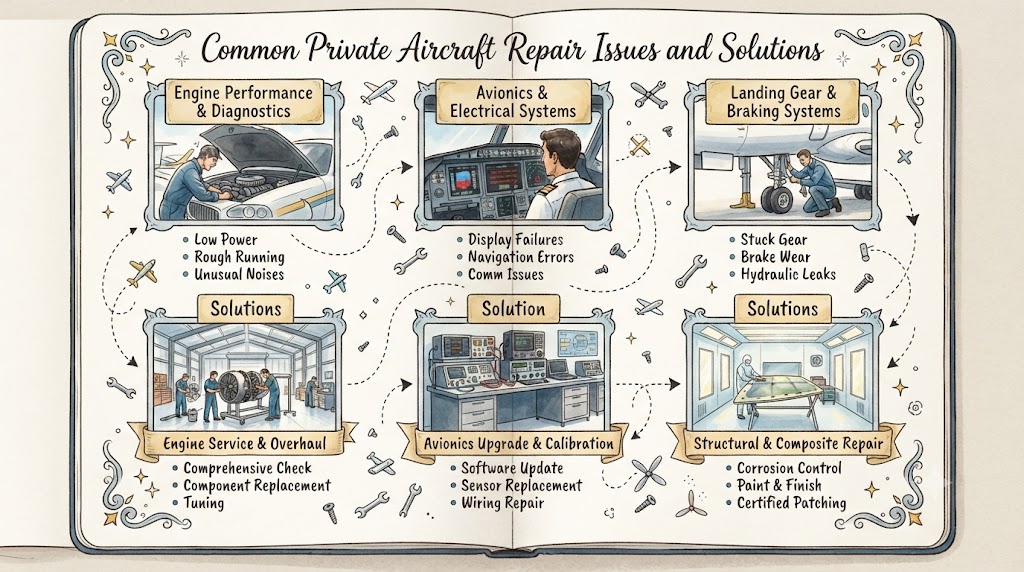
1. Engine Performance Problems
The engine is one of the most important systems in any aircraft. Reduced engine performance can affect safety, efficiency, and overall aircraft operation.
Common Causes
- Fuel contamination
- Ignition system problems
- Compression loss
- Oil system issues
- Internal component wear
- Improper engine adjustments
Warning Signs
- Hard engine starts
- Rough engine operation
- Reduced power output
- Higher fuel consumption
- Unusual engine sounds
Typical Repair Solutions
Maintenance technicians typically begin by inspecting the fuel system, ignition components, oil condition, engine compression, and manufacturer-recommended inspection items. Worn or damaged components may require adjustment or replacement according to approved maintenance procedures.
2. Electrical System Failures
Modern private aircraft rely on electrical systems for communication, navigation, lighting, engine monitoring, and many cockpit functions.
Common Problems
- Weak batteries
- Alternator or generator issues
- Damaged wiring
- Circuit breaker failures
- Faulty switches
- Lighting malfunctions
Repair Solutions
Electrical troubleshooting usually includes battery testing, wiring inspections, voltage measurements, connector checks, and replacement of defective electrical components where necessary.
Routine inspections help identify electrical issues before they affect flight operations.
3. Landing Gear Wear
Landing gear absorbs significant forces during takeoff, landing, and ground operations.
Over time, these components experience normal wear that requires careful inspection.
Common Issues
- Tire wear
- Brake wear
- Hydraulic leaks
- Shock absorber wear
- Landing gear alignment concerns
- Retraction system issues (for retractable gear)
Repair Solutions
Maintenance teams inspect landing gear assemblies, replace worn tires and brake components, service hydraulic systems, and verify proper gear operation.
Keeping landing gear in good condition supports safe aircraft handling during ground operations.
4. Fuel System Issues
The fuel system supplies clean fuel to the engine under various operating conditions.
Even small fuel system problems can affect engine performance.
Common Issues
- Fuel leaks
- Blocked filters
- Fuel pump wear
- Injector problems
- Contaminated fuel
Repair Solutions
Typical maintenance includes:
- Fuel filter replacement
- Leak inspection
- Fuel line examination
- Fuel pump testing
- Injector cleaning or servicing
Regular fuel system inspections help maintain dependable engine performance.
5. Hydraulic System Problems
Many private aircraft use hydraulic systems to operate critical aircraft components.
Common Problems
- Hydraulic fluid leaks
- Pressure loss
- Worn seals
- Damaged hoses
- Pump performance issues
Repair Solutions
Maintenance technicians inspect hydraulic lines, fittings, seals, pumps, and reservoirs while checking for leaks and proper system pressure.
Timely repairs help maintain dependable aircraft operation.
6. Corrosion
Corrosion remains one of the most common long-term maintenance concerns for aircraft.
Aircraft operating near coastal regions or humid environments may experience increased exposure to moisture.
Common Causes
- Moisture
- Salt exposure
- Poor storage conditions
- Environmental contamination
Repair Solutions
Maintenance may involve:
- Removing corrosion
- Cleaning affected areas
- Protective surface treatment
- Repainting when necessary
- Replacing severely damaged components
Regular cleaning and inspections help reduce corrosion risks.
7. Propeller Damage and Wear
The propeller is constantly exposed to airflow, debris, weather, and operational stress.
Common Problems
- Leading-edge wear
- Surface damage
- Balance issues
- Small impact damage
Repair Solutions
Maintenance professionals inspect blade condition, measure damage, verify balance, and determine whether repair or replacement is appropriate according to approved procedures.
8. Avionics Problems
Modern private aircraft depend heavily on avionics for navigation, communication, weather information, and flight management.
Common Issues
- Display malfunctions
- Communication equipment failures
- Navigation system errors
- Sensor problems
- Software-related issues
Repair Solutions
Technicians perform system diagnostics, software updates where applicable, equipment testing, and replacement of faulty components when required.
Common Warning Signs That Repairs May Be Needed
Aircraft owners and pilots should never ignore unusual aircraft behavior.
Warning signs may include:
- Unusual engine sounds
- Increased vibration
- Fluid leaks
- Warning lights
- Reduced engine performance
- Electrical malfunctions
- Poor braking performance
- Unexpected instrument readings
Early inspection often helps prevent larger maintenance issues.
Preventive Maintenance Best Practices
Scheduled Inspections
Routine inspections remain one of the best ways to maintain aircraft reliability.
Following manufacturer recommendations and regulatory inspection schedules helps identify wear before failures occur.
Proper Aircraft Storage
Aircraft storage conditions directly influence long-term maintenance needs.
Good storage practices include:
- Hangar storage when available
- Moisture protection
- Clean storage environments
- Protection from severe weather
Proper storage helps reduce corrosion and environmental damage.
Routine Cleaning
Regular cleaning improves both aircraft appearance and maintenance quality.
Cleaning helps technicians identify:
- Cracks
- Fluid leaks
- Corrosion
- Loose hardware
Visual inspections become easier when aircraft surfaces remain clean.
Accurate Maintenance Records
Maintenance documentation is essential throughout an aircraft’s operational life.
Good records include:
- Inspection dates
- Repairs completed
- Component replacements
- Airworthiness information
Well-maintained records support future inspections and resale value.
Using Approved Aircraft Parts
Using compatible and approved replacement parts helps maintain aircraft reliability.
Maintenance teams should verify:
- Proper specifications
- Compatibility
- Manufacturer approvals where applicable
Correct parts contribute to safe aircraft operation.
Common Repair Solutions Used by Maintenance Professionals
Engine Troubleshooting
Technicians evaluate engine performance through inspections, testing, compression checks, fuel system evaluations, and ignition system diagnostics.
Structural Repairs
Structural maintenance may involve:
- Aluminum skin repairs
- Composite repairs
- Corrosion treatment
- Fastener replacement
Repairs should always follow approved maintenance procedures.
Component Replacement
Frequently replaced components include:
- Filters
- Seals
- Bearings
- Hoses
- Belts
- Electrical connectors
Replacing worn components before failure improves reliability.
System Testing
Following repairs, maintenance professionals perform system testing to verify proper operation.
Testing may include:
- Engine performance evaluation
- Electrical system testing
- Hydraulic pressure checks
- Functional inspections
Verification ensures the repaired system operates correctly.
Private Aircraft Maintenance Checklist
A practical maintenance checklist helps organize routine inspections.
- Engine inspection
- Oil level and condition check
- Fuel system inspection
- Tire inspection
- Brake inspection
- Hydraulic system review
- Battery inspection
- Propeller condition check
- Avionics functionality verification
- Corrosion inspection
- Maintenance record review
Consistent use of maintenance checklists supports organized aircraft care.
Repair Issue Comparison Table
| Aircraft System | Common Problem | Typical Maintenance Focus |
|---|---|---|
| Engine | Rough operation | Inspection and troubleshooting |
| Electrical System | Battery or wiring problems | Electrical diagnostics |
| Fuel System | Leaks or contamination | Inspection and cleaning |
| Landing Gear | Tire and brake wear | Servicing and replacement |
| Hydraulic System | Fluid leaks | Seal and pressure inspection |
| Propeller | Surface wear or imbalance | Inspection and balancing |
| Avionics | Display or communication issues | Diagnostics and software updates |
How to Reduce Aircraft Repair Costs
Although maintenance cannot be eliminated, good planning can help reduce unnecessary repair expenses.
Effective practices include:
Perform Preventive Maintenance
Routine inspections help identify minor problems before they become major repairs.
Address Small Problems Early
Ignoring small leaks or unusual engine behavior may result in more extensive repairs later.
Store Aircraft Properly
Protected storage reduces environmental damage and corrosion.
Use Quality Replacement Parts
Reliable replacement components help maintain long-term aircraft performance.
Work With Experienced Maintenance Professionals
Qualified technicians understand manufacturer recommendations and approved repair procedures.
Maintain Complete Records
Accurate maintenance history supports better planning and future troubleshooting.
Future Trends in Private Aircraft Maintenance
Aircraft maintenance continues to evolve through technology and improved inspection methods.
Predictive Maintenance
Advanced monitoring systems help identify potential maintenance requirements before failures occur.
Digital Maintenance Records
Electronic documentation simplifies maintenance tracking and inspection history.
Aircraft Health Monitoring
Modern systems continuously monitor aircraft performance to support maintenance planning.
Advanced Diagnostic Equipment
New diagnostic technologies improve troubleshooting accuracy and repair efficiency.
Data-Driven Maintenance Planning
Maintenance organizations increasingly use operational data to optimize inspection schedules and component replacement planning.
Frequently Asked Questions
1. What are the most common private aircraft repair issues?
Common issues include engine performance problems, electrical system faults, fuel system concerns, landing gear wear, corrosion, propeller damage, hydraulic leaks, and avionics malfunctions.
2. How often should private aircraft be inspected?
Inspection intervals depend on aircraft type, operating conditions, manufacturer recommendations, and applicable aviation regulations.
3. What causes aircraft engine performance problems?
Fuel contamination, ignition issues, compression loss, lubrication concerns, and worn components are among the common causes.
4. How can corrosion be prevented?
Proper storage, regular cleaning, routine inspections, and protective surface treatments help reduce corrosion.
5. Why are aircraft maintenance records important?
Maintenance records provide documentation of inspections, repairs, and component replacements, supporting aircraft safety and future maintenance planning.
6. How do technicians diagnose aircraft electrical problems?
Technicians use inspection procedures, voltage testing, wiring evaluations, battery testing, and system diagnostics.
7. What signs indicate a propeller inspection is needed?
Visible damage, unusual vibration, impact events, or abnormal operating characteristics may indicate that an inspection is necessary.
8. Why is preventive maintenance important for private aircraft?
Preventive maintenance helps identify developing issues early, reducing unexpected repairs and improving aircraft reliability.
9. Can regular inspections reduce repair costs?
Routine inspections often help detect smaller issues before they require larger repairs, supporting more effective maintenance planning.
10. How do aircraft owners choose a qualified maintenance facility?
Owners should consider technician qualifications, experience with their aircraft type, maintenance capabilities, regulatory compliance, and reputation.
Conclusion
Private aircraft operate in demanding environments where every system must perform reliably to support safe flight. Regular inspections, preventive maintenance, and timely repairs are essential for protecting aircraft performance, minimizing downtime, and maintaining long-term value. By understanding common repair issues—including engine performance concerns, electrical faults, landing gear wear, fuel system problems, hydraulic leaks, corrosion, propeller damage, and avionics malfunctions—aircraft owners can recognize warning signs early and take proactive action.

