
Introduction
Owning a private aircraft is a significant investment that requires careful management, responsible operation, and continuous attention to maintenance. Unlike ordinary vehicles, aircraft operate under demanding conditions where every system, component, and structure must perform reliably. Protecting this investment requires more than repairing problems when they appear—it requires a professional aircraft maintenance approach.
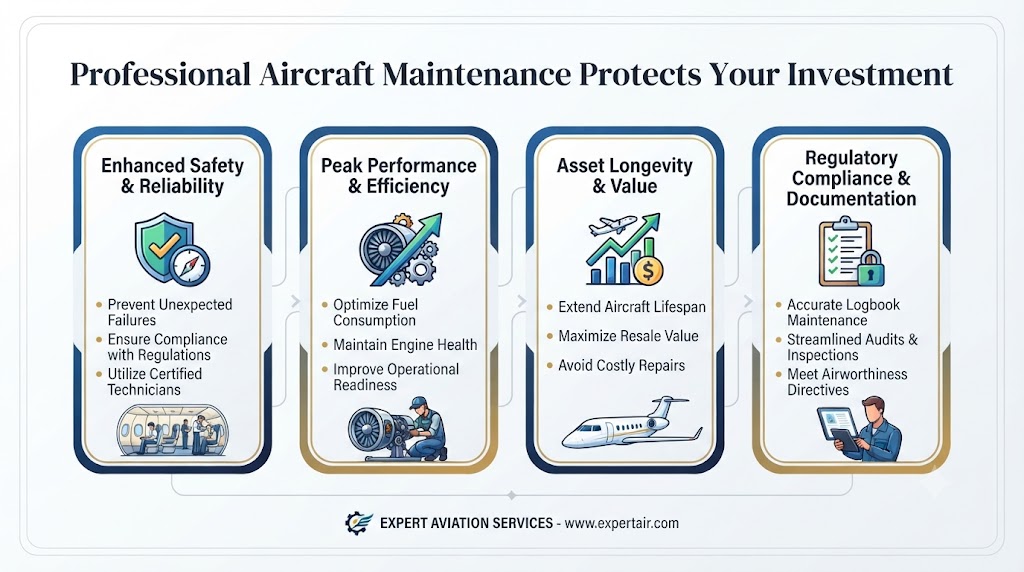
Professional aircraft maintenance helps owners maintain aircraft reliability, preserve value, improve operational readiness, and support long-term ownership goals. Regular inspections, preventive servicing, accurate documentation, and expert maintenance support all contribute to keeping an aircraft in excellent condition.
For private aircraft owners and business aviation operators, maintenance is not simply an expense. It is an important investment strategy that helps protect the aircraft’s performance, safety-focused operations, and future market value.
Why Aircraft Maintenance Is Important for Owners
Modern aircraft are made up of thousands of interconnected components, including:
- Engines
- Avionics systems
- Flight controls
- Electrical systems
- Landing systems
- Structural components
Each system plays an important role in aircraft operation. A small issue in one area can affect other aircraft systems if it is not properly identified and managed.
Professional aircraft maintenance helps owners:
- Monitor aircraft condition
- Identify maintenance requirements
- Plan repairs effectively
- Maintain accurate records
- Support reliable aircraft operation
A structured maintenance approach allows owners to make informed decisions instead of reacting only when problems occur.
How Professional Aircraft Maintenance Protects Your Investment
1. Preserves Aircraft Value
An aircraft’s value depends on many factors, and maintenance history is one of the most important considerations.
A well-maintained aircraft with complete records demonstrates responsible ownership.
Professional maintenance helps preserve value through:
- Regular inspections
- Proper repairs
- Component tracking
- Accurate documentation
- Service history management
When aircraft owners decide to sell or upgrade their aircraft, detailed maintenance records can provide confidence to potential buyers.
A properly maintained aircraft often represents better long-term ownership value compared with one that has limited maintenance history.
2. Improves Aircraft Reliability
Aircraft reliability depends on the condition of individual systems and components.
Professional maintenance helps monitor:
- Engine performance
- Aircraft systems
- Component condition
- Operational performance
Regular inspections allow maintenance professionals to identify areas requiring attention before they become larger challenges.
Reliable aircraft performance supports:
- Better flight planning
- Improved operational confidence
- Reduced unexpected disruptions
3. Reduces Unexpected Repair Challenges
Unexpected repairs can create operational difficulties for aircraft owners.
Reactive maintenance occurs when repairs are needed after a problem develops. While some issues may occur unexpectedly, preventive maintenance helps reduce avoidable challenges.
Professional maintenance planning helps owners:
- Schedule inspections
- Prepare for upcoming requirements
- Manage aircraft downtime
- Organize repair activities
A proactive approach creates better visibility into future maintenance needs.
4. Supports Aircraft Safety Management
Aircraft safety depends on multiple factors, including:
- Proper operation
- Pilot training
- Aircraft condition
- Maintenance practices
Professional aircraft maintenance supports safety-focused operations through:
- Regular inspections
- System evaluations
- Component monitoring
- Qualified technical support
Experienced maintenance professionals follow established procedures to evaluate aircraft condition and identify maintenance requirements.
5. Improves Aircraft Availability
Private aircraft owners often depend on their aircraft for important travel requirements.
Unplanned maintenance can affect:
- Business schedules
- Personal travel plans
- Aircraft availability
A professional maintenance strategy helps owners better manage:
- Service timing
- Inspection schedules
- Repair planning
Planned maintenance allows owners to coordinate aircraft downtime more effectively.
6. Protects Expensive Aircraft Components
Aircraft components represent a significant portion of aircraft ownership costs.
Important systems include:
Engine Systems
Aircraft engines require regular monitoring and maintenance attention.
Proper engine care helps support:
- Reliable performance
- Component condition tracking
- Operational planning
Avionics Systems
Modern aircraft depend heavily on advanced avionics equipment.
Maintenance helps monitor:
- Communication systems
- Navigation equipment
- Flight instruments
Flight Control Systems
Flight control components require careful inspection because they directly affect aircraft operation.
Landing Systems
Landing gear and related components require regular evaluation to support proper function.
Key Areas of Professional Aircraft Maintenance
Routine Aircraft Inspections
Routine inspections are a critical part of aircraft ownership.
They help evaluate:
- Aircraft systems
- Structural condition
- Component performance
- Maintenance requirements
Regular inspections provide valuable information about aircraft health.
Preventive Aircraft Maintenance
Preventive maintenance focuses on planned servicing rather than waiting for problems to develop.
Examples include:
- Scheduled inspections
- Component monitoring
- System checks
- Required servicing
This approach helps owners manage aircraft care more effectively.
Engine Maintenance
Aircraft engines are among the most important and complex systems.
Professional engine maintenance includes:
- Performance monitoring
- Inspection procedures
- Condition evaluation
- Service planning
Proper engine care helps support aircraft reliability.
Avionics Maintenance
Avionics systems support:
- Navigation
- Communication
- Flight information
- Aircraft monitoring
Regular avionics checks help ensure these systems continue functioning properly.
Structural Maintenance
Aircraft structures require careful inspection for:
- Wear
- Damage
- Corrosion
- Component condition
Structural maintenance helps protect aircraft integrity.
Documentation and Maintenance Records
Maintenance records are an essential part of aircraft ownership.
Important records include:
- Inspection history
- Repair information
- Component replacements
- Service details
Accurate documentation helps owners:
- Track aircraft condition
- Plan future maintenance
- Maintain aircraft value
Preventive Maintenance vs Reactive Repairs
| Feature | Preventive Maintenance | Reactive Repairs |
|---|---|---|
| Approach | Planned and proactive | Problem-based response |
| Timing | Scheduled in advance | Occurs after failure or issue |
| Cost Planning | Easier to forecast | More difficult to predict |
| Aircraft Downtime | Usually organized | Often unexpected |
| Maintenance Control | Higher | Lower |
| Record Management | Structured | Event-based |
| Component Monitoring | Continuous | Issue-focused |
| Aircraft Availability | Easier to manage | May be disrupted |
| Repair Preparation | Better planning | Limited preparation |
| Owner Confidence | Higher | Depends on situation |
| Long-Term Planning | Supported | Limited |
| Operational Impact | Reduced disruptions | Potential delays |
| Maintenance Decisions | Strategic | Immediate response |
| Aircraft Value | Better supported | May be affected |
| Ownership Experience | More predictable | Less predictable |
Aircraft Maintenance Planning Process
Step 1: Evaluate Aircraft Condition
The first step is understanding the current condition of the aircraft.
Important factors include:
- Aircraft age
- Flight hours
- Usage patterns
- Component condition
Step 2: Create a Maintenance Strategy
A maintenance strategy helps organize:
- Inspection schedules
- Service requirements
- Repair planning
- Future maintenance needs
Step 3: Monitor Aircraft Performance
Continuous monitoring helps identify changes in aircraft condition.
Areas to observe include:
- Engine performance
- System operation
- Component status
Step 4: Work With Maintenance Professionals
Professional maintenance teams provide:
- Technical expertise
- Aircraft system knowledge
- Inspection support
- Repair guidance
Working with experienced professionals helps owners make better maintenance decisions.
Step 5: Maintain Accurate Records
Updated maintenance records help support:
- Aircraft history
- Future planning
- Ownership confidence
Factors That Affect Aircraft Maintenance Requirements
Aircraft Type
Different aircraft models have different maintenance needs.
Flight Hours and Usage
Aircraft used frequently may require different maintenance planning compared with aircraft used occasionally.
Aircraft Age
Older aircraft may require additional inspections and monitoring.
Operating Environment
Factors such as:
- Climate
- Airport conditions
- Flight operations
can influence maintenance requirements.
Component Condition
Individual components may have different service needs based on usage and condition.
Common Aircraft Maintenance Mistakes Owners Should Avoid
Delaying Regular Inspections
Postponing inspections can make maintenance planning more difficult.
Choosing Maintenance Based Only on Price
Aircraft maintenance requires expertise, quality, and proper procedures.
Poor Record Management
Incomplete records can create challenges during future maintenance or aircraft evaluation.
Ignoring Small Issues
Minor concerns should be evaluated before they develop into larger problems.
Lack of Long-Term Planning
Aircraft ownership requires planning for future maintenance needs.
Choosing the Right Aircraft Maintenance Provider
Technical Expertise
A reliable maintenance provider should understand aircraft systems and aviation requirements.
Quality Maintenance Practices
Professional procedures help ensure consistent maintenance standards.
Documentation Support
Proper documentation helps maintain complete aircraft history.
Clear Communication
Good communication between owners and maintenance teams improves maintenance coordination.
Aviation Experience
Experience with aircraft maintenance helps provide better technical support.
Aircraft Investment Protection Checklist
| Maintenance Area | Investment Benefit |
|---|---|
| Regular Inspections | Helps monitor aircraft condition |
| Engine Care | Supports reliable performance |
| Avionics Checks | Maintains system functionality |
| Component Tracking | Improves maintenance planning |
| Maintenance Records | Supports aircraft value |
| Preventive Servicing | Reduces unexpected issues |
| Professional Support | Provides technical expertise |
| Repair Planning | Improves preparation |
| Aircraft Monitoring | Supports operational awareness |
| Long-Term Strategy | Protects ownership investment |
Future Trends in Aircraft Maintenance
Aircraft maintenance continues improving with new technologies.
Important developments include:
Digital Maintenance Records
Digital systems help organize aircraft service information.
Predictive Maintenance Technology
Data analysis may help identify maintenance trends and support better planning.
Aircraft Health Monitoring
Modern aircraft systems can provide additional information about aircraft condition.
Data-Driven Maintenance Planning
Technology is helping maintenance teams make more informed decisions.
Frequently Asked Questions
1. Why is professional aircraft maintenance important?
Professional aircraft maintenance helps support reliability, aircraft value, and proper ownership management.
2. How does maintenance protect aircraft value?
Complete maintenance records and proper servicing help demonstrate responsible aircraft ownership.
3. What is preventive aircraft maintenance?
Preventive maintenance involves planned inspections and servicing before major issues occur.
4. Why are aircraft maintenance records important?
Records provide information about aircraft history, repairs, and component condition.
5. How does maintenance improve aircraft reliability?
Regular inspections and servicing help identify and manage maintenance requirements.
6. What systems require regular aircraft maintenance?
Important systems include engines, avionics, flight controls, structures, and landing systems.
7. Why choose professional aircraft maintenance providers?
Experienced professionals provide technical knowledge, inspections, and repair support.
8. How does maintenance planning reduce problems?
Planning helps organize inspections, repairs, and future service requirements.
9. What affects aircraft maintenance needs?
Aircraft type, age, usage, operating environment, and component condition all influence maintenance.
10. How does maintenance support long-term aircraft ownership?
Proper maintenance helps protect aircraft reliability, records, and investment value.
Conclusion
Professional aircraft maintenance is one of the most important ways private aircraft owners can protect their investment. An aircraft represents a significant financial commitment, and maintaining its condition requires careful planning, regular inspections, accurate documentation, and expert support. A proactive maintenance approach helps owners better manage aircraft reliability, preserve value, and prepare for future operational needs. Instead of viewing maintenance as only a repair expense, responsible owners recognize it as an essential part of aircraft ownership strategy. With professional maintenance support, aircraft owners can confidently manage their aircraft’s condition and long-term value.

