
Introduction
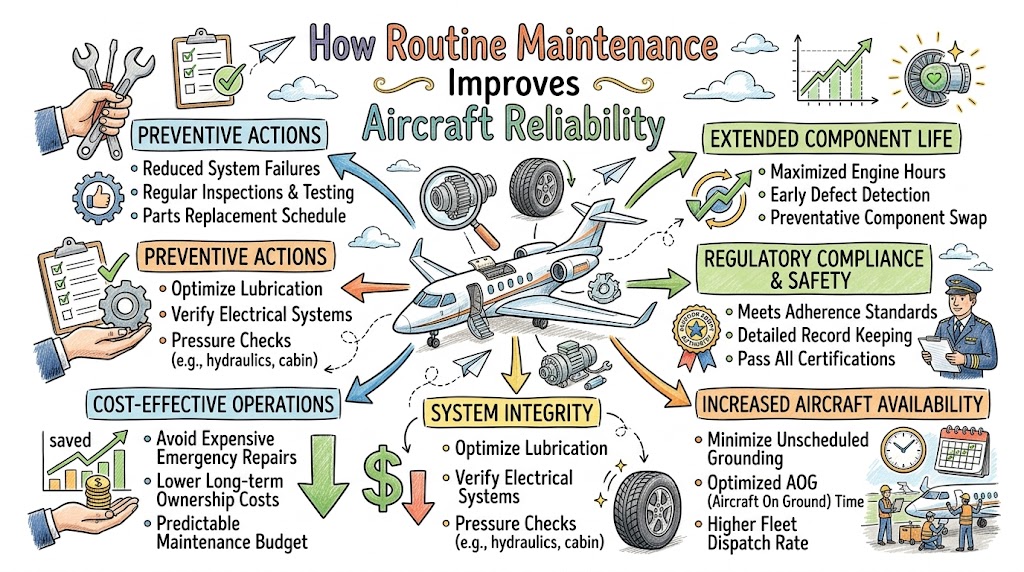
Aircraft reliability is one of the most important factors in safe and efficient aviation operations. Whether an aircraft is used for private travel, business aviation, pilot training, or commercial operations, every flight depends on the proper functioning of thousands of components working together. Routine maintenance plays a vital role in ensuring these systems continue to operate as intended while reducing the likelihood of unexpected mechanical issues.
Rather than waiting for problems to occur, routine maintenance focuses on inspecting, servicing, and monitoring aircraft components on a regular schedule. This proactive approach helps identify wear, detect developing issues early, and maintain the overall health of the aircraft. Consistent maintenance not only improves reliability but also supports safety, extends component life, and helps aircraft owners avoid costly repairs.
This guide explains how routine maintenance improves aircraft reliability, why preventive maintenance is essential, and the best practices that help keep aircraft operating safely and efficiently.
Understanding Routine Aircraft Maintenance
Routine aircraft maintenance consists of scheduled inspections, servicing, testing, and component replacement designed to keep the aircraft in safe operating condition.
Routine maintenance commonly includes:
- Scheduled inspections
- Preventive maintenance
- Component servicing
- System testing
- Lubrication
- Fluid checks
- Maintenance documentation
Each activity contributes to maintaining dependable aircraft performance.
Why Aircraft Reliability Matters
Reliable aircraft provide confidence for pilots, passengers, and maintenance professionals.
High reliability helps achieve:
- Safer flight operations
- Consistent aircraft performance
- Reduced operational interruptions
- Better maintenance planning
- Greater aircraft availability
Reliable aircraft spend more time flying and less time experiencing unexpected maintenance issues.
Key Areas of Routine Maintenance
Every major aircraft system requires regular inspection and servicing.
Engine Inspections
The engine operates under demanding conditions and requires regular attention.
Routine checks include:
- Oil levels
- Filters
- Belts
- Hoses
- Visible leaks
- General engine condition
Regular inspections help identify wear before it affects performance.
Landing Gear
Landing gear absorbs significant forces during every landing.
Maintenance typically includes:
- Wheel inspections
- Shock absorber checks
- Hydraulic component inspection
- Structural examination
Proper landing gear maintenance supports safe takeoffs and landings.
Brakes
Brake systems experience repeated stress during aircraft operations.
Routine maintenance helps verify:
- Brake condition
- Wear levels
- Proper operation
Reliable brakes improve ground safety.
Tires
Aircraft tires should be inspected regularly for:
- Wear
- Cuts
- Cracks
- Proper inflation
- Foreign object damage
Healthy tires improve ground handling.
Flight Controls
Flight control systems require smooth and reliable movement.
Maintenance personnel inspect:
- Control surfaces
- Hinges
- Linkages
- Cables
Reliable controls are essential for safe aircraft handling.
Hydraulic Systems
Hydraulic components should be checked for:
- Fluid levels
- Hose condition
- Leaks
- Pressure consistency
Hydraulic reliability supports several important aircraft systems.
Electrical Systems
Routine inspections include:
- Wiring
- Connections
- Battery condition
- Electrical equipment operation
Reliable electrical systems contribute to dependable aircraft performance.
Fuel Systems
Fuel system inspections help verify:
- Fuel lines
- Filters
- Tanks
- Connections
A properly maintained fuel system supports consistent engine operation.
The Importance of Scheduled Inspections
Scheduled inspections are one of the most effective methods of maintaining aircraft reliability.
They help identify:
- Component wear
- Loose hardware
- Corrosion
- Fluid leaks
- System irregularities
Early identification reduces the likelihood of larger maintenance issues.
Pre-Flight Inspections
Pilots perform visual inspections before every flight.
Typical inspection items include:
- Fuel
- Oil
- Tires
- Flight controls
- Propeller
- Lights
- Aircraft exterior
These inspections provide an additional layer of operational safety.
Scheduled Maintenance Inspections
Maintenance professionals conduct detailed inspections according to established maintenance programs.
These inspections often include:
- Functional testing
- System evaluation
- Component measurement
- Performance verification
Early Detection Prevents Bigger Problems
Routine maintenance emphasizes identifying small issues before they become significant repairs.
Examples include:
Component Wear
Early wear can often be corrected before affecting aircraft performance.
Corrosion
Detecting corrosion early helps protect structural integrity.
Fluid Leaks
Identifying leaks quickly prevents additional system damage.
Component Deterioration
Regular inspections help monitor aging components throughout their service life.
Maintenance Documentation
Accurate documentation supports long-term aircraft reliability.
Maintenance records commonly include:
- Inspection reports
- Service history
- Component replacements
- Repair documentation
- Scheduled maintenance records
Organized documentation helps maintenance teams plan future servicing.
How Routine Maintenance Improves Aircraft Performance
Routine servicing benefits aircraft in several important ways.
Better Engine Efficiency
Well-maintained engines operate more consistently.
Improved Aircraft Handling
Reliable flight control systems support predictable handling.
Stable System Operation
Electrical, hydraulic, and fuel systems perform more consistently when regularly maintained.
Better Fuel Efficiency
Properly maintained systems help support efficient engine operation.
Increased Operational Reliability
Routine maintenance reduces unexpected mechanical interruptions.
Common Maintenance Mistakes to Avoid
Aircraft reliability can be affected by avoidable maintenance practices.
Examples include:
- Delaying inspections
- Ignoring unusual sounds
- Overlooking small fluid leaks
- Poor maintenance documentation
- Skipping preventive servicing
- Delaying component replacement
Avoiding these mistakes supports long-term reliability.
Best Practices for Aircraft Owners and Operators
Several simple practices improve maintenance effectiveness.
Follow Maintenance Schedules
Routine servicing should always follow recommended maintenance intervals.
Conduct Thorough Inspections
Careful inspections help identify developing concerns.
Maintain Complete Documentation
Accurate records simplify maintenance planning.
Communicate Maintenance Concerns
Pilots should report unusual observations promptly.
Replace Worn Components
Timely replacement helps maintain aircraft reliability.
Benefits of Routine Aircraft Maintenance
Routine maintenance provides long-term operational advantages.
Improved Safety
Reliable systems support safer flight operations.
Better Reliability
Well-maintained aircraft experience fewer unexpected issues.
Lower Maintenance Costs
Preventive maintenance often reduces expensive repairs.
Increased Aircraft Availability
Routine servicing minimizes unexpected downtime.
Longer Aircraft Service Life
Proper care helps preserve aircraft components.
Greater Operational Confidence
Pilots and operators benefit from dependable aircraft performance.
Aircraft Maintenance Checklist
Before Every Flight:
- Inspect engine
- Verify fuel quantity
- Check oil
- Examine tires
- Inspect propeller
- Test flight controls
- Check lights
- Look for leaks
Routine Maintenance:
- Inspect landing gear
- Review hydraulic systems
- Examine electrical components
- Replace worn parts
- Update maintenance records
Long-Term Maintenance:
- Follow inspection schedules
- Review service history
- Monitor component condition
- Maintain organized documentation
Frequently Asked Questions
1. What is routine aircraft maintenance?
Routine maintenance includes scheduled inspections, servicing, testing, and replacement of aircraft components to maintain safe and reliable operation.
2. Why is preventive maintenance important?
Preventive maintenance identifies developing issues early, helping reduce unexpected failures and extending component life.
3. How often should aircraft be inspected?
Inspection frequency depends on maintenance programs, aircraft type, operating conditions, and recommended service intervals.
4. What systems require regular maintenance?
Engines, landing gear, brakes, tires, hydraulic systems, electrical systems, fuel systems, and flight controls all require regular inspection.
5. How does maintenance improve reliability?
Routine servicing helps ensure aircraft systems continue operating consistently while reducing unexpected maintenance issues.
6. Why are maintenance records important?
Accurate documentation supports maintenance planning, inspection tracking, and long-term aircraft management.
7. What happens if inspections are delayed?
Delaying inspections may allow small maintenance concerns to develop into larger repairs over time.
8. Can pilots identify maintenance concerns?
Yes. Careful pre-flight inspections and monitoring aircraft performance allow pilots to recognize many developing issues.
9. How does routine maintenance reduce costs?
Preventive maintenance often reduces the need for major repairs by identifying problems before they become more serious.
10. Why should worn components be replaced promptly?
Timely replacement helps maintain aircraft reliability, supports safe operation, and prevents additional component damage.
Conclusion
Routine maintenance is the foundation of reliable aircraft operation. By combining scheduled inspections, preventive servicing, accurate documentation, and timely component replacement, aircraft owners and maintenance professionals can identify developing issues before they affect performance or safety. This proactive approach helps maintain dependable aircraft systems while reducing unexpected downtime and improving long-term operational efficiency.
Whether operating a private aircraft, training aircraft, or business jet, consistent maintenance practices contribute to safer flights, greater reliability, and longer aircraft service life. Investing in routine maintenance today helps ensure dependable aircraft performance for every flight in the future.

