
Introduction
Owning a private aircraft provides flexibility, convenience, and greater control over personal or business travel. However, aircraft ownership also comes with significant responsibilities, and one of the most important responsibilities is maintaining the aircraft properly.
Unlike ordinary vehicles, aircraft operate in highly demanding environments where every system and component must function correctly. A well-maintained aircraft requires more than occasional repairs—it requires a structured maintenance plan that tracks inspections, component conditions, servicing requirements, and future maintenance needs.
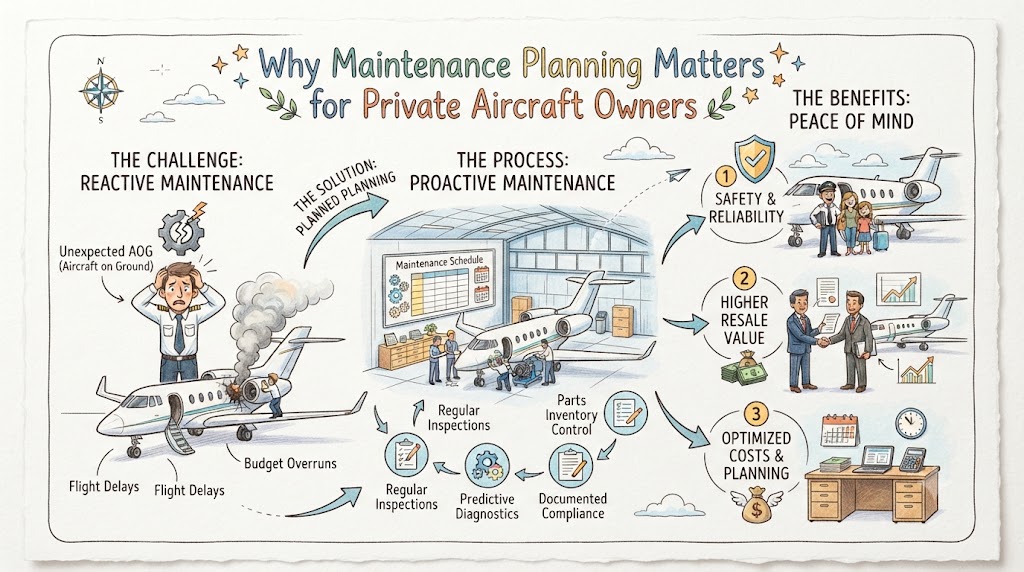
Maintenance planning helps private aircraft owners move from a reactive approach to a proactive strategy. Instead of waiting for unexpected issues to occur, owners can prepare for scheduled inspections, monitor aircraft condition, and coordinate maintenance activities effectively.
What Is Aircraft Maintenance Planning?
Aircraft maintenance planning is the process of organizing, scheduling, and managing aircraft inspections, servicing, repairs, and component monitoring.
The goal is to ensure that aircraft systems receive appropriate attention at the right time based on aircraft requirements, operating conditions, and maintenance recommendations.
A maintenance plan typically includes:
- Scheduled inspections
- Component tracking
- Repair planning
- Service coordination
- Maintenance documentation
- Future maintenance forecasting
For private aircraft owners, maintenance planning provides better visibility into aircraft condition and upcoming requirements.
Why Maintenance Planning Is Important for Private Aircraft Owners
1. Improves Aircraft Safety and Reliability
Aircraft safety depends on many systems working together correctly.
Maintenance planning helps owners:
- Identify potential issues early
- Monitor aircraft condition
- Address maintenance needs systematically
- Maintain operational confidence
Regular inspections and servicing help ensure aircraft components continue operating as expected.
However, maintenance planning does not remove all risks. Safe aircraft operation also depends on proper procedures, qualified professionals, and responsible flight decisions.
2. Reduces Unexpected Maintenance Problems
Unexpected repairs can create challenges for aircraft owners.
Reactive maintenance often happens when a problem appears suddenly, which may result in:
- Unplanned downtime
- Schedule disruptions
- Additional coordination requirements
A planned maintenance approach helps owners prepare for upcoming requirements and reduce operational surprises.
3. Helps Manage Maintenance Costs
Aircraft maintenance involves various expenses, including:
- Inspections
- Repairs
- Replacement components
- Servicing requirements
Maintenance planning helps owners organize these expenses by preparing for expected requirements.
Benefits may include:
- Better budgeting
- Improved cost visibility
- More organized maintenance decisions
Actual maintenance costs depend on factors such as aircraft type, usage, age, and component condition.
4. Supports Aircraft Availability
Private aircraft are often used for important travel requirements.
A structured maintenance plan helps owners:
- Schedule service efficiently
- Reduce unnecessary downtime
- Coordinate maintenance around travel plans
Proper planning allows aircraft operators to better manage availability expectations.
5. Helps Maintain Aircraft Value
Aircraft maintenance history is an important part of ownership.
Well-organized records demonstrate:
- Proper servicing
- Component history
- Inspection completion
- Responsible ownership
Accurate maintenance documentation can support future aircraft evaluations and ownership decisions.
Key Components of Private Aircraft Maintenance Planning
Routine Inspections
Routine inspections are a fundamental part of aircraft maintenance.
They help evaluate:
- Aircraft systems
- Structural condition
- Engine performance
- Component status
Regular inspection planning helps identify areas that require attention.
Preventive Maintenance
Preventive maintenance focuses on addressing maintenance needs before major problems develop.
Examples include:
- Replacing components based on requirements
- Monitoring system performance
- Performing scheduled servicing
This approach helps improve maintenance organization.
Component Tracking
Aircraft contain many components with specific service requirements.
Tracking helps owners monitor:
- Engine components
- Aircraft systems
- Replacement history
- Service information
Proper tracking supports better maintenance decisions.
Maintenance Records Management
Accurate records are essential for aircraft ownership.
Important documentation includes:
- Inspection records
- Repair history
- Component replacements
- Service information
Good records improve maintenance planning and aircraft management.
Future Maintenance Forecasting
Maintenance planning is not only about current needs.
Owners should also consider:
- Upcoming inspections
- Expected component requirements
- Aircraft usage plans
- Future servicing needs
Forecasting helps avoid unexpected scheduling challenges.
Planned Maintenance vs Reactive Maintenance
| Feature | Planned Maintenance | Reactive Maintenance |
|---|---|---|
| Approach | Preventive and organized | Response after a problem occurs |
| Scheduling | Planned in advance | Unpredictable |
| Cost Planning | Easier budgeting | More difficult forecasting |
| Aircraft Downtime | Usually managed | May be unexpected |
| Maintenance Preparation | Higher | Limited |
| Record Management | Structured | Often event-based |
| Operational Planning | More predictable | More challenging |
| Component Monitoring | Regular tracking | Issue-focused |
| Owner Control | Higher | Lower |
| Long-Term Planning | Supported | Limited |
| Aircraft Availability | Easier to manage | Potential disruptions |
| Maintenance Coordination | Organized | Requires immediate action |
| Risk Management | Proactive | Reactive |
| Decision Making | Planned | Problem-driven |
| Ownership Experience | More predictable | More uncertain |
Private Aircraft Maintenance Planning Process
Step 1: Review Aircraft Requirements
Every aircraft has unique maintenance needs.
Owners should consider:
- Aircraft model
- Engine type
- Flight activity
- Operating environment
- Aircraft age
Step 2: Create a Maintenance Schedule
A maintenance schedule helps organize:
- Inspections
- Servicing
- Component reviews
- Repair activities
The schedule should align with aircraft requirements and professional maintenance guidance.
Step 3: Monitor Aircraft Condition
Regular monitoring helps identify changes in aircraft condition.
Areas to review may include:
- Engine performance
- Aircraft systems
- Component condition
- Maintenance history
Step 4: Coordinate With Maintenance Professionals
Professional maintenance teams help owners manage:
- Inspections
- Repairs
- Technical evaluations
- Maintenance planning
Working with qualified professionals supports informed decisions.
Step 5: Maintain Updated Records
Maintenance records should be updated after:
- Inspections
- Repairs
- Component changes
- Service activities
Accurate documentation supports future planning.
Factors That Influence Private Aircraft Maintenance Planning
Aircraft Type
Different aircraft designs have different maintenance requirements.
Flight Frequency
Aircraft that fly more frequently may require different maintenance planning compared with aircraft used less often.
Operating Environment
Factors such as:
- Climate
- Airport conditions
- Flight operations
can influence maintenance needs.
Aircraft Age
Older aircraft may require additional monitoring due to component condition and service history.
Component Condition
Individual systems and components may have different maintenance requirements.
Common Maintenance Planning Mistakes
Ignoring Preventive Maintenance
Waiting until problems occur can create unnecessary challenges.
Poor Record Keeping
Incomplete records may make future maintenance decisions more difficult.
Delaying Inspections
Regular inspections are important for understanding aircraft condition.
Choosing Maintenance Based Only on Cost
The lowest-cost option may not always provide the best long-term value.
Owners should consider:
- Quality
- Experience
- Documentation
- Service capability
Lack of Long-Term Planning
Aircraft ownership requires thinking beyond immediate repairs.
Long-term planning helps owners prepare for future requirements.
How Professional Maintenance Providers Support Aircraft Owners
Technical Expertise
Maintenance professionals provide knowledge about:
- Aircraft systems
- Component conditions
- Repair requirements
Inspection Services
Professional inspections help evaluate aircraft condition.
Repair Coordination
Maintenance providers help organize:
- Required repairs
- Replacement components
- Service schedules
Documentation Support
Proper documentation helps maintain accurate aircraft history.
Aircraft Availability Planning
Maintenance professionals help coordinate service activities around operational needs.
Private Aircraft Maintenance Checklist
| Maintenance Area | Importance |
|---|---|
| Aircraft Inspections | Helps evaluate aircraft condition |
| Engine Monitoring | Supports engine reliability tracking |
| Component Tracking | Maintains service history |
| Maintenance Records | Supports ownership documentation |
| System Checks | Helps identify maintenance needs |
| Repair Planning | Improves preparation |
| Documentation Updates | Maintains accurate records |
| Service Scheduling | Supports aircraft availability |
| Safety Reviews | Encourages responsible operation |
| Professional Consultation | Supports informed decisions |
Future Trends in Aircraft Maintenance
Aircraft maintenance continues evolving through technology and improved management practices.
Emerging areas include:
Digital Maintenance Tracking
Digital systems help organize:
- Service records
- Maintenance schedules
- Component information
Predictive Maintenance Technology
Data-based tools may help identify maintenance trends and support planning decisions.
Aircraft Health Monitoring Systems
Modern monitoring systems provide additional information about aircraft condition.
Data-Driven Maintenance Planning
Technology helps maintenance teams analyze information and improve planning processes.
Frequently Asked Questions
1. Why is maintenance planning important for private aircraft?
Maintenance planning helps aircraft owners organize inspections, repairs, servicing, and future maintenance requirements.
2. What is preventive aircraft maintenance?
Preventive maintenance involves planned servicing and component attention before unexpected issues occur.
3. How does maintenance planning improve aircraft reliability?
It supports regular inspections, proper documentation, and organized maintenance decisions.
4. What should private aircraft owners include in a maintenance plan?
A maintenance plan should include inspections, servicing schedules, component tracking, records, and repair planning.
5. How often should aircraft maintenance be scheduled?
Maintenance schedules depend on aircraft type, usage, manufacturer guidance, and operational requirements.
6. Why are aircraft maintenance records important?
Records provide information about inspections, repairs, and component history.
7. What is the difference between planned and reactive maintenance?
Planned maintenance is scheduled in advance, while reactive maintenance occurs after an issue appears.
8. How does maintenance planning help control costs?
It improves budgeting and helps owners prepare for expected maintenance needs.
9. Why should owners work with professional maintenance providers?
Professionals provide technical expertise and support proper aircraft maintenance management.
10. How does aircraft usage affect maintenance planning?
Flight hours, operating conditions, and usage patterns influence maintenance requirements.
Conclusion
Maintenance planning is one of the most important responsibilities of private aircraft ownership. A structured approach helps owners manage inspections, repairs, component tracking, and future servicing requirements more effectively.
Rather than waiting for unexpected maintenance issues, proactive planning allows aircraft owners to make informed decisions, improve operational organization, and maintain accurate aircraft records.
Private aviation requires careful attention to detail, and professional maintenance support plays an important role in keeping aircraft prepared for their intended operations.

