
Introduction
Private aircraft provide unmatched flexibility, efficiency, and convenience for business leaders, executives, and aviation professionals. However, maintaining that level of performance requires consistent attention to aircraft systems, components, and operational readiness.
Unlike ordinary vehicles, aircraft operate under demanding conditions where reliability and safety are directly connected to proper maintenance practices. A small issue with an engine component, avionics system, or structural element can affect aircraft performance and operational confidence.
A proactive private aircraft maintenance strategy helps owners and operators identify potential problems early, reduce unexpected downtime, improve safety, and protect the long-term value of their aircraft.
A detailed maintenance checklist provides a structured approach to managing aircraft reliability. From pre-flight inspections and engine monitoring to avionics checks and scheduled servicing, every maintenance activity contributes to safer and more dependable operations.
Understanding Private Aircraft Maintenance
Private aircraft maintenance involves the inspection, servicing, repair, and monitoring of aircraft systems to ensure safe and reliable operation.
Maintenance activities typically include:
- Routine inspections
- Preventive maintenance
- Component replacement
- Engine monitoring
- Avionics servicing
- Structural evaluations
- Documentation management
A reliable maintenance program focuses on identifying issues before they become major problems.
Instead of waiting for failures to occur, professional operators use preventive maintenance strategies to maintain aircraft readiness and reduce operational interruptions.
Why Aircraft Reliability Matters in Private Aviation
Reliability is one of the most important factors in private aviation.
Business executives, aircraft owners, and operators depend on aircraft to support:
- Business meetings
- Time-sensitive travel
- Corporate operations
- Personal transportation
- Mission-critical flights
Poor maintenance planning can result in:
- Unexpected repairs
- Flight delays
- Increased costs
- Reduced aircraft availability
A strong maintenance program improves confidence by ensuring aircraft systems operate as expected.
Benefits of Preventive Private Aircraft Maintenance
Improved Flight Safety
Regular maintenance helps identify issues before they affect aircraft operation.
Preventive inspections allow technicians to evaluate:
- Engine condition
- Aircraft structures
- Flight controls
- Electrical systems
- Safety equipment
Early detection reduces operational risks and supports safer flight operations.
Reduced Aircraft Downtime
Unexpected maintenance can disrupt travel schedules and business plans.
A planned maintenance approach helps:
- Identify upcoming requirements
- Schedule repairs efficiently
- Reduce unexpected grounding events
- Improve aircraft availability
Protection of Aircraft Value
An aircraft with complete maintenance records and consistent servicing often maintains stronger long-term value.
Proper maintenance supports:
- Better resale opportunities
- Documented aircraft history
- Improved buyer confidence
- Reduced future repair concerns
Better Aircraft Performance
Well-maintained aircraft generally provide:
- More consistent engine operation
- Better system reliability
- Improved efficiency
- Smoother flight performance
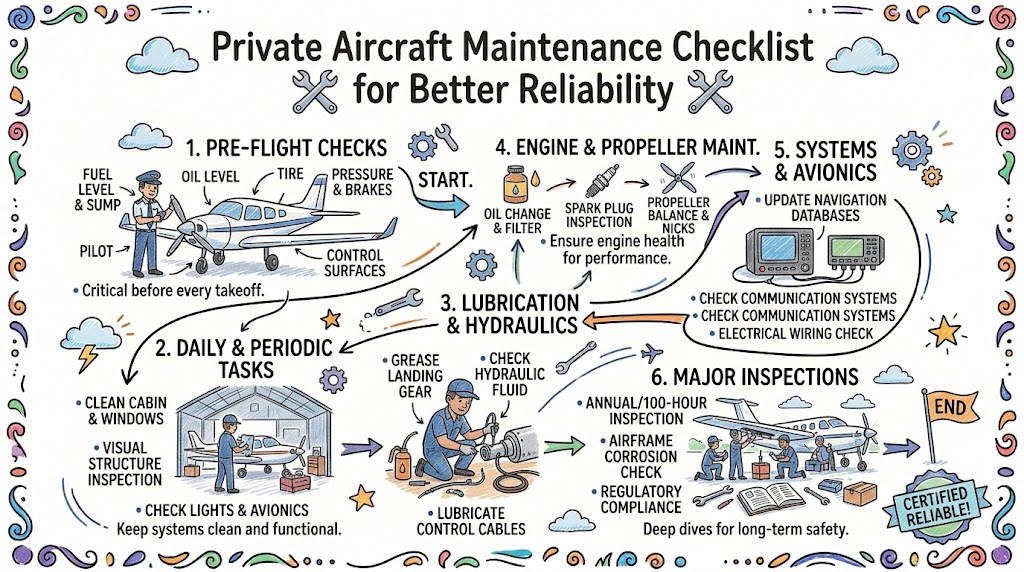
Private Aircraft Maintenance Checklist
1. Pre-Flight Inspection Checklist
Every flight begins with a proper aircraft inspection.
Pilots and maintenance teams should review:
Exterior Inspection
Check:
- Aircraft surface condition
- Signs of damage
- Fluid leaks
- Tire condition
- Landing gear condition
- Control surfaces
Flight Control Inspection
Verify:
- Proper movement
- Secure connections
- Unusual resistance
- Visible damage
Engine Area Inspection
Review:
- Oil levels
- Leaks
- External damage
- Loose components
- Unusual conditions
Safety Equipment Check
Confirm:
- Emergency equipment availability
- Required safety items
- Cabin readiness
A thorough pre-flight inspection helps identify visible issues before operation.
2. Engine Maintenance Checklist
The aircraft engine is one of the most critical systems requiring regular monitoring.
Important engine maintenance activities include:
Oil Monitoring
Engine oil provides lubrication and helps protect internal components.
Maintenance teams monitor:
- Oil levels
- Oil condition
- Possible contamination
- Consumption patterns
Filter Inspection and Replacement
Filters protect engine systems by removing contaminants.
Regular replacement helps maintain:
- Clean airflow
- Proper lubrication
- Engine efficiency
Engine Performance Monitoring
Technicians evaluate:
- Operating temperatures
- Pressure readings
- Performance changes
- Unusual vibrations
Leak Inspection
Engine inspections should identify:
- Oil leaks
- Fuel leaks
- Fluid issues
Small leaks can indicate larger maintenance concerns.
3. Avionics and Electrical System Checklist
Modern private aircraft rely heavily on advanced avionics systems.
Important checks include:
Communication Systems
Review:
- Radio operation
- Communication clarity
- System functionality
Navigation Systems
Verify:
- Navigation equipment performance
- Display functionality
- System accuracy
Electrical Components
Inspect:
- Batteries
- Wiring
- Power systems
- Electrical connections
Software and System Updates
Modern aircraft systems may require updates to maintain performance and reliability.
4. Cabin and Interior Maintenance Checklist
Passenger comfort and safety are important parts of private aircraft operations.
Cabin maintenance includes:
Safety Equipment
Check:
- Emergency equipment
- Safety restraints
- Emergency lighting
Interior Systems
Inspect:
- Cabin lighting
- Climate controls
- Seating systems
- Entertainment equipment
Cleanliness and Condition
Regular cabin care helps maintain:
- Passenger comfort
- Aircraft appearance
- Interior longevity
5. Structural Inspection Checklist
Aircraft structures experience stress during operation and require careful monitoring.
Structural inspections focus on:
- Airframe condition
- Corrosion detection
- Surface damage
- Fasteners
- Panels
- Structural components
Regular inspections help maintain aircraft strength and durability.
6. Landing Gear Maintenance Checklist
Landing gear experiences significant forces during takeoff and landing.
Maintenance teams inspect:
- Tires
- Braking systems
- Hydraulic components
- Landing gear movement
- Mechanical connections
Reliable landing gear performance is essential for safe ground operations.
7. Flight Control System Checklist
Flight control systems directly affect aircraft handling.
Maintenance checks include:
- Control surfaces
- Cables or actuators
- Hydraulic systems
- Mechanical connections
- System response
Proper flight control maintenance supports safe and predictable aircraft handling.
Scheduled Maintenance Planning
A successful maintenance strategy requires planning beyond daily inspections.
Routine Maintenance
Includes:
- Regular inspections
- Fluid checks
- Filter servicing
- Component monitoring
Calendar-Based Maintenance
Some maintenance tasks depend on time periods rather than flight hours.
Examples include:
- System checks
- Equipment inspections
- Component evaluations
Flight-Hour-Based Maintenance
Certain components require attention based on aircraft usage.
Maintenance teams track:
- Flight hours
- Operating cycles
- Component life limits
Long-Term Maintenance Planning
Aircraft owners should plan for:
- Major inspections
- Component replacements
- Aircraft upgrades
- Refurbishment needs
Common Private Aircraft Maintenance Mistakes
Delaying Scheduled Inspections
Postponing maintenance can allow small problems to develop into expensive repairs.
Ignoring Warning Signs
Aircraft owners should never overlook:
- Unusual sounds
- Vibrations
- Performance changes
- Warning indicators
Poor Maintenance Documentation
Incomplete records can create challenges with:
- Future maintenance planning
- Aircraft value assessment
- Component tracking
Choosing Inexperienced Service Providers
Aircraft maintenance requires specialized knowledge, tools, and procedures.
Working with experienced aviation professionals improves reliability.
Reactive Maintenance Approach
Waiting for failures increases downtime and operational disruption.
Preventive maintenance provides better control over aircraft reliability.
Importance of Aircraft Maintenance Records
Accurate maintenance records are essential for aircraft ownership.
They help track:
- Completed inspections
- Repairs
- Component history
- Service schedules
- Aircraft condition
Good documentation supports:
- Better maintenance decisions
- Easier troubleshooting
- Improved aircraft value
How Technology Improves Aircraft Maintenance
Modern aviation maintenance increasingly uses advanced technology.
Aircraft Health Monitoring
Sensors can track:
- Engine performance
- System conditions
- Component behavior
Predictive Maintenance
Data analysis helps identify potential problems before failures occur.
Benefits include:
- Earlier detection
- Better planning
- Reduced downtime
Digital Maintenance Records
Electronic systems improve:
- Record accuracy
- Maintenance tracking
- Communication between teams
Choosing the Right Private Aircraft Maintenance Partner
Selecting a reliable maintenance provider is an important decision.
Aircraft owners should consider:
Aviation Experience
Look for professionals familiar with private aircraft systems.
Technical Capability
Evaluate:
- Equipment
- Tools
- Maintenance expertise
- Repair capabilities
Safety Standards
A strong maintenance provider prioritizes:
- Quality procedures
- Detailed inspections
- Proper documentation
Customer Support
Reliable communication helps owners manage aircraft maintenance efficiently.
Why Aircraft Owners Choose ExecutiveAirRepair
Private aircraft owners require maintenance partners who understand the importance of safety, reliability, and operational efficiency.
A professional aircraft maintenance approach focuses on:
- Detailed inspections
- Reliability improvement
- Quality repair support
- Preventive maintenance planning
- Aircraft performance monitoring
ExecutiveAirRepair supports aircraft owners by helping them maintain dependable aircraft operations through professional aviation maintenance solutions.
Private Aircraft Reliability Checklist
Before Every Flight
- Review aircraft status
- Complete inspections
- Check fluid levels
- Confirm system operation
- Review maintenance alerts
Monthly Maintenance Review
- Check maintenance records
- Review aircraft performance
- Monitor recurring issues
- Confirm upcoming maintenance requirements
Annual Reliability Review
- Evaluate aircraft condition
- Review maintenance history
- Identify improvement opportunities
- Update maintenance planning
Frequently Asked Questions
1. Why is preventive maintenance important for private aircraft?
Preventive maintenance helps identify potential issues early, improves safety, reduces downtime, and supports reliable aircraft operation.
2. How often should private aircraft inspections be performed?
Inspection schedules depend on aircraft type, usage, operating conditions, and applicable maintenance requirements.
3. What systems require the most maintenance attention?
Critical systems include engines, avionics, flight controls, landing gear, electrical systems, and aircraft structures.
4. How does maintenance affect aircraft safety?
Proper maintenance helps ensure aircraft systems operate correctly and reduces the risk of unexpected mechanical issues.
5. Can regular maintenance improve aircraft resale value?
Yes. Complete maintenance records and consistent servicing can improve buyer confidence and aircraft value.
6. What is included in a private aircraft maintenance checklist?
A checklist typically includes inspections of engines, avionics, structures, flight controls, landing gear, cabin systems, and safety equipment.
7. Why are maintenance records important?
Maintenance records provide aircraft history, support future servicing decisions, and help demonstrate proper aircraft care.
8. How can owners reduce unexpected aircraft repairs?
Regular inspections, preventive maintenance, and early attention to warning signs help reduce unexpected repairs.
9. What should aircraft owners look for in a maintenance provider?
Owners should consider experience, technical capability, safety practices, documentation quality, and customer support.
10. How does technology improve aircraft reliability?
Technology such as monitoring systems and predictive maintenance tools helps identify problems earlier and improve maintenance planning.
Conclusion
Private aircraft reliability depends on consistent maintenance planning, detailed inspections, and proactive care. A comprehensive maintenance checklist helps owners and operators monitor critical aircraft systems, identify potential issues, and maintain safe operations.
From engine inspections and avionics checks to structural evaluations and maintenance documentation, every step contributes to aircraft performance and longevity. Preventive maintenance is not simply about repairing problems—it is about creating a reliable aviation environment where aircraft remain ready, efficient, and safe.

