
Introduction
Owning a private aircraft offers unmatched convenience, flexibility, and operational control. Whether used for business travel, charter operations, or personal transportation, private aircraft provide a premium aviation experience that commercial travel often cannot match. However, with aircraft ownership comes a major responsibility: ensuring the aircraft remains safe, compliant, efficient, and airworthy at all times.
This is where aircraft repair services become critically important. From routine inspections and preventive maintenance to major structural repairs and avionics upgrades, professional aircraft maintenance directly impacts flight safety, operational reliability, aircraft lifespan, and resale value.
For many private aircraft owners, understanding the world of aviation maintenance can feel overwhelming. Questions about FAA compliance, repair costs, inspection schedules, engine maintenance, avionics upgrades, and aircraft downtime are common. Choosing the right maintenance provider is equally important because poor maintenance decisions can lead to expensive repairs, safety risks, and prolonged aircraft grounding.
This complete guide explains everything private aircraft owners should know about aircraft repair services, including maintenance categories, inspection requirements, repair costs, preventive strategies, and how to choose the right aviation repair company.
Real-world use cases include:
- Corporate jet operators maintaining reliable executive travel schedules
- Private aircraft owners reducing unexpected repair costs
- Aircraft management companies ensuring FAA compliance
- Charter operators maximizing aircraft availability
- Jet owners upgrading outdated avionics systems
- Pilots and operators improving operational safety
- Aircraft sellers increasing resale value before listing aircraft
Evaluation Criteria for Buyers
When choosing an aircraft maintenance and repair provider, aircraft owners should evaluate:
- FAA certifications and regulatory compliance
- Technician qualifications and experience
- Aircraft type specialization
- Repair turnaround time
- Availability of hangar facilities
- Emergency repair support
- Avionics expertise
- Maintenance transparency
- Parts sourcing capabilities
- Industry reputation and operational history
Best for: Private jet owners, turboprop operators, aircraft management firms, corporate aviation teams, and charter companies.
Not ideal for: Commercial airline fleet maintenance discussions or military aviation operations.
What Are Aircraft Repair Services?
Aircraft repair services refer to the inspection, maintenance, troubleshooting, repair, overhaul, and replacement of aircraft systems and components to ensure airworthiness and operational safety.
These services include:
- Routine inspections
- Structural repairs
- Engine maintenance
- Avionics troubleshooting
- Electrical system repairs
- Hydraulic maintenance
- Interior refurbishment
- Exterior paint correction
- Landing gear servicing
Unlike automobiles, aircraft maintenance follows strict aviation regulations and must comply with detailed safety standards established by aviation authorities.
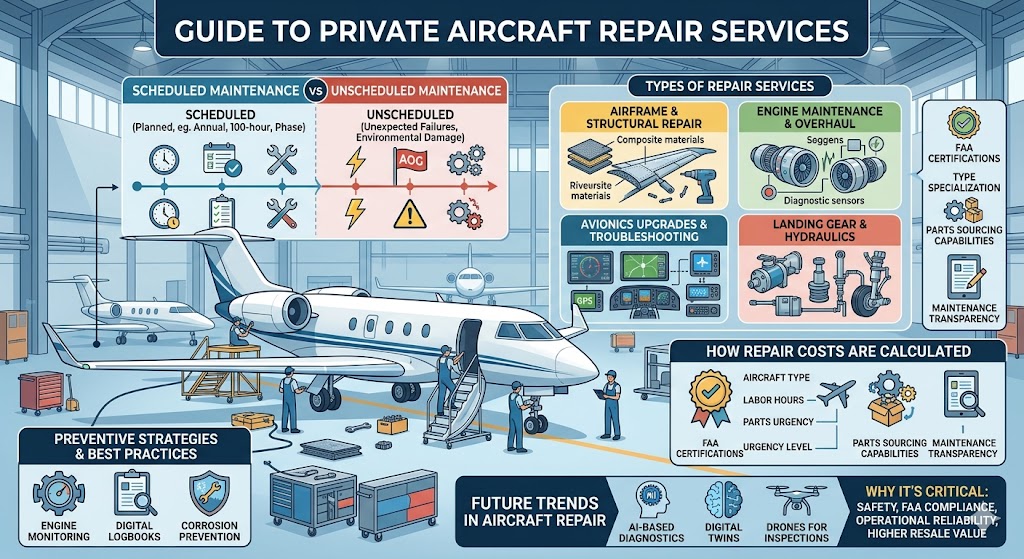
Scheduled vs Unscheduled Maintenance
Aircraft maintenance generally falls into two categories:
Scheduled Maintenance
Planned inspections and maintenance tasks performed at specific intervals.
Unscheduled Maintenance
Unexpected repairs caused by equipment failure, environmental damage, or operational wear.
Repair vs Overhaul vs Preventive Maintenance
| Service Type | Purpose |
|---|---|
| Repair | Fix damaged or malfunctioning systems |
| Overhaul | Complete restoration or rebuilding |
| Inspection | Identify potential issues |
| Preventive Maintenance | Reduce risk of future failures |
Why Aircraft Maintenance Is Critical
Passenger Safety
Aircraft safety depends heavily on proper maintenance. Even minor mechanical issues can create major operational risks if left unresolved.
FAA Compliance
Private aircraft owners must comply with aviation regulations regarding inspections, repairs, and maintenance documentation.
Aircraft Performance
Well-maintained aircraft perform more efficiently and reliably.
Engine Reliability
Regular engine servicing reduces failure risks and improves long-term operational health.
Reduced Downtime
Preventive maintenance minimizes unexpected aircraft grounding.
Higher Resale Value
Aircraft with strong maintenance records generally maintain higher market value.
Long-Term Cost Savings
Ignoring small maintenance issues often results in significantly higher repair costs later.
Types of Aircraft Repair Services
Airframe Repair
Airframe repair focuses on the aircraft’s structural integrity.
Common Airframe Services
- Structural damage repair
- Composite repairs
- Corrosion treatment
- Aluminum skin replacement
- Rivet repair
- Fuselage maintenance
- Wing structure repair
Corrosion Prevention
Corrosion is one of the most common problems affecting private aircraft, especially in humid or coastal environments.
Landing Gear Repair
Landing gear systems require regular inspection because they experience significant stress during takeoff and landing operations.
Engine Maintenance and Repair
Aircraft engines are among the most expensive and critical aircraft components.
Engine Maintenance Includes
- Oil system inspections
- Turbine diagnostics
- Fuel system testing
- Compression checks
- Engine overhauls
- Component replacement
Engine Overhauls
An overhaul involves dismantling, inspecting, repairing, and rebuilding engine components to restore operational reliability.
Engine Monitoring
Modern aircraft increasingly use engine monitoring systems to identify performance irregularities before major failures occur.
Avionics Repair and Upgrades
Modern aircraft depend heavily on advanced avionics systems.
Avionics Services Include
- GPS system repair
- Flight management system upgrades
- Communication equipment servicing
- Radar maintenance
- Cockpit display replacement
- Navigation system calibration
Why Avionics Upgrades Matter
Upgraded avionics improve:
- Flight safety
- Pilot situational awareness
- Navigation accuracy
- Operational efficiency
- Regulatory compliance
Electrical System Repair
Aircraft electrical systems power critical operational components.
Common Electrical Repairs
- Wiring inspections
- Battery replacement
- Circuit testing
- Lighting system repair
- Power distribution troubleshooting
Hydraulic System Repair
Hydraulic systems support:
- Flight controls
- Braking systems
- Landing gear operations
Leaks or pressure failures can create serious operational concerns.
Brake and Landing Gear Services
Landing gear maintenance includes:
- Tire replacement
- Brake inspections
- Hydraulic servicing
- Shock absorber maintenance
- Wheel alignment
Interior Refurbishment Services
Many private aircraft owners upgrade interiors to improve comfort and resale value.
Interior Upgrades Include
- Cabin redesign
- Seating replacement
- Carpet installation
- Lighting upgrades
- Entertainment systems
- Wood veneer restoration
Paint and Exterior Repair
Exterior aircraft repair protects the airframe and improves visual appearance.
Exterior Services Include
- Paint correction
- Surface protection
- Dent removal
- Decal replacement
- Exterior refinishing
Scheduled vs Unscheduled Aircraft Maintenance
| Feature | Scheduled Maintenance | Unscheduled Maintenance |
|---|---|---|
| Timing | Planned intervals | Unexpected |
| Cost Predictability | High | Low |
| Operational Impact | Minimal disruption | Potential grounding |
| FAA Compliance | Routine requirement | Case-dependent |
| Downtime | Controlled | Unpredictable |
| Objective | Prevention | Immediate repair |
Understanding FAA Inspection Requirements
Aircraft inspections are mandatory for maintaining airworthiness.
Annual Inspections
Most private aircraft require annual inspections by certified technicians.
Inspection Areas
- Airframe condition
- Engine systems
- Electrical systems
- Flight controls
- Safety equipment
100-Hour Inspections
Aircraft used for commercial or instructional purposes may require inspections every 100 flight hours.
Progressive Maintenance Programs
Some operators divide inspections into smaller scheduled phases throughout the year.
Pre-Purchase Inspections
A pre-purchase inspection evaluates aircraft condition before acquisition.
Benefits
- Identifies hidden problems
- Reduces purchasing risk
- Helps negotiate pricing
Phase Inspections
Phase inspections divide maintenance into smaller intervals to reduce downtime.
Common Aircraft Problems Private Owners Face
Corrosion Damage
Moisture exposure can damage aircraft structures over time.
Engine Wear
Continuous operation gradually affects engine efficiency and reliability.
Hydraulic Leaks
Hydraulic system leaks can impact braking and control systems.
Electrical Failures
Aging wiring and electrical components can create operational failures.
Tire Wear
Aircraft tires experience intense operational stress.
Avionics Malfunctions
Software and hardware issues can impact navigation and communication systems.
Bird Strike Damage
Bird strikes may damage windshields, engines, and wing structures.
Fuel Contamination
Contaminated fuel can create engine performance problems.
Cabin Pressurization Issues
Pressurization failures can affect passenger comfort and operational safety.
How Aircraft Repair Costs Are Calculated
Aircraft repair pricing depends on several operational and technical factors.
Aircraft Type
Larger aircraft generally require more expensive maintenance.
Labor Hours
Aircraft maintenance labor requires specialized certified technicians.
Replacement Parts
Aircraft parts often involve strict sourcing and certification requirements.
Avionics Complexity
Advanced avionics systems increase maintenance complexity.
Inspection Requirements
Certain inspections require extensive labor and testing.
Emergency Repairs
AOG situations often increase service costs due to urgency.
Aircraft Age
Older aircraft may require more extensive repairs and replacement components.
Cost Consideration Table
| Cost Factor | Impact on Pricing |
|---|---|
| Aircraft size | Higher operational complexity |
| Engine type | Increased overhaul costs |
| Parts availability | Delays and higher pricing |
| Labor requirements | Specialized technician rates |
| Inspection depth | Additional service hours |
| Emergency response | Premium service costs |
Preventive Aircraft Maintenance Best Practices
Regular Inspection Scheduling
Routine inspections help identify problems early.
Engine Monitoring
Continuous monitoring improves engine reliability and reduces major failures.
Proper Aircraft Storage
Hangar storage reduces weather-related damage and corrosion exposure.
Corrosion Prevention
Regular cleaning and protective treatments reduce corrosion risks.
Cleaning Procedures
Proper aircraft cleaning protects paint, structural materials, and cabin systems.
Avionics Software Updates
Updated avionics software improves system reliability and compliance.
Tire and Brake Monitoring
Frequent inspection reduces operational safety risks.
How to Reduce Aircraft Downtime
Aircraft downtime directly impacts operational productivity and revenue.
Predictive Maintenance
Predictive maintenance uses operational data to identify issues before failures occur.
Scheduled Inspections
Proper maintenance planning reduces unexpected operational interruptions.
Quality Repair Providers
Experienced maintenance providers improve repair efficiency and reliability.
Spare Parts Planning
Maintaining parts availability minimizes repair delays.
Maintenance Tracking Software
Digital systems improve maintenance scheduling and documentation accuracy.
Preventive Maintenance Programs
Preventive maintenance reduces long-term operational disruptions.
Choosing the Right Aircraft Repair Company
FAA Certifications
Always verify that the repair provider operates with appropriate certifications.
Experienced Technicians
Aircraft maintenance requires highly trained aviation professionals.
Aircraft Type Expertise
Some providers specialize in specific aircraft categories and manufacturers.
Hangar Capabilities
Modern hangar facilities improve repair efficiency and environmental protection.
Repair Turnaround Time
Efficient repair timelines reduce aircraft downtime.
Transparent Communication
Clear maintenance reporting builds trust and improves operational planning.
Emergency Support Availability
AOG support is critical for minimizing unexpected operational disruptions.
Reputation and Client Trust
Experienced providers with strong reputations often deliver more reliable service quality.
Questions Aircraft Owners Should Ask Before Hiring a Repair Provider
Before selecting an aircraft repair company, owners should ask important operational questions.
Recommended Questions
- Are your technicians FAA certified?
- Which aircraft models do you specialize in?
- What inspection programs do you support?
- How do you handle emergency repairs?
- What is your average repair turnaround time?
- Do you provide maintenance tracking support?
- Can you support avionics upgrades?
- What are your hangar capabilities?
- How do you source aircraft parts?
- What preventive maintenance programs do you recommend?
The Role of Technology in Modern Aircraft Repair
Technology is transforming aviation maintenance operations.
Predictive Maintenance Software
Predictive systems identify operational irregularities before failures occur.
AI-Based Diagnostics
Artificial intelligence improves fault detection and maintenance planning.
Digital Inspection Systems
Digital inspections improve documentation accuracy and operational transparency.
Drone-Assisted Inspections
Drones help technicians inspect difficult aircraft areas more efficiently.
Aircraft Health Monitoring Systems
Modern aircraft increasingly use real-time monitoring systems.
Digital Maintenance Logs
Digital record systems improve compliance and operational tracking.
Future Trends in Aircraft Repair Services
Sustainable Aviation Maintenance
The aviation industry is increasingly focused on environmentally responsible maintenance practices.
Advanced Composite Repair
Composite materials are becoming more common in modern aircraft structures.
Smart Aircraft Diagnostics
Connected aircraft systems will continue improving maintenance efficiency.
AI-Powered Maintenance Tracking
Artificial intelligence will improve scheduling and predictive analysis.
Digital Twin Technology
Digital aircraft replicas may improve maintenance simulation and diagnostics.
Remote Aircraft Diagnostics
Remote monitoring systems will allow faster troubleshooting and operational analysis.
Common Mistakes Aircraft Owners Make
- Delaying required inspections
- Choosing low-cost uncertified repair providers
- Ignoring small maintenance issues
- Poor maintenance documentation
- Skipping preventive maintenance schedules
- Delaying avionics upgrades
- Failing to store aircraft properly
- Overlooking corrosion prevention
- Ignoring engine monitoring data
- Focusing only on short-term cost savings
Frequently Asked Questions
1. How often should private aircraft undergo maintenance?
Maintenance schedules vary based on aircraft type, usage, manufacturer recommendations, and regulatory requirements. Annual inspections are typically mandatory for most private aircraft.
2. What is included in an annual inspection?
Annual inspections generally include airframe evaluation, engine checks, avionics inspection, landing gear testing, and verification of operational safety systems.
3. How expensive is aircraft repair?
Repair costs vary significantly depending on aircraft type, repair complexity, labor requirements, and replacement parts availability.
4. Can preventive maintenance reduce operational costs?
Yes. Preventive maintenance helps identify issues early, reducing expensive emergency repairs and minimizing operational downtime.
5. What FAA certifications matter most for repair providers?
FAA-certified repair stations and certified aviation technicians are critical for ensuring regulatory compliance and maintenance quality.
6. How long do aircraft repairs usually take?
Repair timelines depend on the maintenance scope, parts availability, and aircraft complexity. Minor repairs may take days, while major structural repairs can require weeks.
7. What causes the most aircraft downtime?
Unexpected mechanical failures, parts shortages, engine problems, and delayed inspections are among the most common causes of downtime.
8. Are avionics upgrades worth the investment?
Modern avionics improve navigation, safety, operational efficiency, and aircraft resale value, making upgrades beneficial for many owners.
9. How can owners improve aircraft lifespan?
Routine inspections, preventive maintenance, proper storage, and timely repairs significantly extend aircraft operational life.
10. What should owners check before purchasing a used aircraft?
Buyers should review maintenance records, inspection history, engine hours, avionics condition, and overall aircraft structural integrity.
Conclusion
Aircraft ownership requires more than operational planning and luxury travel convenience. Proper maintenance and repair services are essential for ensuring passenger safety, regulatory compliance, aircraft reliability, and long-term asset value. From preventive inspections and engine maintenance to avionics upgrades and structural repairs, every maintenance decision directly affects aircraft performance and operational efficiency. Working with certified and experienced aircraft repair providers helps reduce downtime, improve operational reliability, and protect long-term investment value. As aviation technology continues evolving with predictive maintenance systems, AI diagnostics, and digital maintenance platforms, proactive aircraft maintenance will become even more important for private aircraft owners focused on safety, efficiency, and operational excellence.

