
Introduction
Owning an aircraft is a serious responsibility that goes far beyond flight planning, hangar space, fuel management, and travel convenience. Whether you own a private jet, turboprop, piston aircraft, or small business aircraft, regular maintenance is essential for keeping the aircraft safe, compliant, reliable, and ready for operation. A well-maintained aircraft performs better, experiences fewer unexpected failures, and protects the long-term value of your aviation investment.
An aircraft maintenance checklist helps owners, pilots, and aircraft managers stay organized by clearly identifying what needs to be inspected, serviced, documented, and repaired. While certified aviation mechanics and approved maintenance providers must handle many technical inspections and repairs, owners still need to understand the major maintenance areas that affect aircraft safety and airworthiness. This guide explains the essential aircraft maintenance checklist every owner should follow, including pre-flight checks, engine care, avionics, landing gear, fluids, interiors, emergency equipment, scheduled inspections, and preventive maintenance best practices.
Real-World Use Cases
Aircraft maintenance checklists are useful for many types of aircraft owners and operators. They create consistency, reduce missed steps, and support better decision-making before, during, and after maintenance activities.
- Private Aircraft Owners: A checklist helps private owners avoid unexpected repair costs by identifying small issues before they become expensive failures.
- Corporate Jet Operators: Business aviation teams use maintenance checklists to keep executive travel schedules reliable and reduce aircraft downtime.
- Aircraft Management Companies: Management teams rely on checklists to stay inspection-ready and maintain accurate service records.
- Charter Operators: Charter businesses use maintenance routines to maximize aircraft availability and maintain passenger safety.
- Pilots: Pilots benefit from checklist-based inspections because they improve pre-flight confidence and operational awareness.
- Aircraft Sellers: Owners preparing to sell an aircraft can improve resale readiness with complete maintenance documentation and timely repairs.
Evaluation Criteria for Aircraft Owners
Before building or following an aircraft maintenance checklist, owners should evaluate several important factors. Every aircraft has unique operational needs, and maintenance should always align with manufacturer guidance, aviation regulations, and actual aircraft usage.
Key evaluation points include:
- Aircraft Type: Jets, turboprops, helicopters, and piston aircraft have different inspection and servicing needs.
- Usage Frequency: Aircraft flown regularly may require more frequent checks than aircraft used occasionally.
- FAA or Aviation Authority Compliance: Maintenance must follow applicable regulatory requirements.
- Manufacturer Recommendations: OEM maintenance manuals provide critical service intervals and inspection procedures.
- Engine Hours and Flight Cycles: Engine usage directly affects overhaul planning and component inspections.
- Airframe Condition: Structural health, corrosion, and surface damage must be monitored consistently.
- Avionics Reliability: Communication, navigation, and cockpit systems must remain accurate and functional.
- Landing Gear and Tire Condition: Takeoff and landing stress makes these areas especially important.
- Maintenance Documentation: Accurate records support compliance, resale value, and warranty claims.
- Repair Provider Qualification: Certified technicians and trusted aviation repair companies are essential for safe maintenance.
Best for
This checklist is best for private aircraft owners, jet owners, turboprop owners, aircraft managers, and aviation operators who want safer and more reliable aircraft operations. It is especially useful for owners who want better maintenance planning, stronger documentation, and fewer unexpected repair surprises. It also helps new owners understand which systems require regular attention.
Not Ideal for
This guide is not a replacement for certified aircraft mechanics, official aircraft maintenance manuals, or aviation authority inspection requirements. It should be used as an owner-friendly planning guide, not as a technical repair manual. Any complex repair, inspection, or compliance-related maintenance should be completed by qualified aviation professionals.
Why Aircraft Maintenance Checklists Matter
Aircraft maintenance checklists are important because aviation safety depends on accuracy, consistency, and proper documentation. Missing even a small inspection item can create operational risk, increase repair costs, or lead to unexpected aircraft grounding.
Passenger Safety
The most important reason for aircraft maintenance is safety. Every flight depends on properly functioning engines, avionics, flight controls, landing gear, brakes, and emergency systems. A checklist helps ensure that key systems are reviewed before they create risk.
Aircraft Airworthiness
An aircraft must remain airworthy to operate legally and safely. Regular inspections help confirm that the aircraft meets required safety standards and is suitable for flight.
Regulatory Compliance
Aircraft owners must follow aviation regulations related to inspections, repairs, maintenance records, and airworthiness directives. A checklist helps owners track required tasks and avoid compliance gaps.
Reduced Downtime
Unexpected repairs can ground an aircraft and disrupt travel plans. Preventive maintenance reduces the chances of surprise failures and keeps the aircraft available when needed.
Lower Long-Term Repair Costs
Small issues often become expensive repairs when ignored. Regular checks help owners detect problems early, reducing major repair expenses.
Better Flight Planning
Maintenance planning helps owners avoid last-minute disruptions. When inspections and repairs are scheduled properly, flights can be planned with greater confidence.
Higher Aircraft Resale Value
Aircraft with complete maintenance records and consistent service history are usually more attractive to buyers. Good maintenance protects long-term asset value.
Complete Aircraft Maintenance Checklist
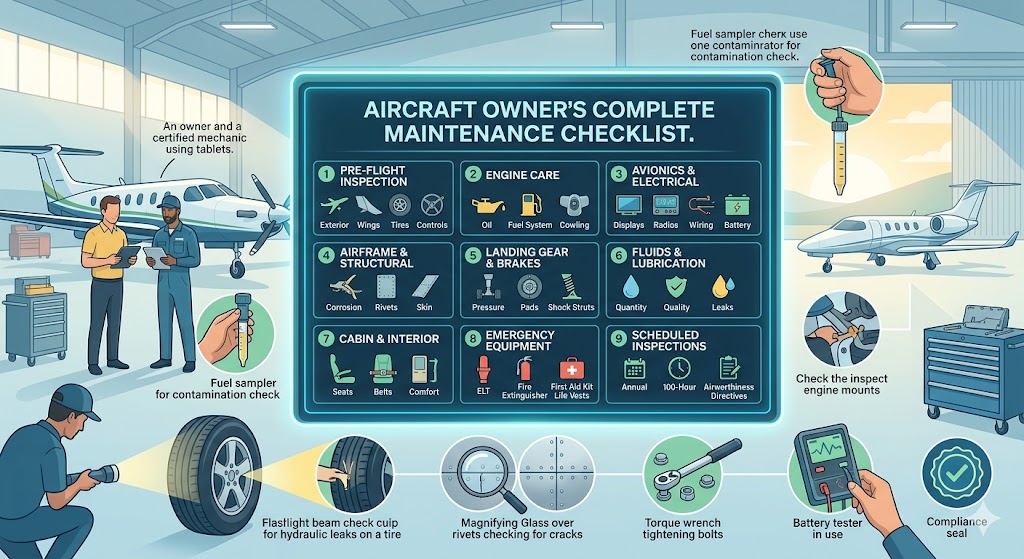
A complete aircraft maintenance checklist should cover both routine owner-level checks and professional maintenance areas. The checklist below is designed to help aircraft owners understand the major systems that require regular attention.
1- Pre-Flight Inspection Checklist
Pre-flight inspections are essential before every flight. These checks help identify visible damage, fluid issues, tire problems, loose components, or missing safety equipment before the aircraft leaves the ground.
Exterior Walkaround
Inspect the aircraft exterior carefully. Look for dents, cracks, loose panels, missing fasteners, fluid stains, and visible signs of damage. A slow and careful walkaround helps detect issues that may not be obvious from inside the cockpit.
Fuselage Inspection
Check the fuselage for cracks, corrosion, scratches, dents, and loose access panels. Pay close attention to areas around doors, windows, antennas, and service panels.
Wing and Control Surface Inspection
Inspect wings, flaps, ailerons, elevators, rudder, and other control surfaces. Make sure control surfaces move properly and are free from obstruction, visible damage, or excessive looseness.
Tire and Brake Condition
Check tires for proper inflation, tread wear, cuts, flat spots, and sidewall damage. Inspect brakes for visible wear, leaks, and signs of overheating.
Fuel Level and Contamination Check
Confirm that the aircraft has sufficient fuel for the planned flight plus required reserves. Check for fuel contamination, water, sediment, or unusual color during sampling.
Oil Level Check
Verify oil level according to manufacturer recommendations. Low oil, dirty oil, or signs of leakage should be addressed before flight.
Lights and Indicators
Check landing lights, navigation lights, beacon lights, strobe lights, taxi lights, and cockpit indicators. Proper lighting is important for visibility and communication with other aircraft.
Windshield and Windows
Inspect windshields and windows for cracks, chips, fogging, or seal damage. Clear visibility is essential for safe operation.
Emergency Equipment
Confirm that required emergency equipment is present, accessible, and in good condition. This may include a fire extinguisher, first aid kit, emergency locator transmitter, oxygen equipment, and life vests if required.
Documentation Review
Verify that required aircraft documents, maintenance logs, registration, airworthiness certificate, and operating documents are available and current.
2- Engine Maintenance Checklist
The engine is one of the most critical and expensive components of any aircraft. Regular engine checks help protect performance, reliability, and safety.
Oil Level and Oil Quality
Check oil level regularly and monitor oil condition. Dirty oil, unusual odor, metal particles, or rapid oil consumption may indicate deeper mechanical issues.
Fuel System Inspection
Inspect fuel lines, fuel caps, filters, tanks, and drains. Fuel leaks, contamination, or poor fuel flow can create serious operational problems.
Engine Mounts
Engine mounts should be inspected for cracks, looseness, wear, and vibration-related damage. Damaged mounts can affect engine alignment and operational stability.
Cowling Inspection
Check engine cowling for secure attachment, cracks, loose fasteners, and heat damage. Proper cowling condition supports engine cooling and protection.
Belts, Hoses, and Seals
Inspect belts, hoses, clamps, and seals for wear, cracking, leaks, or looseness. These small components can cause major problems if they fail during operation.
Exhaust System
Look for exhaust cracks, corrosion, leaks, loose components, and heat damage. Exhaust system issues can affect performance and cabin safety.
Spark Plugs or Turbine Components
Depending on aircraft type, inspect spark plugs, ignition systems, turbine sections, or engine hot-section components as required by maintenance schedules.
Engine Performance Monitoring
Track engine temperature, pressure, vibration, fuel flow, and operating trends. Unusual readings may signal developing problems.
Unusual Vibration or Noise
Any abnormal engine sound, vibration, rough operation, or startup issue should be inspected by a qualified aviation technician.
3- Avionics and Electrical System Checklist
Modern aircraft rely heavily on avionics and electrical systems for communication, navigation, monitoring, and flight safety. These systems should be checked regularly and maintained carefully.
Communication Radios
Test radios for clear transmission and reception. Poor communication can create safety risks, especially in controlled airspace.
Navigation Systems
Verify that navigation systems are accurate and responsive. This includes VOR, GPS, flight management systems, and other navigation equipment.
GPS and Flight Management Systems
Check database updates, route input, screen function, and system accuracy. Outdated or malfunctioning systems may affect navigation reliability.
Transponder
Ensure the transponder functions correctly and displays accurate information. This is important for air traffic control tracking and safety.
Cockpit Displays
Inspect display screens for brightness, readability, warning messages, dead pixels, or intermittent failures.
Battery Health
Check aircraft battery condition, charge level, and age. Weak batteries may cause startup problems and electrical instability.
Wiring Condition
Inspect visible wiring for wear, chafing, corrosion, loose connections, or overheating signs. Electrical faults can be difficult and costly if ignored.
Circuit Breakers
Confirm circuit breakers are properly set and not repeatedly tripping. Frequent breaker issues should be investigated by a technician.
Lighting Systems
Check interior and exterior lighting systems, including panel lights, cabin lights, landing lights, taxi lights, and emergency lighting.
Software or Database Updates
Avionics databases and software should be updated as required. Updated systems improve accuracy, safety, and compliance.
4- Airframe and Structural Checklist
The airframe is the foundation of aircraft safety. Structural inspections help identify corrosion, cracks, stress damage, and surface deterioration.
Corrosion Inspection
Corrosion can weaken aircraft structures over time. Inspect common corrosion-prone areas, especially if the aircraft operates in humid, coastal, or high-moisture environments.
Cracks, Dents, and Surface Damage
Look for visible cracks, dents, scratches, loose panels, or impact marks. Even minor surface damage should be reviewed to ensure structural integrity.
Rivets and Fasteners
Inspect rivets, screws, bolts, and fasteners for looseness, missing parts, or signs of stress.
Composite or Metal Skin Condition
Aircraft skin should be checked for delamination, bubbling, corrosion, deformation, or paint damage.
Door and Window Seals
Check door seals, window seals, and cabin sealing areas for wear, leaks, or cracking. Poor seals can affect cabin comfort and pressurization.
Wing Structure
Inspect wings for surface damage, fuel leaks, fastener issues, and control surface alignment.
Tail Section
Check horizontal stabilizer, vertical stabilizer, rudder, elevator, and related surfaces for damage and proper movement.
Paint and Surface Protection
Paint protects the airframe from environmental exposure. Peeling paint, scratches, and exposed metal should be addressed quickly.
5- Landing Gear and Brake Checklist
Landing gear and brakes experience heavy operational stress. Regular inspection is important for safe takeoff, landing, taxiing, and ground handling.
Tire Pressure
Tire Tread and Sidewall Condition
Inspect tread depth, cuts, flat spots, bulges, and sidewall cracking. Worn or damaged tires should be replaced promptly.
Brake Pad Wear
Brake pads should be inspected for wear and proper function. Weak braking performance can create serious ground safety concerns.
Hydraulic Leaks
Check around landing gear and brake systems for hydraulic leaks. Leaks may reduce braking or landing gear performance.
Shock Struts
Inspect shock struts for proper extension, leaks, and wear. Shock struts absorb landing impact and protect the airframe.
Wheel Alignment
Poor alignment can increase tire wear and affect taxi performance. Alignment should be checked during maintenance.
Landing Gear Doors
If applicable, inspect landing gear doors for proper movement, damage, and secure operation.
Retraction and Extension Function
Retractable landing gear should be tested according to maintenance procedures to confirm proper extension and retraction.
6- Fuel, Fluids, and Lubrication Checklist
Aircraft fluids must be monitored closely because they support engine health, hydraulic function, braking, lubrication, and cooling.
Fuel Quantity
Confirm fuel quantity before every flight. Always account for route, weather, alternate planning, and required reserves.
Fuel Contamination
Check fuel samples for water, debris, sediment, or discoloration. Fuel contamination can seriously affect engine performance.
Hydraulic Fluid
Monitor hydraulic fluid level and condition. Low or contaminated hydraulic fluid can affect landing gear, brakes, and flight controls.
Brake Fluid
Brake fluid should be checked during maintenance inspections. Any leak or performance issue should be addressed quickly.
Coolant if Applicable
Some aircraft systems may require coolant checks. Follow manufacturer guidance for levels and condition.
Lubrication Points
Moving parts should be lubricated according to maintenance schedules. Proper lubrication reduces wear and extends component life.
Leak Inspection
Inspect the aircraft for oil, fuel, hydraulic fluid, and other leaks. Any unexplained fluid mark should be investigated.
Proper Fluid Documentation
Record fluid changes, top-offs, and inspections in maintenance logs where required. Documentation supports compliance and tracking.
7- Cabin and Interior Checklist
Cabin condition affects passenger comfort, safety, and aircraft value. Interior inspections are especially important for private aircraft, corporate jets, and charter aircraft.
Seat Condition
Inspect seats for wear, loose fittings, damaged upholstery, and proper movement.
Seat Belts and Harnesses
Check seat belts and harnesses for fraying, proper locking, and secure attachment.
Cabin Lighting
Verify that cabin lights, reading lights, emergency lights, and control switches work properly.
Emergency Exits
Emergency exits should be clearly marked, accessible, and operational.
Fire Extinguisher
Check that fire extinguishers are present, properly secured, and within inspection requirements.
First Aid Kit
Ensure the first aid kit is stocked, accessible, and suitable for aircraft operations.
Oxygen System if Applicable
Check oxygen masks, pressure levels, regulators, and system readiness where applicable.
Interior Panels and Flooring
Inspect panels, carpets, flooring, and trim for damage, looseness, or wear.
Passenger Comfort Systems
Check entertainment systems, climate controls, cabin management systems, and other comfort features.
8- Emergency and Safety Equipment Checklist
Emergency equipment must be ready before it is needed. Owners should confirm that all required safety equipment is inspected and accessible.
ELT Inspection
The emergency locator transmitter should be inspected according to requirements and tested as allowed by regulations.
Fire Extinguisher Condition
Confirm pressure, expiration status, mounting, and accessibility.
Life Vests or Rafts if Required
For overwater flights, inspect life vests, rafts, and related survival equipment.
Oxygen Masks
Check oxygen mask condition, access, and proper storage.
First Aid Supplies
Review first aid supplies for completeness and expired items.
Flashlights
Ensure flashlights are available and batteries are functional.
Survival Equipment
Depending on flight routes, survival kits may include water, signaling devices, blankets, or emergency tools.
Safety Placards
Check that safety placards are readable, accurate, and properly placed.
Emergency Checklist Availability
Emergency procedures should be available to pilots and crew in an accessible format.
9- Scheduled Maintenance Checklist
Scheduled maintenance is essential for compliance, reliability, and long-term aircraft performance. Owners should track all inspection intervals carefully.
Annual Inspection
Most private aircraft require an annual inspection by qualified professionals. This inspection reviews major systems, structural condition, and overall airworthiness.
100-Hour Inspection if Applicable
Aircraft used for flight instruction or commercial operations may require inspections every 100 flight hours.
Phase Inspections
Some aircraft use phase inspections to divide maintenance into smaller scheduled tasks throughout the year.
Engine Overhaul Planning
Track engine hours and manufacturer-recommended overhaul intervals. Planning ahead helps avoid unexpected grounding.
Avionics Calibration
Navigation, communication, and monitoring systems may require calibration or functional checks.
Landing Gear Service Intervals
Landing gear components should be serviced according to aircraft requirements and operational usage.
Airworthiness Directives
Owners must track and comply with applicable airworthiness directives.
Service Bulletins
Manufacturer service bulletins may recommend inspections, repairs, or upgrades that improve safety and reliability.
Maintenance Log Updates
Every inspection, repair, replacement, and approved maintenance action should be documented accurately.
Aircraft Maintenance Checklist Table
| Maintenance Area | What to Check | Recommended Frequency | Why It Matters |
|---|---|---|---|
| Pre-Flight Inspection | Exterior, fuel, oil, tires, lights, controls | Before every flight | Helps identify visible safety issues before departure |
| Engine System | Oil, fuel system, mounts, exhaust, performance | Regularly and per maintenance schedule | Protects engine reliability and reduces failure risk |
| Avionics | Radios, GPS, transponder, cockpit displays | Before flight and during scheduled service | Supports navigation, communication, and situational awareness |
| Electrical System | Battery, wiring, circuit breakers, lighting | Regularly and during inspections | Prevents power failures and electrical malfunctions |
| Airframe | Corrosion, cracks, dents, fasteners, paint | During walkaround and scheduled inspections | Maintains structural integrity and aircraft value |
| Landing Gear | Tires, brakes, hydraulic leaks, shock struts | Before flight and during maintenance | Ensures safe takeoff, landing, and taxi operations |
| Fluids | Fuel, oil, hydraulic fluid, brake fluid | Before flight and during servicing | Keeps critical systems operating correctly |
| Cabin Interior | Seats, belts, lighting, emergency exits | Regularly | Improves passenger safety and comfort |
| Emergency Equipment | ELT, fire extinguisher, first aid, oxygen | Before trips and scheduled checks | Supports emergency readiness |
| Maintenance Records | Logs, inspections, repairs, directives | After every maintenance event | Supports compliance and resale value |
Common Aircraft Maintenance Mistakes Owners Should Avoid
Aircraft owners can reduce risk and cost by avoiding common maintenance mistakes. Many expensive repair problems begin as small warning signs that were delayed or overlooked.
Delaying Inspections
Postponing required inspections can create compliance issues and increase mechanical risk. Inspections should be scheduled early to avoid last-minute pressure.
Ignoring Small Leaks
Small oil, fuel, or hydraulic leaks should never be ignored. Leaks can indicate worn seals, damaged lines, or developing system failures.
Poor Maintenance Documentation
Incomplete records can reduce aircraft value and create compliance problems. Every inspection and repair should be properly documented.
Using Uncertified Repair Providers
Aircraft maintenance should be handled by qualified aviation professionals. Choosing an uncertified or inexperienced provider can create serious safety and compliance risks.
Skipping Corrosion Checks
Corrosion can spread quietly and weaken aircraft structures. Regular corrosion inspections are especially important in humid or coastal environments.
Overlooking Tire and Brake Wear
Tires and brakes are critical for safe ground operations. Excessive wear can create landing and taxiing hazards.
Not Updating Avionics
Outdated avionics may reduce navigation accuracy, efficiency, and compliance readiness. Updates should be planned when needed.
Ignoring Engine Performance Data
Engine trend changes can reveal early signs of trouble. Owners should monitor unusual temperature, pressure, vibration, or fuel flow patterns.
Poor Aircraft Storage
Outdoor exposure can increase corrosion, paint damage, and system wear. Proper hangar storage helps protect the aircraft.
Choosing Cost Over Safety
Low-cost maintenance may seem attractive, but poor-quality repair decisions can lead to higher long-term costs and safety concerns.
How to Choose the Right Aircraft Maintenance Provider
Choosing the right maintenance provider is one of the most important decisions an aircraft owner can make. A reliable provider improves safety, reduces downtime, and supports long-term aircraft value.
Certified Technicians
Work with technicians who have the proper aviation qualifications and experience. Certification and training are essential for aircraft maintenance quality.
Aviation Repair Experience
Aircraft repair requires specialized knowledge. Choose providers with a strong history in aviation maintenance and repair.
Aircraft Model Expertise
Not all maintenance providers specialize in every aircraft type. Select a provider familiar with your aircraft model, systems, and manufacturer requirements.
Transparent Inspection Reports
A good provider should explain findings clearly, provide detailed inspection reports, and help owners understand repair priorities.
Hangar Facilities
Proper hangar facilities protect aircraft during inspections, repairs, and storage. They also support better working conditions for technicians.
Parts Sourcing Capability
Aircraft parts must meet strict quality and documentation standards. Reliable sourcing reduces delays and supports compliance.
Emergency Repair Support
Aircraft-on-ground situations can disrupt travel plans. Providers with emergency support can reduce downtime.
Avionics Service Capability
Avionics expertise is increasingly important as aircraft systems become more digital and connected.
Strong Reputation
Look for providers with proven reliability, professional communication, and trusted service history.
Clear Communication
Owners should receive timely updates, repair explanations, cost estimates, and maintenance recommendations.
Preventive Maintenance Tips for Aircraft Owners
Preventive maintenance is one of the best ways to protect safety, reduce downtime, and control long-term ownership costs.
- Keep Digital and Physical Maintenance Logs: Strong documentation makes inspections, resale, and compliance easier.
- Schedule Inspections Early: Avoid waiting until the last moment, especially before major trips.
- Store Aircraft in a Proper Hangar: Hangar storage reduces weather exposure, corrosion, and paint damage.
- Monitor Engine Performance: Track engine data and respond quickly to unusual trends.
- Clean Aircraft Regularly: Cleaning helps protect paint, windows, sensors, and structural surfaces.
- Address Minor Issues Quickly: Small problems often become costly repairs when delayed.
- Review Manufacturer Recommendations: Follow service instructions and maintenance schedules carefully.
- Work with Certified Aviation Professionals: Professional maintenance protects safety and compliance.
- Plan Parts in Advance: For older or specialized aircraft, parts availability can affect downtime.
- Review Maintenance Logs Before Every Major Trip: This helps confirm inspection status and service readiness.
Frequently Asked Questions
1. How often should aircraft maintenance be performed?
Aircraft maintenance frequency depends on aircraft type, usage, manufacturer guidance, and aviation authority requirements. Pre-flight checks should happen before every flight, while deeper inspections follow scheduled intervals. Owners should work with certified professionals to build a proper maintenance calendar.
2. What should be checked before every flight?
Before every flight, owners or pilots should check the exterior, fuel, oil, tires, brakes, control surfaces, lights, avionics, and required documents. Emergency equipment should also be confirmed. Any unusual sign should be reviewed before departure.
3. Why is preventive aircraft maintenance important?
Preventive maintenance helps identify small problems before they become costly failures. It reduces downtime, improves safety, and supports regulatory compliance. For private aircraft owners, it also protects long-term aircraft value.
4. Can aircraft owners perform maintenance themselves?
Some basic owner-permitted tasks may be allowed depending on regulations and aircraft type, but technical repairs must be handled by qualified aviation professionals. Owners should never attempt complex aircraft repairs without proper approval, training, and documentation.
5. What is included in an annual aircraft inspection?
An annual inspection usually reviews the airframe, engine, avionics, landing gear, flight controls, safety equipment, and maintenance records. The goal is to confirm that the aircraft remains airworthy and safe for operation.
6. How can owners reduce aircraft repair costs?
Owners can reduce repair costs by following preventive maintenance schedules, storing the aircraft properly, monitoring engine data, addressing issues early, and keeping accurate records. Choosing a qualified maintenance provider also helps avoid repeat repairs.
7. Why are maintenance records important?
Maintenance records prove that inspections, repairs, replacements, and required service tasks were completed properly. They support compliance, improve resale value, and help technicians understand aircraft history during troubleshooting.
8. What are signs an aircraft needs immediate repair?
Warning signs include fluid leaks, unusual engine noise, abnormal vibration, avionics failures, brake issues, warning lights, fuel contamination, or visible structural damage. Any safety-related concern should be inspected before the next flight.
9. How does proper maintenance affect resale value?
A well-maintained aircraft with complete records is more attractive to buyers because it shows responsible ownership and lower risk. Poor maintenance history can reduce buyer confidence and lower market value.
10. How do I choose a reliable aircraft repair provider?
Choose a provider with certified technicians, aircraft model experience, transparent reporting, strong communication, proper facilities, and emergency support. Owners should also evaluate reputation, parts sourcing ability, and avionics expertise.
Conclusion
An aircraft maintenance checklist is one of the most valuable tools every aircraft owner can use to protect safety, compliance, reliability, and long-term asset value. From pre-flight inspections and engine monitoring to avionics checks, landing gear maintenance, emergency equipment review, and scheduled inspections, every item plays an important role in safe aircraft ownership. While owners should understand the checklist and monitor aircraft condition regularly, certified aviation professionals should handle technical repairs, inspections, and compliance-related maintenance. By staying proactive, keeping accurate records, and working with experienced aircraft repair experts, private aircraft owners can reduce downtime, control repair costs, and keep their aircraft ready for safe and dependable operation.

