
Introduction
General aviation maintenance is one of the most important parts of safe and reliable aircraft ownership. Whether an aircraft is used for private flying, flight training, business travel, recreational trips, or shared club operations, regular maintenance helps keep it airworthy, dependable, and ready for flight. A well-maintained aircraft gives pilots more confidence, reduces unexpected failures, and supports long-term aircraft value.
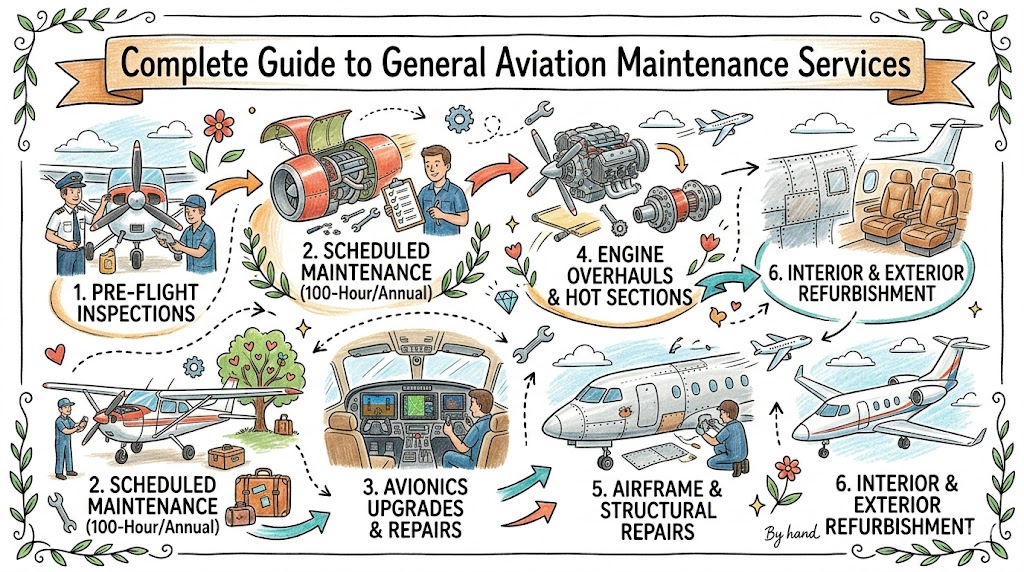
General aviation maintenance services include inspections, repairs, preventive checks, engine care, avionics troubleshooting, airframe review, landing gear service, fuel system checks, brake service, propeller inspection, documentation, and compliance support. These services are not only about fixing problems after they happen. They are also about finding small issues early before they become larger, more expensive, or safety-critical concerns. For aircraft owners, private pilots, flight schools, flying clubs, and fleet operators, choosing the right maintenance provider is essential for safety, cost control, performance, and operational reliability.
Real-world Use Cases
A private aircraft owner may schedule annual maintenance to confirm the aircraft is safe, compliant, and ready for personal travel. A flight school may need frequent inspections because training aircraft are used heavily and must remain reliable for students and instructors. A flying club may manage shared aircraft and need organized maintenance records so all members can fly with confidence.
A business aviation operator may rely on maintenance planning to reduce downtime and keep travel schedules on track. A first-time aircraft buyer may request a pre-buy inspection before purchasing an aircraft to avoid hidden repair costs. A pilot preparing for seasonal flying may need fluid checks, battery inspection, tire review, corrosion checks, and engine evaluation before returning the aircraft to regular use.
Evaluation Criteria for Choosing General Aviation Maintenance Services
Before choosing an aviation maintenance provider, aircraft owners should evaluate:
- Technician experience and qualifications
- Experience with the aircraft make and model
- Inspection and repair capabilities
- Maintenance documentation practices
- Safety culture and quality control
- Turnaround time and scheduling reliability
- Parts sourcing standards
- Communication and transparency
- Preventive maintenance planning
- Cost clarity and service scope
- Compliance and airworthiness support
- Long-term service relationship potential
A good maintenance provider should not only complete repairs but also help aircraft owners understand maintenance needs clearly and plan ahead responsibly.
1- Scheduled Aircraft Inspections
Scheduled inspections are a core part of general aviation maintenance. These inspections help confirm that the aircraft is safe, properly maintained, and ready for continued operation.
They may include checks of the airframe, engine, propeller, landing gear, brakes, avionics, fuel system, electrical system, and control surfaces. For example, a private aircraft owner planning regular flying should schedule inspections on time to avoid missed issues and protect airworthiness.
2- Preventive Maintenance
Preventive aircraft maintenance focuses on identifying and correcting small issues before they become serious problems. It helps reduce unexpected failures, repair delays, and costly downtime.
For example, checking tires, fluids, filters, hoses, belts, fasteners, and visible wear can help prevent larger maintenance events later. Preventive maintenance is especially useful for aircraft that fly frequently or sit unused for long periods.
3- Engine Maintenance
The engine is one of the most important and expensive systems in an aircraft. Engine maintenance may include oil changes, compression checks, spark plug inspection, fuel system review, cooling system checks, and monitoring for leaks or unusual wear.
For example, if a pilot notices rough engine operation or unusual temperatures, a maintenance provider should inspect the engine promptly. Proper engine care supports reliability, performance, and flight safety.
4- Airframe Inspection and Repair
The airframe includes the aircraft’s structure, wings, fuselage, control surfaces, doors, panels, and related components. Airframe inspection helps detect cracks, corrosion, loose hardware, structural wear, and damage.
For example, an aircraft stored outdoors may need careful corrosion inspection. Small structural problems should be addressed early because they can affect safety, performance, and long-term aircraft value.
5- Avionics Checks and Troubleshooting
Avionics systems support communication, navigation, monitoring, and situational awareness. Avionics checks may include radios, transponders, GPS units, displays, antennas, wiring, and instrument systems.
For example, if a pilot experiences radio issues or inconsistent instrument readings, avionics troubleshooting can identify the source of the problem. Reliable avionics help pilots communicate clearly and operate safely.
6- Landing Gear Inspection
Landing gear systems experience stress during every takeoff, landing, taxi, and ground operation. Inspection may include tires, struts, wheels, bearings, alignment, attachment points, and hydraulic or mechanical components.
For example, a training aircraft used for repeated landings needs regular landing gear checks. Proper landing gear maintenance reduces the risk of ground handling issues and landing-related failures.
7- Brake System Service
Aircraft brakes are essential for safe taxiing, landing rollout, and ground control. Brake system service may include checking brake pads, discs, hydraulic lines, fluid levels, leaks, and pedal response.
For example, if a pilot notices reduced braking performance or uneven braking, the system should be inspected immediately. Brake problems can affect safety during landing and airport ground operations.
8- Electrical System Maintenance
Electrical systems power lights, avionics, instruments, starters, charging systems, and other aircraft components. Maintenance may involve checking batteries, alternators, wiring, switches, circuit protection, and grounding.
For example, an aircraft that struggles to start or shows electrical faults during flight preparation may need battery or charging system inspection. Electrical reliability is important for safe and predictable aircraft operation.
9- Fuel System Inspection
Fuel system issues can directly affect engine performance and flight safety. Fuel system inspection may include checking tanks, fuel lines, vents, filters, pumps, selectors, drains, and signs of contamination.
For example, water or debris in fuel can create serious engine problems. Regular fuel system checks help protect engine reliability and reduce the risk of power interruptions.
10- Oil Changes and Fluid Checks
Oil changes and fluid checks are basic but essential maintenance tasks. They help protect engine health, reveal signs of wear, and support proper system operation.
For example, oil analysis or inspection during an oil change may reveal metal particles, contamination, or early signs of engine wear. Fluids should be checked regularly to ensure the aircraft is operating within safe limits.
11- Propeller Inspection and Maintenance
The propeller plays a major role in aircraft performance. Propeller inspection may include checking blade condition, nicks, cracks, erosion, balance, hub condition, and mounting hardware.
For example, a small nick on a propeller blade may seem minor but can worsen over time if ignored. Proper propeller maintenance supports smoother operation, better performance, and reduced vibration.
12- Aircraft Cleaning and Corrosion Prevention
Aircraft cleaning is not only about appearance. Clean aircraft are easier to inspect, and regular cleaning helps prevent corrosion, contamination, and surface damage.
For example, aircraft exposed to moisture, salt air, dust, or outdoor storage may need more frequent cleaning and corrosion prevention. Protecting the aircraft’s exterior and internal structures helps preserve long-term value.
13- Maintenance Documentation and Logbooks
Aircraft maintenance records are essential for safety, compliance, ownership history, and resale value. Every inspection, repair, part replacement, service action, and maintenance finding should be documented clearly.
For example, a future buyer will review logbooks to understand how the aircraft was maintained. Complete records create confidence, while missing records can reduce trust and aircraft value.
14- Compliance and Airworthiness Support
Maintenance providers help aircraft owners stay aligned with inspection requirements, airworthiness expectations, and service recommendations. Compliance support helps ensure the aircraft remains legal and safe to operate.
For example, if an inspection reveals a required repair or replacement, the maintenance provider should explain the issue clearly and document the corrective action. Airworthiness depends on both proper maintenance and accurate records.
15- Pre-Purchase or Pre-Buy Inspections
A pre-buy inspection helps aircraft buyers understand the real condition of an aircraft before purchase. It can reveal hidden maintenance needs, documentation gaps, corrosion, engine concerns, avionics issues, or expensive future repairs.
For example, a first-time aircraft buyer may find an aircraft that looks clean but has incomplete records or upcoming maintenance needs. A pre-buy inspection helps avoid costly surprises and supports a smarter purchase decision.
Benefits of Professional General Aviation Maintenance Services
Professional aircraft maintenance services help aircraft owners:
- Maintain airworthiness
- Improve flight safety
- Reduce unexpected failures
- Protect aircraft value
- Improve aircraft performance
- Control long-term costs
- Keep better maintenance records
- Reduce downtime
- Improve pilot confidence
- Support better ownership planning
Maintenance is an investment in safety, reliability, and long-term aircraft health.
Proactive vs Reactive Aircraft Maintenance
| Factor | Proactive Maintenance | Reactive Maintenance |
|---|---|---|
| Safety Confidence | Issues are found early | Problems may appear unexpectedly |
| Downtime Control | Maintenance is planned | Downtime can be sudden |
| Repair Cost | Costs are easier to manage | Repairs may become expensive |
| Aircraft Reliability | More predictable operation | Higher risk of failures |
| Documentation Quality | Records stay organized | Records may become rushed |
| Compliance Readiness | Easier to maintain | More risk of missed items |
| Long-Term Aircraft Value | Better protected | May decline due to neglect |
Proactive maintenance is usually more cost-effective and safer than waiting for problems to appear.
Practical Tips for Choosing a General Aviation Maintenance Provider
Verify Technician Experience
Choose a provider with experience working on your aircraft type. Aircraft systems vary, and model-specific knowledge can improve inspection accuracy and repair quality.
Review Maintenance Records Carefully
Good maintenance providers value accurate records. Ask how they document work, track parts, and explain completed maintenance.
Plan Maintenance Costs Early
Aircraft maintenance costs should be part of ownership planning. Budget for inspections, repairs, parts, fluids, labor, and unexpected findings.
Avoid Deferred Maintenance
Delaying maintenance can turn small issues into larger problems. Deferred maintenance may increase costs, reduce reliability, and affect safety confidence.
Schedule Preventive Inspections
Do not wait until the aircraft shows obvious problems. Preventive inspections help detect wear, leaks, corrosion, and system issues early.
Reduce Unexpected Downtime
Plan maintenance around flying schedules when possible. Flight schools, flying clubs, and business aviation operators should coordinate maintenance before busy flying periods.
Compare More Than Price
Cheaper maintenance can become costly if it leads to poor workmanship, incomplete inspections, weak documentation, or repeat repairs. Focus on safety, quality, and reliability.
Communicate Clearly with the Maintenance Team
Share recent flight concerns, unusual sounds, warning signs, operating patterns, and aircraft history. Good communication helps technicians diagnose issues more accurately.
Why Cheaper Maintenance Can Become Costly Later
Low-cost maintenance may seem attractive at first, but aircraft maintenance should never be judged by price alone. Poor inspections, incomplete repairs, undocumented work, or low-quality parts can lead to higher costs later.
For example, ignoring early corrosion or delaying engine troubleshooting may result in expensive repairs and unexpected downtime. Quality maintenance helps owners avoid repeat issues and protects long-term aircraft value.
Common General Aviation Maintenance Mistakes to Avoid
Aircraft owners and operators should avoid:
- Skipping scheduled inspections
- Ignoring small leaks or unusual sounds
- Delaying engine checks
- Keeping incomplete logbooks
- Choosing providers only by price
- Not reviewing aircraft records
- Failing to plan maintenance budgets
- Overlooking corrosion prevention
- Not checking battery and electrical systems
- Waiting for problems instead of preventing them
Avoiding these mistakes helps support safer and more reliable aircraft ownership.
How Maintenance Records Protect Aircraft Value
Maintenance records are one of the most important parts of aircraft ownership. They show how the aircraft has been cared for, what repairs were completed, and whether inspections were performed properly.
Complete records help future buyers, maintenance providers, and owners understand the aircraft’s condition. Poor or missing records can reduce confidence and may affect resale value. Good documentation is not just paperwork; it is part of responsible aircraft ownership.
FAQs
1- What does general aviation maintenance include?
General aviation maintenance includes inspections, preventive maintenance, engine care, airframe repair, avionics troubleshooting, landing gear service, brake checks, fuel system inspection, propeller maintenance, documentation, and airworthiness support.
2- How often should aircraft inspections be scheduled?
Inspection schedules depend on aircraft type, usage, operating environment, and regulatory requirements. Aircraft owners should follow maintenance guidance and work with a qualified provider to plan inspections properly.
3- Why is preventive aircraft maintenance important?
Preventive maintenance helps find small problems before they become major issues. It improves safety, reduces unexpected downtime, protects aircraft value, and helps owners manage long-term costs.
4- What does engine maintenance involve?
Engine maintenance may include oil changes, compression checks, spark plug inspection, leak checks, fuel system review, temperature monitoring, and troubleshooting unusual engine behavior.
5- Why is avionics troubleshooting important?
Avionics support communication, navigation, and flight awareness. Troubleshooting helps identify faulty wiring, display issues, radio problems, antenna concerns, or instrument errors before they affect flight operations.
6- Why are aircraft maintenance records important?
Maintenance records show what work was completed, when it was done, what parts were used, and who performed the service. Good records support safety, compliance, resale value, and future maintenance planning.
7- What does airworthiness mean?
Airworthiness means the aircraft is safe and suitable for flight according to required standards and maintenance condition. Proper inspections, repairs, and documentation all support airworthiness.
8- What is a pre-buy inspection?
A pre-buy inspection is an evaluation completed before purchasing an aircraft. It helps identify hidden maintenance problems, documentation gaps, engine concerns, corrosion, and future repair costs.
9- How should aircraft owners plan maintenance costs?
Owners should budget for inspections, labor, parts, fluids, repairs, storage-related issues, and unexpected findings. Planning ahead helps reduce financial surprises and supports safer ownership.
10- How do I choose the right maintenance provider?
Choose a provider with aircraft-specific experience, qualified technicians, strong documentation practices, clear communication, reliable scheduling, fair pricing, and a safety-focused approach.
Conclusion
General aviation maintenance services are essential for safe, reliable, and cost-effective aircraft ownership. From scheduled inspections and engine care to avionics troubleshooting, fuel system checks, propeller maintenance, corrosion prevention, and logbook documentation, every maintenance activity supports airworthiness and operating confidence. Aircraft owners, pilots, flight schools, flying clubs, and fleet managers should choose maintenance providers carefully and focus on safety, quality, communication, and long-term planning. Proactive maintenance helps reduce downtime, control costs, protect aircraft value, and prevent small issues from becoming serious problems. With the right maintenance strategy, general aviation aircraft can remain dependable, efficient, and ready for every flight.

