
Introduction
Owning an aircraft is an exciting milestone that brings freedom, convenience, and new opportunities for personal or business travel. However, aircraft ownership also comes with significant responsibilities. One of the most important responsibilities is ensuring that your aircraft remains safe, reliable, and compliant through regular inspections.
For first-time aircraft owners, understanding the inspection process can feel overwhelming. From pre-flight checks and maintenance records to annual inspections and preventive maintenance, there are many aspects to monitor. The good news is that developing good inspection habits early can help prevent costly repairs, improve safety, extend the life of your aircraft, and provide greater confidence every time you fly.
This guide explains the essential aircraft inspection tips every first-time aircraft owner should know, helping you better understand your aircraft and protect your investment.
Why Aircraft Inspections Matter
Aircraft inspections are much more than a regulatory requirement. They are a critical part of maintaining the aircraft’s airworthiness and ensuring safe operation.
Regular inspections help:
- Improve passenger and pilot safety
- Detect wear before it becomes a major issue
- Reduce unexpected maintenance costs
- Increase aircraft reliability
- Maintain regulatory compliance
- Improve aircraft performance
- Protect long-term resale value
- Extend the service life of the aircraft
A proactive approach to inspections minimizes risks and helps keep your aircraft in excellent condition.
Types of Aircraft Inspections Every Owner Should Know
Different inspections serve different purposes throughout an aircraft’s operational life.
Pre-Flight Inspection
Conducted before every flight, this inspection focuses on identifying obvious issues that could affect safety.
Typical checks include:
- Fuel quantity
- Oil levels
- Tires
- Flight controls
- Lights
- Exterior damage
- Propeller condition
- Fluid leaks
Post-Flight Inspection
After landing, inspect the aircraft for:
- New damage
- Oil leaks
- Tire wear
- Bird strikes
- Loose panels
- Fuel contamination
- Engine abnormalities
A brief inspection after each flight helps identify issues before the next journey.
50-Hour Inspection
Aircraft used frequently may require inspections approximately every 50 flight hours.
These inspections often include:
- Oil changes
- Filter replacement
- Engine checks
- Lubrication
- Basic system inspections
100-Hour Inspection
Aircraft used for commercial operations or flight instruction often require more comprehensive inspections every 100 flight hours.
Technicians examine:
- Structural components
- Engine systems
- Flight controls
- Landing gear
- Electrical systems
- Fuel systems
Annual Inspection
Every privately owned aircraft typically requires an annual inspection performed by qualified maintenance personnel.
This is a detailed examination covering:
- Entire airframe
- Engine
- Propeller
- Instruments
- Electrical systems
- Structural integrity
- Documentation compliance
Progressive Inspection
Some aircraft follow a progressive inspection schedule, dividing maintenance into smaller inspections completed throughout the year.
This approach reduces downtime while maintaining continuous oversight.
Establish a Consistent Pre-Flight Inspection Routine
Never rush your pre-flight inspection.
A consistent routine helps ensure nothing is overlooked.
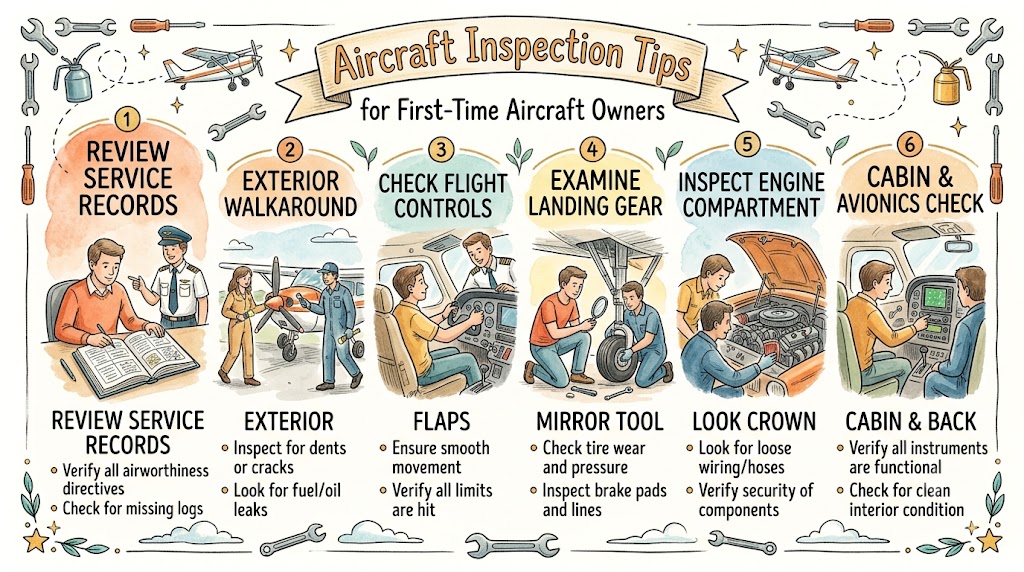
Walk Around the Aircraft
Inspect:
- Wings
- Fuselage
- Tail
- Nose
- Landing gear
- Control surfaces
Look for dents, cracks, missing fasteners, or signs of impact damage.
Check Fuel Quality
Verify:
- Fuel quantity
- Fuel caps
- Water contamination
- Fuel color
- Fuel odor
Contaminated fuel remains one of the most preventable causes of engine problems.
Inspect Tires
Look for:
- Proper inflation
- Uneven wear
- Cuts
- Cracks
- Foreign objects
Healthy tires contribute to safer takeoffs and landings.
Examine Flight Controls
Ensure:
- Smooth movement
- No unusual resistance
- Secure hinges
- Proper alignment
- No visible damage
Inspect the Propeller
Look carefully for:
- Nicks
- Cracks
- Corrosion
- Loose fasteners
- Oil residue
Even minor propeller damage should be evaluated promptly.
Verify Oil Levels
Always confirm:
- Correct oil level
- No contamination
- No leaks
- Proper cap security
Proper lubrication protects engine performance.
Review Aircraft Documentation
Documentation is just as important as the physical inspection.
Keep organized records of:
- Airworthiness certificate
- Aircraft registration
- Maintenance logs
- Inspection records
- Engine logbooks
- Propeller logbooks
- Service bulletins
- Equipment lists
- Weight and balance records
Accurate documentation supports maintenance planning and future resale.
Pay Close Attention to the Engine
The engine is one of the most valuable components of your aircraft.
Inspect for:
Oil Leaks
Small leaks may indicate developing mechanical issues.
Fuel Leaks
Never ignore the smell or presence of fuel around the engine compartment.
Belts and Hoses
Look for:
- Cracks
- Wear
- Loose fittings
- Deterioration
Wiring
Check for:
- Loose connections
- Damaged insulation
- Corrosion
- Secure routing
Engine Mounts
Ensure there are no visible cracks, loose hardware, or excessive vibration indicators.
Examine the Aircraft Exterior
A thorough exterior inspection protects structural integrity.
Check:
- Wings
- Tail surfaces
- Control surfaces
- Rivets
- Paint
- Inspection panels
- Windows
- Doors
- Antennas
- Static ports
- Pitot tube
Look for signs of corrosion, impact damage, or loose hardware.
Inspect the Landing Gear
Landing gear experiences significant stress during every flight.
Check:
- Tires
- Brake pads
- Hydraulic components
- Shock absorbers
- Struts
- Wheel assemblies
Proper landing gear maintenance improves safety during takeoff and landing.
Examine the Aircraft Interior
The cabin and cockpit deserve equal attention.
Inspect:
Seats
Ensure secure mounting and proper adjustment.
Seat Belts
Check for:
- Wear
- Fraying
- Proper locking
Cockpit Instruments
Verify:
- Display functionality
- Proper calibration
- Warning lights
- Indicator accuracy
Flight Controls
Move controls through their full range to confirm smooth operation.
Emergency Equipment
Verify that required safety equipment is present and accessible.
Examples include:
- Fire extinguisher
- First aid kit
- Emergency locator equipment
- Survival gear (where applicable)
Watch for Corrosion
Corrosion is one of the most common long-term threats to aircraft.
Pay special attention to:
- Landing gear
- Wheel wells
- Wing roots
- Battery compartment
- Engine compartment
- Fasteners
- Interior structural areas
Aircraft stored near coastal environments require even more frequent corrosion inspections.
Monitor Weather-Related Damage
Aircraft exposed to outdoor conditions should be inspected for:
- Hail damage
- UV deterioration
- Water intrusion
- Wind damage
- Ice accumulation effects
- Moisture buildup
Using quality covers and proper storage reduces weather-related wear.
Know When to Call Certified Maintenance Professionals
Some issues require immediate professional attention.
Contact qualified maintenance personnel if you notice:
- Engine vibration
- Fluid leaks
- Unusual noises
- Electrical failures
- Avionics malfunctions
- Hard landing damage
- Bird strike damage
- Control system abnormalities
- Structural cracks
Never attempt repairs beyond your approved maintenance authority.
Preventive Maintenance Tips
Good preventive maintenance reduces unexpected repairs.
Helpful practices include:
- Keep the aircraft clean.
- Follow manufacturer maintenance schedules.
- Protect the aircraft from weather.
- Monitor engine operating hours.
- Replace worn components promptly.
- Use approved replacement parts.
- Maintain accurate service records.
- Address small issues before they become major repairs.
Preventive care saves money over the aircraft’s lifetime.
Common Inspection Mistakes First-Time Owners Make
New aircraft owners sometimes overlook important details.
Avoid these common mistakes:
- Skipping pre-flight inspections
- Ignoring minor leaks
- Delaying scheduled maintenance
- Poor documentation
- Overlooking corrosion
- Assuming everything is fine after long periods of storage
- Using non-approved replacement parts
- Ignoring unusual sounds
- Rushing inspections
- Not consulting certified maintenance professionals
Learning from these common mistakes helps improve long-term aircraft ownership.
Benefits of Routine Aircraft Inspections
Consistent inspections provide significant advantages.
Improved Safety
Early detection reduces the likelihood of mechanical failures.
Better Reliability
Properly maintained aircraft experience fewer unexpected problems.
Lower Maintenance Costs
Minor repairs usually cost far less than major component replacements.
Longer Aircraft Life
Routine care protects structural components and major systems.
Increased Resale Value
Well-maintained aircraft with complete inspection records are generally more attractive to future buyers.
Regulatory Compliance
Meeting inspection requirements helps maintain legal airworthiness.
Greater Confidence
Knowing your aircraft has been properly inspected provides peace of mind before every flight.
Aircraft Inspection Checklist
Before Every Flight:
- Check fuel quantity and quality
- Verify oil levels
- Inspect tires
- Examine propeller
- Test flight controls
- Inspect landing gear
- Check lights
- Verify pitot tube and static ports
- Inspect windows and windshield
- Review aircraft documents
After Every Flight:
- Check for leaks
- Inspect tires
- Look for bird strikes
- Examine exterior damage
- Record maintenance concerns
- Secure the aircraft properly
Frequently Asked Questions
1. How often should an aircraft be inspected?
Aircraft inspection schedules depend on regulations, aircraft type, and usage. Every flight should begin with a thorough pre-flight inspection, while annual inspections and other scheduled maintenance must be completed according to applicable maintenance requirements.
2. What happens during an annual inspection?
A qualified maintenance professional performs a comprehensive examination of the aircraft’s airframe, engine, propeller, systems, and documentation to verify continued airworthiness.
3. Can aircraft owners perform inspections themselves?
Owners may perform routine visual checks and certain preventive maintenance tasks permitted by applicable regulations. However, required inspections and major maintenance should always be completed by appropriately qualified maintenance personnel.
4. What should be included in a pre-flight inspection?
A pre-flight inspection should include checks of fuel, oil, tires, landing gear, flight controls, propeller, lights, windows, engine compartment, and overall aircraft condition.
5. How long does an aircraft inspection take?
Routine pre-flight inspections may take 20 to 40 minutes, while annual inspections can take several days depending on the aircraft and any maintenance findings.
6. Why are maintenance records important?
Maintenance records provide evidence of completed inspections, repairs, and compliance with maintenance requirements. They also help preserve aircraft value and simplify future maintenance planning.
7. Why is corrosion dangerous?
Corrosion weakens structural components, damages systems, and may compromise aircraft safety if left untreated. Early detection and prevention are essential.
8. What warning signs should never be ignored?
Fluid leaks, unusual vibrations, strange noises, warning lights, excessive tire wear, corrosion, and changes in engine performance should all be investigated promptly.
9. How can preventive maintenance reduce costs?
Routine inspections identify small issues before they develop into expensive repairs, reducing downtime and extending component life.
10. Why should certified maintenance professionals perform major inspections?
Certified professionals have the training, experience, tools, and knowledge to identify issues accurately, perform repairs correctly, and ensure the aircraft meets applicable safety and maintenance standards.
Conclusion
Owning an aircraft is both a privilege and a responsibility. Regular inspections are the foundation of safe and reliable aircraft ownership, helping first-time owners identify potential problems before they become serious while maintaining compliance and protecting long-term value.
By developing a consistent inspection routine, maintaining accurate records, addressing concerns promptly, and working with qualified maintenance professionals, aircraft owners can significantly improve safety, reduce unexpected repair costs, and extend the operational life of their aircraft. Whether you fly occasionally or frequently, investing time in proper inspections is one of the smartest decisions you can make as a responsible aircraft owner.

