
Introduction
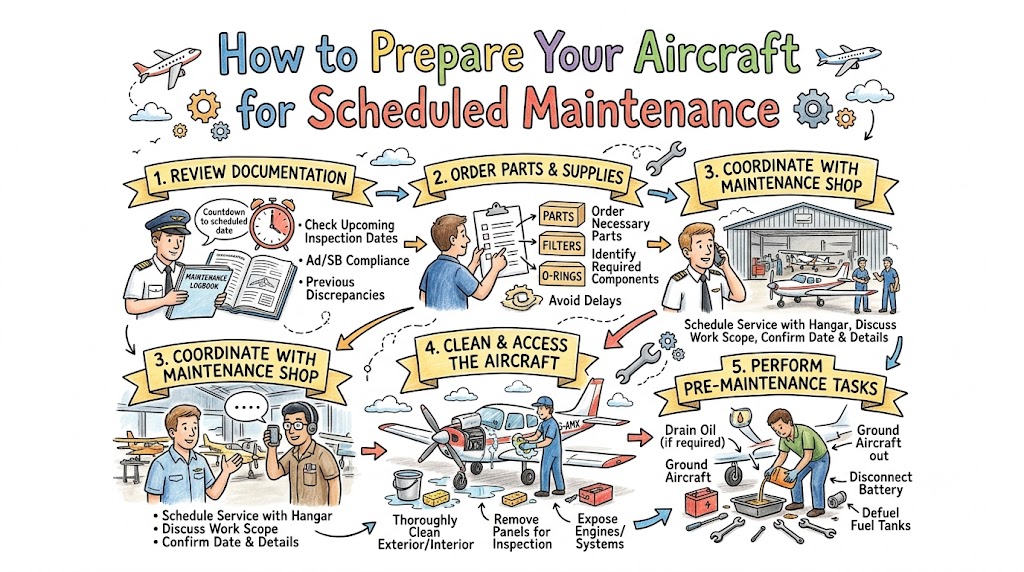
Scheduled aircraft maintenance is one of the most important processes in aviation operations. It ensures that aircraft remain safe, airworthy, and compliant with regulatory standards throughout their operational life. However, maintenance efficiency does not depend only on the technicians or MRO providers—it also depends heavily on how well the aircraft is prepared before maintenance begins.
Proper preparation reduces downtime, improves inspection accuracy, and allows maintenance teams to identify issues faster. When aircraft are well-prepared, maintenance becomes smoother, more predictable, and more cost-effective. On the other hand, poor preparation can lead to delays, missed defects, and increased operational risk.
This guide explains how aircraft owners, pilots, and operators can properly prepare their aircraft for scheduled maintenance to ensure safe and efficient servicing.
Real-world Use Cases
A private aircraft owner preparing for an annual inspection ensures all logbooks, maintenance records, and squawk reports are updated before handing over the aircraft.
A fleet operator scheduling multiple aircraft maintenance cycles coordinates aircraft availability and ensures proper sequencing of maintenance tasks.
A pilot reporting technical issues before maintenance provides accurate defect reports to help engineers identify problems faster.
A maintenance planner coordinating hangar slots ensures aircraft are positioned correctly and ready for inspection.
An MRO technician reviewing aircraft condition reports uses pre-maintenance data to plan tools, manpower, and parts requirements.
A general aviation operator reduces downtime by ensuring aircraft accessibility and documentation readiness.
A corporate jet operator preparing for A-check maintenance ensures systems are properly shut down and documented.
Evaluation Criteria for Aircraft Maintenance Preparation
Before scheduled maintenance begins, operators should evaluate:
- Accuracy of aircraft maintenance logs
- Reported defects and squawk list completeness
- Fuel, oil, and hydraulic system status
- Availability of spare parts and components
- Aircraft positioning and accessibility
- Documentation and compliance readiness
- Engine trend and performance data
- Safety tagging and lockout status
- Coordination with MRO teams
- Environmental and hangar conditions
- Aircraft cleanliness and accessibility
- Regulatory inspection requirements
These factors ensure smooth and efficient maintenance execution.
Pre-Maintenance Inspection Review
A full review of aircraft condition helps identify known issues before maintenance begins.
For example, a pilot may report vibration during flight, which engineers can investigate during scheduled servicing.
Aircraft Logbook and Maintenance Record Verification
Logbooks provide critical historical maintenance information.
For example, missing entries can delay inspection approval or cause compliance issues.
Identification of Reported Defects (Squawks)
All reported issues must be documented before maintenance starts.
For example, a landing gear warning issue must be listed for inspection.
Fuel System Status and Defueling Considerations
Fuel levels and system condition must be checked before maintenance.
For example, partial defueling may be required for certain inspections.
Cleaning and Aircraft Accessibility Preparation
A clean aircraft allows easier inspection and maintenance access.
For example, removing dirt helps technicians detect corrosion or cracks.
Removal of Personal Items and Equipment
Loose items must be cleared before maintenance begins.
For example, cabin baggage can obstruct inspection of interior panels.
Engine Condition Reporting and Trend Review
Engine performance data helps predict maintenance needs.
For example, increasing vibration trends may indicate turbine imbalance.
Hydraulic and Electrical System Status Checks
System status must be known before servicing begins.
For example, hydraulic pressure leaks must be identified early.
Avionics Shutdown and Configuration Preparation
Avionics systems must be safely powered down.
For example, incorrect shutdown procedures may damage sensitive electronics.
Spare Parts Availability and OEM Verification
Required parts should be ready before maintenance begins.
For example, OEM-certified components ensure compliance and safety.
Maintenance Schedule Alignment (A/B/C Checks)
Maintenance must align with scheduled inspection cycles.
For example, A-checks focus on routine inspection, while deeper checks involve structural review.
Coordination with MRO Provider
Clear communication with maintenance teams ensures efficiency.
For example, scheduling work order details helps reduce delays.
Safety Tagging and Lockout Procedures
Aircraft must be safely secured before maintenance.
For example, engines are locked out to prevent accidental startup.
Aircraft Positioning in Hangar or Maintenance Area
Proper positioning improves accessibility.
For example, placing aircraft in a hangar allows better inspection conditions.
Landing Gear, Tire, and Brake Condition Reporting
Landing gear condition must be checked before servicing.
For example, worn brake pads must be flagged for replacement.
Corrosion and Structural Issue Reporting
Early detection of corrosion prevents structural damage.
For example, small metal corrosion spots may require immediate treatment.
Tooling and Ground Support Equipment Readiness
Proper tools must be available before maintenance begins.
For example, missing equipment can delay inspection timelines.
Weather and Environmental Considerations
Environmental conditions affect maintenance quality.
For example, humidity may increase corrosion risks during servicing.
Operator, Pilot, and Engineer Communication
Clear communication ensures smooth maintenance execution.
For example, pilots provide detailed defect reports to engineers.
Regulatory Documentation and Compliance Readiness
All regulatory requirements must be met before inspection.
For example, incomplete documentation can delay aircraft release.
Well-Prepared vs Poorly Prepared Aircraft
| Factor | Well-Prepared Aircraft | Poorly Prepared Aircraft |
|---|---|---|
| Maintenance Speed | Fast | Delayed |
| Inspection Accuracy | High | Low |
| Downtime | Minimal | Extended |
| Cost Efficiency | Optimized | Higher |
| Safety | Strong | Risk-prone |
Preventive vs Reactive Maintenance Preparation
| Factor | Preventive Preparation | Reactive Handling |
| Planning | Structured | Unplanned |
| Safety | High | Variable |
| Cost Control | Better | Higher |
| Efficiency | High | Low |
Operator vs MRO Managed Preparation
| Factor | Operator Managed | MRO Managed |
| Control | High | Shared |
| Coordination | Required | Internal |
| Efficiency | Depends on readiness | Higher |
Complete vs Incomplete Documentation
| Factor | Complete Records | Incomplete Records |
| Compliance | Easy | Difficult |
| Maintenance Speed | Faster | Slower |
| Risk Level | Low | High |
Benefits of Proper Aircraft Maintenance Preparation
Proper preparation helps:
- Reduce aircraft downtime
- Improve inspection accuracy
- Increase maintenance efficiency
- Ensure regulatory compliance
- Lower maintenance costs
- Improve safety outcomes
- Enhance communication
- Reduce operational delays
- Extend aircraft lifespan
- Improve fleet reliability
Practical Tips for Operators
- Maintain updated logbooks
- Report defects clearly
- Prepare aircraft cleaning before maintenance
- Ensure spare parts availability
- Coordinate early with MRO teams
- Follow maintenance schedules strictly
- Ensure aircraft accessibility
Common Mistakes to Avoid
- Missing maintenance records
- Delaying squawk reporting
- Poor communication with engineers
- Not preparing spare parts
- Ignoring aircraft cleanliness
- Incomplete documentation
FAQs
1. Why is aircraft preparation important before maintenance?
It ensures efficient inspections, reduces downtime, and improves safety outcomes.
2. What documents are required?
Maintenance logs, defect reports, and compliance records are essential.
3. What is a squawk report?
It is a list of reported aircraft defects that need maintenance attention.
4. How is downtime reduced?
Through proper planning, documentation, and parts readiness.
5. What role do MRO providers play?
They perform inspection, repair, and overhaul services.
6. What is pre-maintenance inspection?
It is a review of aircraft condition before scheduled servicing begins.
7. Why is communication important?
It ensures accurate defect reporting and smoother maintenance execution.
8. What is aircraft lockout?
It is a safety procedure preventing accidental aircraft operation.
9. How are spare parts managed?
Operators ensure OEM-certified parts are available before maintenance.
10. What is the biggest preparation mistake?
Incomplete documentation and poor coordination with maintenance teams.
Conclusion
Preparing an aircraft for scheduled maintenance is essential for ensuring safety, efficiency, and regulatory compliance. Proper preparation allows maintenance teams to work faster, identify issues more accurately, and reduce unnecessary downtime. From logbook verification to defect reporting and spare parts readiness, every step plays a critical role in successful maintenance execution. A structured preparation process not only improves operational efficiency but also enhances aircraft reliability and long-term performance in aviation operations.

