
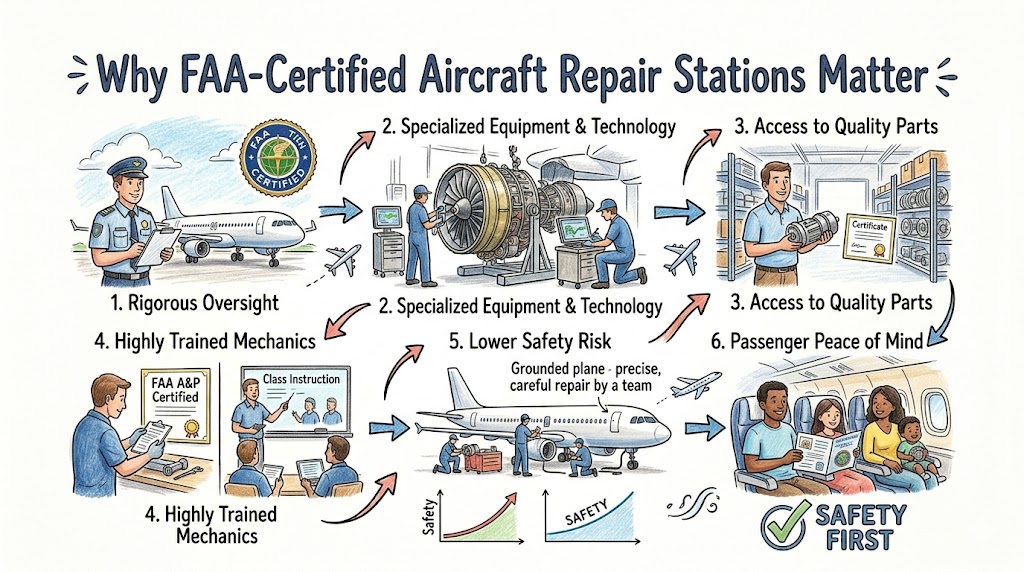
Introduction
Aircraft repair is not just about fixing mechanical issues; it is about protecting safety, maintaining compliance, and preserving the long-term reliability of an aircraft. For aircraft owners, operators, pilots, and fleet managers, choosing the right repair facility can directly affect airworthiness, operating costs, and passenger confidence. This is why an FAA-certified aircraft repair station matters.
An FAA-certified repair station is a maintenance facility authorized to perform specific aircraft repair, inspection, and maintenance work under defined aviation standards. Certification shows that the facility follows approved procedures, uses qualified personnel, maintains proper documentation, and operates under regulatory oversight. For private aircraft owners, business jet operators, charter companies, and flight schools, working with certified repair professionals helps reduce operational risk and ensures that aircraft receive maintenance aligned with aviation safety expectations.
Real-world Use Cases
FAA-certified aircraft repair stations are important in many aviation situations.
A private aircraft owner may need scheduled maintenance, avionics troubleshooting, or structural repair before the next flight. A business jet operator may require fast but compliant repair work to keep executive travel schedules on track. A flight school depends on properly maintained aircraft to protect students, instructors, and training schedules.
Charter operators and fleet managers also rely on certified repair stations to maintain safety, reduce downtime, and keep aircraft inspection records organized. In each case, certification provides confidence that the work is being performed according to professional aviation standards.
Evaluation Criteria for Choosing an Aircraft Repair Station
Before choosing an aircraft repair provider, owners and operators should evaluate:
- FAA certification status
- Technician qualifications
- Experience with the aircraft type
- Inspection and repair capabilities
- Quality control procedures
- Documentation practices
- Safety culture
- Turnaround time
- Parts sourcing standards
- Customer communication
A repair station should not only be capable of completing the work but also able to document it properly and support long-term aircraft reliability.
1- Regulatory Compliance
A major reason FAA-certified repair stations matter is regulatory compliance. Aircraft maintenance is governed by strict safety and operational standards, and certified stations must follow approved procedures for the work they are authorized to perform.
For owners and operators, this means repairs are not handled casually. Certified facilities understand the importance of airworthiness requirements, approved repair methods, and proper documentation. This helps reduce the risk of compliance issues during inspections, audits, or future aircraft transactions.
2- Aircraft Safety
Safety is the foundation of aviation maintenance. Even a small repair mistake can affect aircraft performance, system reliability, or flight safety.
FAA-certified repair stations are expected to follow structured maintenance procedures, inspection standards, and quality control practices. This helps ensure that repairs are completed carefully and that aircraft are returned to service only after appropriate checks have been performed.
3- Qualified Technicians
Aircraft repair requires technical knowledge, hands-on experience, and familiarity with aviation systems. Certified repair stations employ trained personnel who understand aircraft structures, engines, avionics, systems, and inspection requirements.
Qualified technicians help identify problems accurately, perform repairs correctly, and reduce the risk of repeat issues. Their expertise is especially important for business aircraft, complex avionics systems, and aircraft with specialized maintenance needs.
4- Standardized Inspection Procedures
Certified repair stations follow standardized inspection and maintenance processes. This creates consistency in how aircraft are evaluated, repaired, and approved for return to service.
Standardized procedures help prevent missed steps and reduce human error. They also make it easier for aircraft owners and operators to understand what was inspected, what was repaired, and what may require future attention.
5- Proper Maintenance Documentation
Maintenance records are one of the most important parts of aircraft ownership. Every repair, inspection, replacement, or service action should be recorded accurately.
FAA-certified aircraft repair stations understand the importance of proper documentation. Good records support:
- Airworthiness tracking
- Future maintenance planning
- Resale value
- Warranty claims
- Regulatory inspections
- Ownership transparency
Poor or incomplete records can create problems later, even if the repair itself was completed.
6- Approved Maintenance Practices
Aircraft repairs must be performed using appropriate methods, tools, parts, and procedures. Certified repair stations are expected to follow approved maintenance practices within the scope of their authorization.
This matters because aircraft systems are highly specific. A repair method that works for one aircraft may not be suitable for another. Certified stations help ensure the right approach is used for the aircraft type, system, and repair requirement.
7- Better Repair Quality
Repair quality affects aircraft reliability, operating costs, and long-term performance. Poor workmanship can lead to repeat repairs, unexpected downtime, or safety concerns.
FAA-certified repair stations are held to higher accountability standards. Their processes are designed to support consistent quality, from inspection and troubleshooting to repair completion and final sign-off.
8- Reduced Operational Risk
Aircraft downtime can be costly, especially for business aviation, charter operations, and training fleets. Unexpected failures may disrupt schedules, increase expenses, and affect passenger confidence.
Certified repair stations help reduce operational risk by identifying issues early, repairing them properly, and maintaining accurate service records. This supports smoother operations and fewer unexpected maintenance interruptions.
9- Improved Aircraft Reliability
Reliable aircraft depend on consistent, high-quality maintenance. When repairs are performed correctly, aircraft systems operate more predictably and safely.
Certified repair stations help improve reliability by following structured repair processes, using qualified personnel, and maintaining quality control standards. This is especially important for aircraft that fly frequently or support time-sensitive travel.
10- Support for Aircraft Resale Value
When an aircraft is sold, buyers carefully review maintenance history. Aircraft with complete records from certified repair stations often create more confidence during evaluation.
Well-documented repairs and inspections show that the aircraft has been maintained responsibly. This can help protect resale value and make ownership transitions smoother.
11- Accountability and Oversight
FAA certification brings a level of oversight that unverified maintenance providers may not offer. Certified repair stations must operate within defined standards and maintain procedures that support safety and compliance.
This accountability benefits aircraft owners because it adds structure, transparency, and confidence to the repair process. It also helps ensure that maintenance work is not simply completed, but completed responsibly.
12- Confidence for Owners and Operators
Aircraft owners want to know that their aircraft is safe, reliable, and properly maintained. Certified repair stations provide reassurance through documented processes, trained technicians, and recognized maintenance standards.
This confidence is valuable for private owners, corporate flight departments, charter operators, and anyone responsible for passenger safety.
Benefits of FAA-Certified Aircraft Repair Stations
FAA-certified repair stations help aircraft owners and operators:
- Maintain airworthiness
- Reduce unexpected failures
- Improve operational reliability
- Protect passenger safety
- Meet inspection requirements
- Preserve aircraft value
- Strengthen maintenance documentation
- Reduce long-term repair risks
These benefits make certification an important factor when choosing an aircraft repair provider.
FAA-Certified Repair Stations vs Non-Certified Repair Options
| Factor | FAA-Certified Repair Station | Non-Certified or Unverified Provider |
|---|---|---|
| Compliance | Follows defined aviation standards | May lack formal oversight |
| Technician Standards | Qualified aviation maintenance personnel | Varies widely |
| Documentation | Structured and traceable records | May be incomplete |
| Repair Quality | Process-driven quality control | Less predictable |
| Safety Confidence | Higher accountability | Higher uncertainty |
| Long-Term Value | Supports resale and inspection confidence | May create future concerns |
While cheaper repair options may seem attractive, aircraft maintenance should never be evaluated on price alone. Poor repairs can lead to higher costs, compliance problems, and safety risks later.
Practical Tips for Choosing an Aircraft Repair Station
Verify Certification
Ask the repair station about its certification status and authorized repair capabilities. Make sure the facility is approved for the type of work your aircraft needs.
Ask About Aircraft Experience
Choose a repair station familiar with your aircraft make, model, and system type. Experience can improve troubleshooting accuracy and repair quality.
Review Documentation Practices
Ask how maintenance records are prepared, stored, and shared. Proper documentation is essential for compliance and aircraft value.
Ask About Technician Qualifications
Understand who will perform the work and what training or experience they have with your aircraft.
Compare More Than Price
Low-cost repair work can become expensive if it leads to repeat issues, downtime, or incomplete documentation. Evaluate quality, safety, and reliability first.
Check Turnaround Time Realistically
Fast repairs are helpful, but quality should never be sacrificed. A professional repair station should provide realistic timelines and communicate clearly.
FAQs
1- What does FAA certification mean for an aircraft repair station?
FAA certification means the repair station is authorized to perform specific aircraft maintenance or repair work under approved aviation standards. It shows the facility follows defined procedures, employs qualified personnel, and maintains required documentation.
2- Why should aircraft owners choose an FAA-certified repair station?
Certified repair stations provide greater confidence in safety, compliance, and repair quality. They help ensure the aircraft is maintained according to recognized aviation requirements and proper service practices.
3- Does FAA certification improve aircraft safety?
Yes. Certified repair stations follow structured inspection, repair, and quality control processes. This helps reduce repair errors, improve reliability, and support safe aircraft operation.
4- Are certified repair stations more expensive?
They may cost more than unverified providers, but the value comes from quality, compliance, documentation, and reduced long-term risk. Poor repair work can become far more expensive later.
5- Why are aircraft maintenance records important?
Maintenance records prove what work was completed, when it was completed, and who performed it. They support compliance, resale value, inspections, and future maintenance planning.
6- Do certified repair stations use qualified technicians?
Yes. Certified stations are expected to use trained and qualified maintenance personnel. Technician skill is essential for accurate inspections, proper repairs, and safe return-to-service decisions.
7- Can a non-certified provider repair aircraft?
Some work may be performed outside a certified repair station depending on the situation and qualifications involved. However, certified repair stations provide stronger oversight, documentation, and process consistency.
8- How do certified repair stations support airworthiness?
They follow approved repair practices, maintain proper records, and perform inspections according to aviation maintenance standards. This helps ensure the aircraft remains safe and legally ready for operation.
9- What should I ask before choosing a repair station?
Ask about certification, aircraft experience, technician qualifications, repair capabilities, documentation practices, parts sourcing, safety procedures, and estimated turnaround time.
10- Do certified repairs help aircraft resale value?
Yes. Buyers often prefer aircraft with complete, well-documented maintenance histories from certified repair facilities. Good records create confidence and support long-term aircraft value.
Conclusion
FAA-certified aircraft repair stations matter because they support the core priorities of aviation: safety, compliance, reliability, and accountability. For aircraft owners, operators, and fleet managers, choosing a certified repair facility helps ensure that maintenance work is performed by qualified professionals using approved procedures and proper documentation. Certified repair stations reduce operational risk, improve aircraft reliability, and help preserve long-term value. While cost is always a consideration, aircraft repair should be evaluated through the lens of safety and quality first. Working with the right FAA-certified repair station gives owners and operators greater confidence that their aircraft is maintained responsibly and ready for safe operation.

