
Introduction
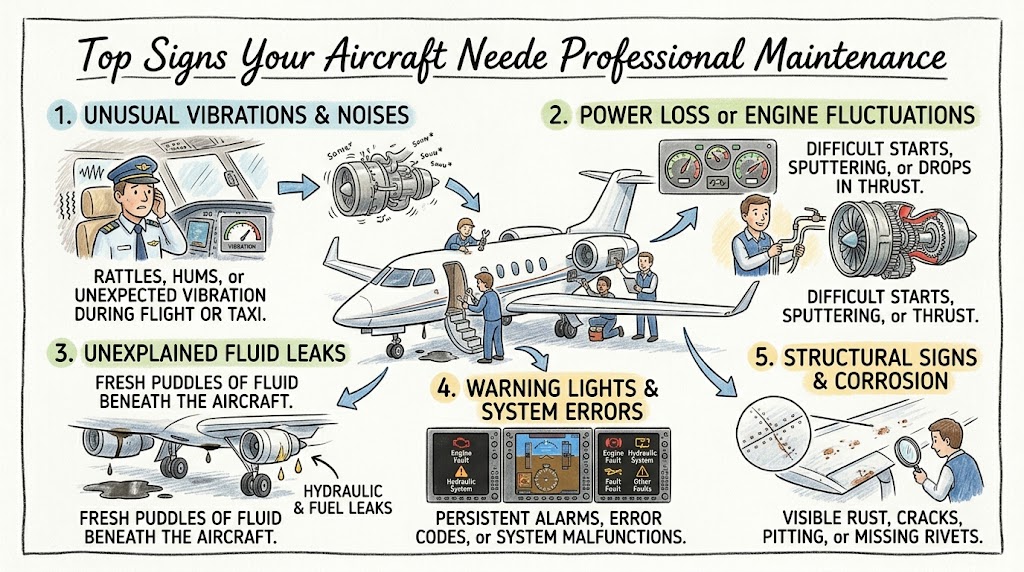
Aircraft rarely fail without warning. In most cases, they begin to show subtle signs long before a serious issue develops. Recognizing these early indicators is essential for maintaining safety, ensuring airworthiness, and avoiding costly unexpected repairs. For aircraft owners, pilots, flight schools, and fleet operators, understanding when an aircraft needs professional maintenance is not just about performance—it is about protecting lives, reducing downtime, and maintaining regulatory compliance.
Professional aircraft maintenance helps identify and resolve issues before they escalate into major failures. Whether it’s unusual engine behavior, electrical inconsistencies, or structural wear, timely inspection by qualified technicians ensures that the aircraft remains safe and reliable. Ignoring early warning signs can lead to increased repair costs, operational disruptions, and potential safety risks. This guide highlights the most important signs that indicate your aircraft may need immediate professional attention.
Real-world Use Cases
A private aircraft owner may notice subtle engine vibration during climb and assume it is normal, but later discover it is caused by a developing mechanical imbalance.
A flight school operating multiple training aircraft may observe repeated brake wear across the fleet due to high-frequency landings, requiring deeper inspection and replacement planning.
A fleet operator may track recurring avionics glitches across several aircraft, indicating an electrical system issue that needs professional diagnosis rather than temporary fixes.
A maintenance technician may identify hydraulic fluid traces during inspection, preventing a potential landing gear system failure. A pilot returning an aircraft after long-term storage may notice sluggish engine response or fuel inconsistencies that require full system servicing before safe operation.
Evaluation Criteria for Identifying Maintenance Needs
Before deciding whether an aircraft needs professional maintenance, evaluate:
- Frequency and severity of irregular behavior
- Changes in engine or system performance
- Presence of unusual sounds, smells, or vibrations
- Instrument and avionics inconsistencies
- Fluid leaks or abnormal consumption
- Brake, landing gear, or control response issues
- Corrosion or structural wear visibility
- Recurring minor faults over time
- Maintenance logbook history
- Changes after storage or heavy usage
- Safety-critical system behavior
- Pilot-reported vs technician-confirmed issues
Early identification reduces risk and ensures safer flight operations.
1. Unusual Engine Vibrations
Unusual engine vibrations are often one of the earliest warning signs of mechanical imbalance or internal wear.
When an engine vibrates more than normal, it may indicate issues with propeller balance, engine mounts, or internal components.
For example, a pilot may feel increased vibration during climb that was not present in previous flights. This should always be inspected immediately by maintenance professionals to avoid further damage.
2. Irregular Engine Performance or Power Loss
If the aircraft engine is not producing consistent power, it may signal fuel delivery issues, ignition problems, or internal wear.
For example, reduced climb performance or sluggish throttle response could indicate a developing engine issue that requires immediate inspection.
3. Difficulty During Startup
Engines that are harder to start than usual may indicate battery issues, fuel system irregularities, or ignition system faults.
For instance, a delayed start during cold conditions might suggest weakening electrical components that should be tested and replaced if necessary.
4. Abnormal Fuel Consumption
A sudden increase in fuel usage without operational changes often indicates inefficiency or system malfunction.
For example, a private aircraft owner noticing shorter range than usual should have the fuel system and engine performance evaluated.
5. Oil Leaks or Unusual Oil Readings
Oil leaks or abnormal oil color and pressure readings can signal engine wear or internal damage.
For instance, finding oil residue under the aircraft after parking should never be ignored and requires immediate inspection.
6. Warning Lights or Instrument Anomalies
Unexpected warning lights or inconsistent instrument readings may indicate sensor failures or electrical system issues.
For example, fluctuating engine temperature readings could point to a faulty sensor rather than actual overheating—but both require verification.
7. Electrical System Inconsistencies
Electrical issues such as flickering lights, intermittent avionics failure, or weak battery performance can affect safe operation.
A fleet aircraft experiencing repeated avionics resets should be professionally diagnosed to prevent system-wide failure.
8. Landing Gear Noise or Stiffness
Unusual noises or stiffness during landing gear extension or retraction may indicate hydraulic issues or mechanical wear.
For example, a grinding sound during landing gear operation requires immediate inspection before the next flight.
9. Brake Performance Issues
Weak or uneven braking can significantly affect landing safety.
A flight school aircraft experiencing longer stopping distances may have worn brake pads or hydraulic system issues requiring replacement.
10. Hydraulic System Leaks or Pressure Drops
Hydraulic leaks can affect landing gear, flaps, and braking systems.
For example, a visible fluid leak near the landing gear area should be addressed immediately to prevent system failure.
11. Unusual Sounds During Flight or Taxi
Any unfamiliar noise such as knocking, whistling, or grinding should be treated seriously.
A pilot hearing new sounds during taxi should stop and request maintenance inspection before continuing operations.
12. Control Surface Stiffness or Imbalance
If control surfaces feel stiff or unresponsive, it may indicate cable tension issues or mechanical blockage.
For example, reduced aileron responsiveness requires immediate grounding and inspection.
13. Avionics Malfunctions or Intermittent Signals
Avionics issues can affect navigation and communication reliability.
A GPS system losing signal repeatedly may indicate antenna or wiring faults requiring professional attention.
14. Overheating or Temperature Irregularities
Abnormal temperature readings may indicate cooling system problems or engine inefficiencies.
For example, an engine running hotter than normal during cruise requires immediate diagnostic checks.
15. Corrosion or Structural Wear
Visible corrosion or surface cracks can compromise aircraft structural integrity.
An aircraft stored in humid conditions may develop corrosion that must be treated before further operation.
16. Fuel System Contamination Signs
Water, debris, or discoloration in fuel can lead to engine performance issues or failure.
For example, detecting contamination during pre-flight checks requires grounding the aircraft until the system is cleaned.
17. Frequent Minor Recurring Issues
Repeated small issues often indicate a deeper underlying system problem.
For instance, repeated electrical resets may point to a wiring fault that requires full system inspection.
18. Poor Aircraft Responsiveness
If the aircraft feels sluggish or unresponsive, it may indicate aerodynamic, engine, or control system issues.
A pilot noticing delayed response during takeoff should have the aircraft checked before further flights.
19. Changes in Takeoff or Landing Behavior
Any change in takeoff roll distance, climb rate, or landing behavior should be investigated immediately.
For example, a longer-than-usual takeoff distance could indicate engine performance or weight distribution issues.
Benefits of Early Detection and Maintenance
Identifying maintenance issues early helps:
- Improve flight safety
- Reduce unexpected breakdowns
- Lower repair costs
- Minimize aircraft downtime
- Improve reliability
- Extend aircraft lifespan
- Support compliance requirements
- Increase pilot confidence
- Enhance operational planning
Preventive Maintenance vs Reactive Repairs
| Factor | Preventive Maintenance | Reactive Repairs |
|---|---|---|
| Safety | Higher assurance | Higher risk |
| Cost | Predictable | Often expensive |
| Downtime | Planned | Unexpected |
| Reliability | Consistent | Variable |
| Aircraft Value | Better preserved | May decline |
Early Detection vs Delayed Detection
| Factor | Early Detection | Delayed Detection |
| Damage Level | Minimal | Often severe |
| Repair Cost | Lower | Higher |
| Safety Risk | Reduced | Increased |
| Downtime | Controlled | Unplanned |
| Operational Impact | Low | Significant |
Tips for Aircraft Owners
- Pay attention to small performance changes
- Never ignore unusual sounds or vibrations
- Maintain accurate maintenance logs
- Report issues immediately to technicians
- Follow scheduled inspections strictly
- Monitor engine and system trends
- Treat recurring issues as serious warnings
Common Mistakes to Avoid
- Ignoring minor vibrations or noises
- Delaying inspection for convenience
- Flying with known faults
- Skipping pre-flight inspections
- Using unverified replacement parts
- Overlooking small fluid leaks
- Relying only on visual checks
- Not reviewing maintenance records
FAQs
1. Why do aircraft need professional maintenance?
Aircraft require professional maintenance to ensure safe operation, detect hidden issues, and maintain airworthiness. Regular inspections help prevent failures and reduce long-term repair costs.
2. What are early signs of aircraft problems?
Early signs include unusual vibrations, oil leaks, engine performance changes, electrical issues, and abnormal instrument readings. These should always be inspected immediately.
3. Can I fly if I notice a small issue?
No. Even small issues can indicate larger hidden problems. Aircraft should be inspected by professionals before continued operation.
4. What causes engine vibration?
Engine vibration may be caused by imbalance, worn mounts, propeller issues, or internal engine wear. It requires immediate inspection.
5. Why are brake issues serious?
Brake issues affect landing safety and stopping distance. Worn or failing brakes must be addressed immediately.
6. What does fuel contamination mean?
Fuel contamination refers to water, debris, or impurities in the fuel system, which can affect engine performance or cause failure.
7. How often should aircraft be inspected?
Aircraft should be inspected regularly based on flight hours, usage, and manufacturer recommendations, along with pre-flight checks.
8. What is preventive maintenance?
Preventive maintenance is scheduled servicing designed to identify and fix issues before they become serious failures.
9. What happens if maintenance is delayed?
Delaying maintenance can lead to increased damage, higher repair costs, downtime, and safety risks.
10. How do I choose a maintenance provider?
Choose a provider with experience, proper certification, good reputation, transparent communication, and strong safety standards.
Conclusion
Recognizing the top signs that your aircraft needs professional maintenance is essential for safe and efficient flight operations. Early detection of issues such as engine vibration, electrical inconsistencies, fuel problems, and structural wear helps prevent costly repairs and unexpected downtime. Aircraft owners and pilots must remain alert to performance changes, follow maintenance schedules, and act quickly when warning signs appear. A proactive maintenance approach not only improves aircraft reliability but also enhances safety, preserves value, and ensures long-term operational confidence in every flight.

