
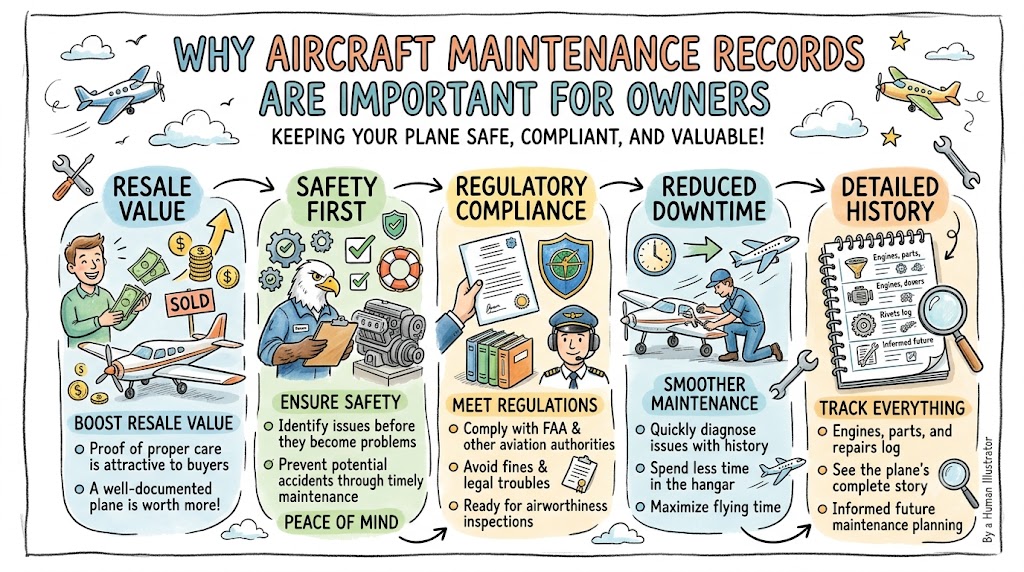
Introduction
Aircraft ownership comes with a high level of responsibility, where safety, compliance, and operational reliability must always be maintained at the highest standard. One of the most critical yet often overlooked aspects of aircraft management is maintenance record keeping.
Aircraft maintenance records are not just paperwork—they represent the complete technical history of an aircraft, documenting every inspection, repair, replacement, and service activity. These records are essential for ensuring airworthiness, meeting regulatory requirements, and protecting the long-term value of the aircraft.
For aircraft owners and operators, understanding the importance of maintenance records is essential for safe, legal, and efficient aviation operations.
What Are Aircraft Maintenance Records?
Aircraft maintenance records are official documents that track the complete maintenance history of an aircraft. They provide detailed information about all maintenance actions performed to ensure the aircraft remains safe and airworthy.
These records typically include:
- Scheduled inspections and routine maintenance
- Repairs and corrective maintenance actions
- Parts replacement history and component tracking
- Airworthiness directives and compliance records
- Service bulletins and modifications
- Engine and airframe logbooks
Who maintains these records?
- Licensed aircraft maintenance technicians
- Maintenance, Repair, and Overhaul (MRO) organizations
- Aircraft operators and owners
These records act as a complete technical history of the aircraft throughout its lifecycle.
Why Aircraft Maintenance Records Are Important
Maintenance records play a critical role in aviation safety, compliance, and operational planning.
1. Ensuring Aircraft Safety
Maintenance records help track the condition of aircraft components over time. This allows technicians to identify potential issues early and prevent safety risks before they occur.
2. Regulatory Compliance
Aviation authorities require detailed maintenance documentation to certify airworthiness. Without proper records, an aircraft may not be legally allowed to operate.
3. Tracking Aircraft Performance History
Maintenance records provide a clear history of aircraft performance, helping operators:
- Monitor recurring technical issues
- Evaluate component reliability
- Improve maintenance planning
4. Preventing Mechanical Failures
Accurate records support preventive maintenance programs that reduce the likelihood of unexpected mechanical failures during flight operations.
5. Supporting Maintenance Planning
Maintenance teams rely on records to:
- Schedule inspections efficiently
- Plan part replacements in advance
- Reduce aircraft downtime
- Improve operational reliability
Legal and Regulatory Importance
Aircraft maintenance records are a legal requirement in aviation operations. They serve as proof that the aircraft complies with safety and airworthiness standards.
Key benefits include:
- Readiness for regulatory audits and inspections
- Proof of compliance with aviation authorities
- Verification of aircraft airworthiness
Risks of poor record keeping:
- Aircraft grounding
- Regulatory penalties
- Loss of airworthiness certification
- Safety compliance violations
Incomplete records can lead to serious operational and legal consequences.
Impact on Aircraft Value
Maintenance records directly affect the resale value and marketability of an aircraft.
Well-maintained records result in:
- Higher resale value
- Strong buyer confidence
- Faster transaction approvals
Poor records lead to:
- Lower valuation
- Reduced buyer trust
- Difficulty in selling the aircraft
Buyers always prefer aircraft with transparent and well-documented maintenance histories.
Role in Safety and Risk Management
Maintenance records are a core part of aviation safety management systems.
They help in:
- Early detection of component wear
- Predictive maintenance planning
- Risk reduction in flight operations
- Improving overall aircraft reliability
A properly documented aircraft is significantly safer and more reliable.
Digital vs Manual Maintenance Records
Aircraft maintenance documentation has evolved from manual logbooks to digital systems.
Manual Records:
- Paper-based documentation
- Higher risk of loss or damage
- Time-consuming to organize and access
Digital Records:
- Centralized data storage
- Easy access and retrieval
- Improved accuracy and tracking
- Faster compliance reporting
Digital systems are increasingly becoming the industry standard.
Common Mistakes Aircraft Owners Make
Aircraft owners often face compliance and operational issues due to poor record management.
Common mistakes include:
- Missing or incomplete maintenance entries
- Delayed updates after maintenance work
- Poor organization of logbooks
- Lack of digital backup systems
These mistakes can lead to regulatory and financial risks.
Best Practices for Managing Maintenance Records
To ensure compliance and safety, aircraft owners should follow structured record management practices.
Recommended practices:
- Update records immediately after every maintenance activity
- Use digital maintenance tracking systems
- Work only with certified MRO providers
- Maintain complete documentation of inspections and repairs
- Regularly audit maintenance records for accuracy
- Ensure readiness for regulatory inspections
Proper documentation ensures long-term aircraft safety and operational efficiency.
FAQs
1. What are aircraft maintenance records?
Aircraft maintenance records are official documents that track all inspections, repairs, servicing, and modifications performed on an aircraft throughout its lifecycle.
2. Why are maintenance records important for aircraft owners?
They ensure safety, regulatory compliance, operational efficiency, and help maintain the aircraft’s long-term value and airworthiness.
3. Who is responsible for maintaining aircraft records?
Maintenance technicians, MRO providers, aircraft operators, and owners all share responsibility for ensuring accurate record keeping.
4. What happens if maintenance records are missing?
Missing records can lead to regulatory non-compliance, aircraft grounding, reduced resale value, and potential safety risks.
5. How do maintenance records affect aircraft safety?
They help track component health, identify potential issues early, and ensure preventive maintenance is performed on time.
6. Are digital maintenance records better than manual logs?
Yes, digital records offer better accuracy, accessibility, security, and efficiency compared to traditional paper-based logbooks.
7. Do aircraft maintenance records affect resale value?
Yes, well-documented maintenance history significantly increases aircraft value and buyer confidence.
8. What should be included in maintenance records?
They should include inspections, repairs, parts replacements, compliance records, and all maintenance-related activities.
9. How often should maintenance records be updated?
Records should be updated immediately after every maintenance or inspection activity to ensure accuracy.
10. Can an aircraft fly without complete maintenance records?
No, incomplete records can make the aircraft non-compliant with aviation regulations and potentially unfit for operation.
Conclusion
Aircraft maintenance records are a fundamental requirement for safe, compliant, and efficient aircraft operations. They provide a complete history of an aircraft’s condition, ensure regulatory approval, and play a critical role in maintaining safety and value. For aircraft owners, proper record keeping is not optional—it is a core responsibility that directly impacts operational reliability and legal compliance. A well-documented aircraft is safer, more valuable, and easier to manage over time.

