
Introduction
Aircraft are designed to operate safely under a wide range of conditions, but their continued safety depends on proper maintenance and regular inspections. Every aircraft, whether used for private flying, business travel, flight training, or commercial operations, must remain airworthy throughout its service life. Airworthiness is not something achieved only when an aircraft is manufactured—it is maintained through continuous care, inspections, repairs, and adherence to recommended maintenance practices.
For aircraft owners and operators, understanding airworthiness and maintenance requirements is essential. Proper maintenance helps reduce the risk of mechanical issues, improves aircraft reliability, extends component life, and supports safe flight operations. It also protects the long-term value of the aircraft and minimizes unexpected downtime.
This guide explains what aircraft airworthiness means, why it matters, the maintenance practices that support continued airworthiness, and the steps aircraft owners can take to keep their aircraft operating safely and efficiently.
What Is Aircraft Airworthiness?
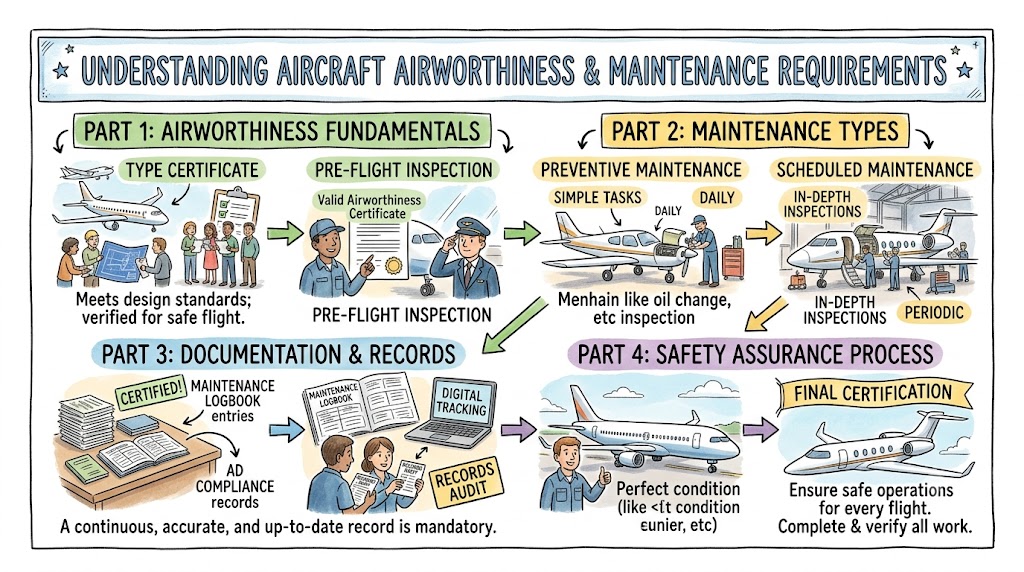
Aircraft airworthiness refers to the condition in which an aircraft is considered safe and suitable for flight. An airworthy aircraft meets its approved design standards and is maintained in a condition that allows it to operate safely.
Airworthiness includes two essential elements:
- The aircraft conforms to its approved design.
- The aircraft is in a safe condition for operation.
Maintaining both elements throughout the aircraft’s service life is critical for safe aviation.
Initial Airworthiness
Initial airworthiness begins when an aircraft is manufactured and approved according to applicable certification standards.
This process includes:
- Aircraft design approval
- Manufacturing inspections
- System testing
- Flight testing
- Safety verification
These steps confirm that the aircraft meets established safety requirements before entering service.
Continued Airworthiness
After entering service, continued airworthiness depends on regular maintenance and inspections.
This includes:
- Scheduled maintenance
- Replacement of worn components
- Inspection of critical systems
- Repair of defects
- Accurate maintenance records
Continued airworthiness is an ongoing responsibility throughout the life of the aircraft.
Why Airworthiness Matters
Maintaining airworthiness provides several important benefits.
It helps:
- Protect pilots and passengers
- Improve aircraft reliability
- Reduce mechanical failures
- Extend aircraft service life
- Support safe operations
- Preserve aircraft value
- Reduce unexpected maintenance costs
Safe aircraft begin with consistent maintenance.
Understanding Aircraft Maintenance Requirements
Aircraft maintenance involves much more than repairing problems after they occur.
Effective maintenance includes:
- Routine inspections
- Preventive maintenance
- Scheduled servicing
- Component replacement
- System testing
- Documentation
Following recommended maintenance schedules helps identify issues before they become serious.
Scheduled Maintenance
Scheduled maintenance is performed at predetermined intervals based on:
- Flight hours
- Calendar time
- Manufacturer recommendations
- Component life limits
These inspections help maintain safe aircraft operation.
Unscheduled Maintenance
Unexpected issues sometimes require immediate attention.
Examples include:
- Fluid leaks
- Electrical faults
- Unusual engine performance
- Damage from foreign objects
- Weather-related damage
Prompt repairs help restore safe operating conditions.
Preventive Maintenance
Preventive maintenance focuses on reducing wear before failures occur.
Common activities include:
- Lubrication
- Cleaning
- Filter replacement
- Tire inspection
- Battery servicing
- Fluid checks
Preventive maintenance helps improve reliability while reducing long-term repair costs.
Types of Aircraft Inspections
Aircraft undergo different inspections throughout their service lives.
Pre-Flight Inspection
Pilots inspect the aircraft before every flight.
Typical checks include:
- Fuel quantity
- Oil levels
- Tires
- Flight controls
- Propeller
- Exterior condition
- Lights
These inspections help identify obvious issues before departure.
Routine Maintenance Inspections
Routine inspections verify the condition of systems that experience normal wear.
Maintenance personnel examine:
- Engine components
- Hydraulic systems
- Electrical systems
- Landing gear
- Brakes
- Control systems
Annual Inspections
Annual inspections involve a detailed examination of the aircraft.
These inspections help verify continued airworthiness and identify maintenance needs.
Engine Inspections
Engines require regular evaluation because they operate under demanding conditions.
Inspections often include:
- Compression checks
- Oil analysis
- Filter examination
- Ignition system inspection
- Fuel system evaluation
Structural Inspections
Aircraft structures experience stress during every flight.
Inspectors examine:
- Wings
- Fuselage
- Control surfaces
- Fasteners
- Corrosion
- Cracks
Early detection helps prevent more significant structural issues.
Avionics Inspections
Modern aircraft rely on electronic systems for communication, navigation, and monitoring.
Regular inspections verify proper operation of:
- Radios
- GPS systems
- Flight displays
- Transponders
- Wiring
Reliable avionics improve situational awareness and operational safety.
Aircraft Maintenance Records
Accurate documentation is an important part of aircraft ownership.
Maintenance records typically include:
- Inspection history
- Repairs completed
- Component replacements
- Maintenance dates
- Service bulletins
- Logbook entries
Organized records simplify future maintenance planning and support aircraft value.
Common Factors That Affect Airworthiness
Aircraft condition changes over time due to normal operation and environmental exposure.
Factors affecting airworthiness include:
Wear and Tear
Moving parts gradually wear with use.
Corrosion
Moisture and environmental conditions may damage metal components if not properly managed.
Environmental Exposure
Sunlight, temperature changes, humidity, and contaminants can affect aircraft materials.
Delayed Maintenance
Postponing recommended maintenance may increase the risk of component failure.
Aging Components
Even lightly used aircraft require replacement of time-limited components.
Improper Repairs
Using incorrect procedures or unsuitable replacement parts may affect aircraft safety.
Importance of Qualified Maintenance Professionals
Aircraft maintenance requires specialized knowledge and experience.
Qualified technicians provide:
- Accurate inspections
- Proper troubleshooting
- Approved repair procedures
- Correct component installation
- Reliable documentation
Professional maintenance contributes directly to continued airworthiness.
Best Practices for Maintaining Airworthiness
Aircraft owners can improve long-term reliability by following good maintenance practices.
Recommendations include:
Follow Maintenance Schedules
Complete inspections according to recommended intervals.
Address Problems Promptly
Do not ignore unusual sounds, vibrations, or performance changes.
Keep Accurate Records
Maintain organized maintenance documentation.
Use Quality Replacement Parts
Proper components help maintain reliability and compatibility.
Store Aircraft Properly
Protect aircraft from excessive moisture, sunlight, and environmental damage whenever possible.
Monitor Recurring Issues
Repeated problems may indicate underlying maintenance concerns requiring further investigation.
Common Airworthiness Mistakes Aircraft Owners Should Avoid
Many maintenance issues develop because of avoidable mistakes.
Examples include:
- Skipping inspections
- Delaying repairs
- Ignoring unusual aircraft behavior
- Poor maintenance documentation
- Using unapproved replacement parts
- Neglecting preventive maintenance
- Failing to monitor component life limits
Awareness helps reduce these risks.
Benefits of Proper Aircraft Maintenance
Consistent maintenance provides many long-term advantages.
Improved Safety
Properly maintained aircraft operate more reliably.
Greater Reliability
Routine servicing reduces unexpected mechanical problems.
Lower Long-Term Costs
Preventive maintenance often reduces expensive repairs.
Better Aircraft Performance
Well-maintained systems support efficient operation.
Longer Service Life
Proper care extends the useful life of aircraft components.
Higher Resale Value
Aircraft with complete maintenance records and consistent care are generally more attractive to future buyers.
Aircraft Airworthiness Checklist
Before Every Flight:
- Inspect fuel
- Check oil
- Examine tires
- Verify flight controls
- Inspect propeller
- Check lights
- Review aircraft documents
Routine Maintenance:
- Complete scheduled inspections
- Replace worn components
- Monitor engine performance
- Inspect avionics
- Update maintenance records
Long-Term Care:
- Follow maintenance schedules
- Store aircraft properly
- Address defects promptly
- Maintain documentation
- Use quality replacement parts
Frequently Asked Questions
1. What is aircraft airworthiness?
Aircraft airworthiness means an aircraft meets its approved design standards and remains in a safe condition for flight through proper maintenance and inspections.
2. Who determines aircraft airworthiness?
Aircraft manufacturers establish design standards, while qualified maintenance personnel evaluate aircraft condition through inspections and maintenance in accordance with applicable aviation requirements.
3. Why are maintenance records important?
Maintenance records document inspections, repairs, and component replacements, helping owners manage maintenance schedules and preserve aircraft history.
4. How often should aircraft be inspected?
Inspection frequency depends on manufacturer recommendations, operating conditions, flight hours, and applicable maintenance programs.
5. What is preventive maintenance?
Preventive maintenance consists of routine servicing activities designed to reduce wear, improve reliability, and identify potential issues before they become major repairs.
6. What happens if maintenance is delayed?
Delayed maintenance may increase component wear, reduce aircraft reliability, increase repair costs, and affect continued airworthiness.
7. Can aircraft owners perform maintenance?
Certain maintenance activities may be permitted depending on the aircraft, applicable regulations, and owner qualifications. More complex maintenance should be completed by qualified maintenance professionals.
8. How does maintenance improve aircraft safety?
Regular inspections identify worn or damaged components before they affect aircraft operation, reducing the likelihood of mechanical problems.
9. Why are qualified technicians important?
Experienced maintenance professionals understand aircraft systems, approved repair procedures, and inspection techniques necessary to maintain safe aircraft operation.
10. How can owners support continued airworthiness?
Owners can follow maintenance schedules, maintain accurate records, perform pre-flight inspections, use quality replacement parts, and address maintenance concerns promptly.
Conclusion
Aircraft airworthiness is the foundation of safe and reliable aviation. While every aircraft begins its service life meeting approved design standards, maintaining that condition requires continuous attention through inspections, preventive maintenance, accurate documentation, and timely repairs. Understanding maintenance requirements helps aircraft owners, pilots, and maintenance professionals work together to ensure aircraft remain safe, dependable, and ready for operation.
By following recommended maintenance schedules, performing regular inspections, keeping organized maintenance records, and relying on qualified maintenance professionals, aircraft owners can extend the life of their aircraft, reduce operating costs, and support safe flying for years to come.

