
Introduction
A professional aircraft inspection is a critical part of maintaining safety, performance, and compliance. Whether you operate a private jet, rotorcraft, or small piston aircraft, inspections ensure your aircraft is airworthy, reliable, and ready for safe operations. Inspections also help preserve the aircraft’s value and protect passengers, crew, and operators.
Every aircraft owner or operator should understand what happens during an inspection, who performs it, and how to prepare. Professional inspections follow structured procedures, involve qualified personnel, and combine visual, mechanical, and functional checks. Understanding the process helps you feel confident and informed when your aircraft is evaluated.
Why Aircraft Inspections Are Important
Aircraft inspections are designed to:
- Ensure airworthiness: Verifying all systems and components are safe for flight.
- Detect early wear or damage: Identifying issues before they become safety risks.
- Meet regulatory requirements: Complying with aviation authorities and insurance obligations.
- Maintain performance: Ensuring engines, control systems, and avionics operate as intended.
- Preserve resale value: Maintaining documented records supports future sales.
- Enhance flight safety: Reducing the risk of in-flight mechanical issues.
Regular inspections provide peace of mind for both pilots and passengers, confirming that all systems meet strict operational and safety standards.
Types of Aircraft Inspections
Professional inspections vary depending on the aircraft type and operational requirements. Common inspections include:
- Pre-flight inspection: A brief check before every flight to identify obvious issues.
- Routine scheduled inspections: Often categorized as A, B, C, or D checks for jets, or hourly inspections for smaller aircraft.
- Annual or 100-hour inspections: Required for certain aircraft to ensure ongoing compliance and airworthiness.
- Special inspections: Triggered by hard landings, component replacements, or after mechanical incidents.
Each inspection has specific objectives, and the depth of the inspection increases with its scope.
Who Performs the Inspection
Professional inspections are carried out by:
- Licensed aircraft mechanics: Technicians certified to perform inspections according to regulations.
- Certified inspectors: Personnel authorized to sign off on airworthiness.
- Maintenance technicians: Support staff performing detailed checks and repairs.
- Pilots: May assist in walkarounds or operational checks during pre-flight or post-maintenance tests.
- Quality assurance personnel: Oversee compliance with maintenance standards and documentation.
Using qualified personnel ensures the inspection is thorough and meets all regulatory and safety standards.
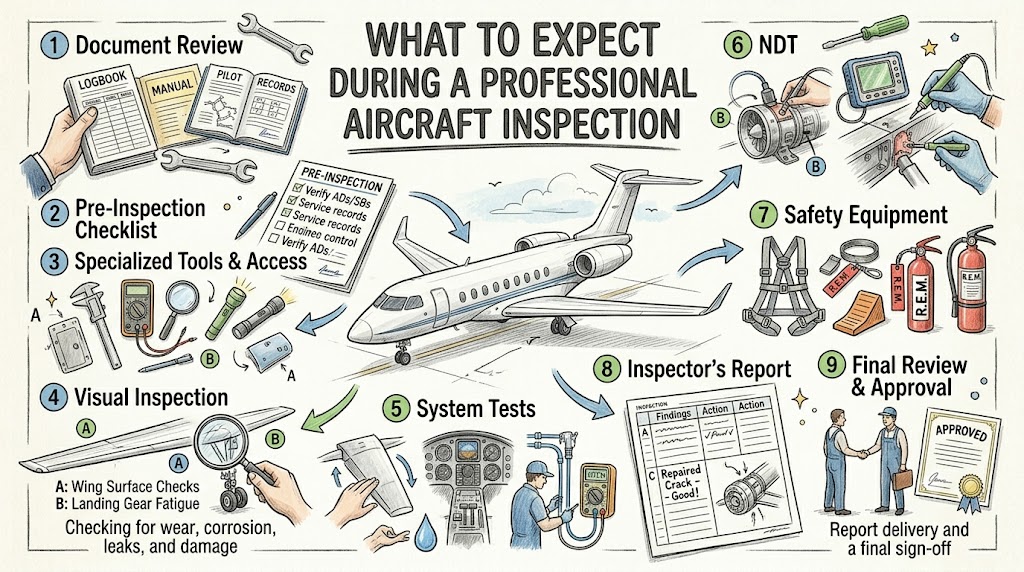
Step-by-Step Inspection Process
A professional aircraft inspection generally includes the following steps:
- Pre-inspection preparation: Review maintenance logs, flight history, previous defects, and service bulletins.
- Exterior inspection: Examine the airframe, wings, control surfaces, landing gear, fuselage, and empennage for damage, corrosion, or wear.
- Engine and propulsion system checks: Inspect turbines, piston engines, or rotor systems for wear, fluid levels, leaks, and operational readiness.
- Avionics and electrical system evaluation: Test instruments, radios, navigation systems, and electrical components.
- Fuel, oil, and hydraulic systems: Verify levels, check for leaks, and inspect lines, pumps, and reservoirs.
- Control surface movement: Check hinges, cables, and linkages for proper operation.
- Cabin and safety equipment assessment: Inspect seats, emergency equipment, oxygen systems, and life vests where applicable.
- Logbook and maintenance record review: Confirm all required documentation is accurate and complete.
- Functional testing and operational checks: Run engines, verify control responses, and conduct system tests.
- Post-inspection reporting: Document findings, recommend repairs or preventive actions, and provide a signed report.
This systematic approach ensures all critical areas of the aircraft are inspected thoroughly.
Common Inspection Tools and Equipment
Inspectors use a variety of tools and equipment, including:
- Torque wrenches and calibration tools
- Flashlights and mirrors for hard-to-see areas
- Measuring devices and gauges
- Avionics testers
- Fluid testing kits
- Lifting and support equipment
- Vibration and balancing analysis tools
These tools allow technicians to identify issues that may not be visible during a simple walkaround.
What Aircraft Owners Should Prepare
To facilitate a smooth inspection, owners should:
- Provide complete logbooks and maintenance records
- Ensure the aircraft is accessible and clean
- Notify inspectors of recent repairs or incidents
- Coordinate schedules if operational checks are required
- Provide keys, codes, or hangar access as needed
Preparation helps the inspection proceed efficiently and reduces the likelihood of delays or missed checks.
How Inspections Affect Aircraft Value and Safety
Inspections not only ensure airworthiness but also protect the aircraft’s long-term value. Documented inspections:
- Confirm compliance with regulatory standards
- Identify repairs or preventive maintenance needs
- Support insurance coverage
- Demonstrate proactive safety management
- Enhance resale or trade-in value
Regular inspections show potential buyers or operators that the aircraft has been maintained responsibly and safely.
FAQs
1- How long does a professional aircraft inspection take?
Inspection time varies depending on aircraft size, inspection type, and condition. Smaller aircraft may take a few hours, while large jets or comprehensive checks can take several days.
2- Who is qualified to perform the inspection?
Inspections must be performed by licensed aircraft mechanics or certified inspectors authorized by aviation authorities. Support technicians and quality assurance staff may assist.
3- What should I provide before the inspection?
Owners should provide logbooks, previous maintenance records, recent flight history, and details of any known defects or repairs.
4- Will the aircraft need to be flown during the inspection?
Some inspections may include operational checks or engine runs, but not all require actual flight. The inspector will advise based on the inspection scope.
5- How are issues reported?
Inspectors document findings in a formal report, noting defects, recommended repairs, and compliance status. Owners receive a signed copy for their records.
6- What happens if a serious defect is found?
Serious defects must be addressed before the aircraft can legally fly. Repairs or corrective actions are scheduled according to maintenance regulations and manufacturer guidance.
7- Are inspections required by law?
Yes, aviation authorities mandate periodic inspections to ensure airworthiness, compliance, and safety.
8- Can I be present during the inspection?
Owners are often welcome to observe but should follow safety instructions and avoid interfering with inspection procedures.
9- How often should aircraft inspections be performed?
Frequency depends on aircraft type, operating hours, and regulatory requirements. Routine, annual, or 100-hour inspections are standard for most aircraft.
10- Does inspection affect insurance coverage?
Yes. Maintaining up-to-date inspections ensures compliance with insurance policies and can affect liability or coverage in the event of an incident.
Conclusion
A professional aircraft inspection is essential for safety, compliance, and long-term aircraft reliability. During an inspection, licensed mechanics and certified inspectors assess every aspect of the aircraft—from airframe and propulsion systems to avionics, fuel, and control linkages. Proper preparation by the owner, including logbooks, access, and recent repair information, helps the process run efficiently. Understanding the inspection steps, the tools used, and what is evaluated allows owners and operators to feel confident in the aircraft’s readiness. Inspections protect passengers, pilots, and operators while preserving the value and performance of the aircraft. By following professional inspection procedures and preparing appropriately, aircraft owners can ensure that their aircraft remains safe, compliant, and ready for flight.

