
Introduction
For private aircraft owners, corporate aviation managers, and charter operators, choosing the right aircraft repair station is a critical decision. The safety, reliability, and performance of an aircraft depend heavily on the quality of maintenance, inspections, and repairs performed. Selecting a certified and experienced repair station ensures that your aircraft remains airworthy, compliant with FAA regulations, and operationally efficient, while also protecting your investment.
A poor choice in maintenance provider can lead to unnecessary downtime, costly repairs, and even safety risks. Conversely, a trusted repair station provides peace of mind, timely service, and professional guidance for everything from routine inspections to complex engine or avionics repairs. This guide explores how to evaluate repair stations, what criteria to consider, and common mistakes to avoid, helping aircraft owners make informed decisions.
Real-World Use Cases
The right repair station is essential in practical aviation scenarios:
- Private jet owners maintaining safe and reliable aircraft operations
- Corporate aviation managers minimizing downtime for executive travel
- Charter operators keeping fleets operational and compliant
- Aircraft management companies ensuring FAA inspections are met
- Pilots and operators relying on well-maintained avionics and engines
- Owners preparing aircraft for sale to preserve value
- Operators handling urgent AOG (Aircraft on Ground) situations
- Maintenance teams executing preventive and progressive maintenance programs
- Businesses optimizing operational efficiency through timely repairs
- Aircraft enthusiasts seeking trustworthy support for specialized aircraft
Evaluation Criteria for Aircraft Owners
When selecting a repair station, consider the following:
- FAA or regulatory certifications ensuring compliance with aviation standards
- Technician qualifications and experience with your aircraft type
- Specialization in specific aircraft models or systems
- Facility capabilities, including hangars, tooling, and diagnostics
- Turnaround time and scheduling flexibility
- Emergency and AOG support availability
- Avionics, engine, and structural repair expertise
- Transparent maintenance reporting and cost estimates
- Availability of replacement parts and supply chain reliability
- Reputation, client references, and operational history
Best for
This guide is ideal for private jet owners, corporate aviation managers, charter operators, and aircraft management companies who require safe, reliable, and certified repair services.
Not Ideal for
This guide is not intended for military aviation operations or large commercial airline fleet management, which involve different regulatory frameworks and scale.
Why Choosing the Right Repair Station Matters
1- Flight Safety
The repair station directly impacts aircraft reliability and operational safety. Using certified technicians and quality parts reduces the risk of mechanical failure.
2- Regulatory Compliance
Certified repair stations ensure FAA compliance, proper documentation, and adherence to maintenance standards, preventing legal or operational issues.
3- Operational Efficiency
Experienced repair stations minimize aircraft downtime, offering timely maintenance and fast turnaround for urgent or scheduled repairs.
4- Cost Management
Quality maintenance reduces unexpected repair expenses, labor inefficiencies, and recurring issues, improving cost-effectiveness.
5- Aircraft Longevity
High-quality repair services extend airframe life, engine reliability, and overall aircraft value, preserving your investment over the long term.
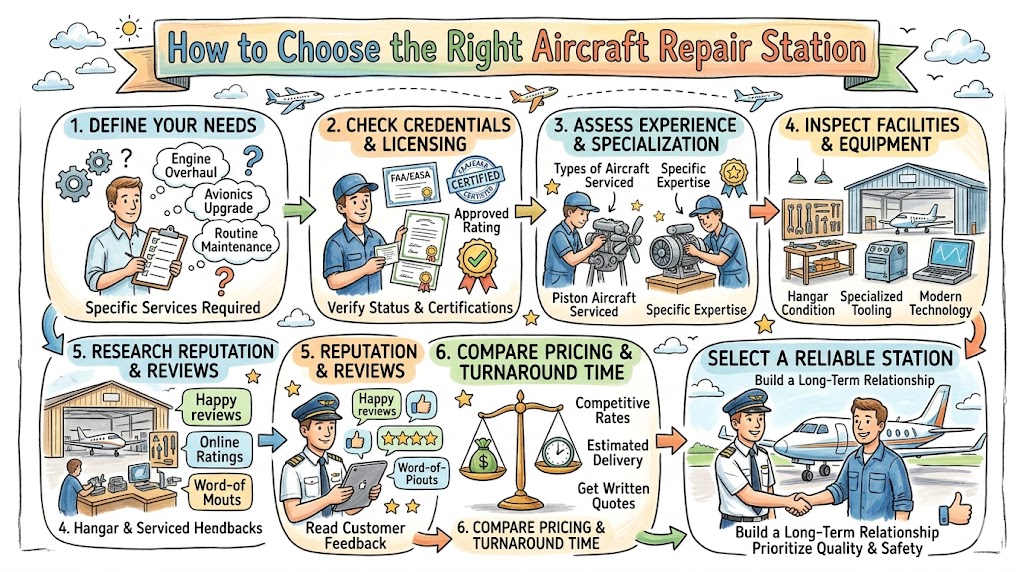
Key Factors to Evaluate in a Repair Station
- Certifications and Accreditations: FAA or equivalent regulatory approval
- Technician Expertise: Experience with your aircraft model and ongoing training
- Specialized Services: Avionics, engines, interiors, structural repairs
- Facility Capabilities: Hangars, tooling, diagnostic equipment
- Turnaround and Scheduling: Ability to meet operational deadlines
- Emergency Support: AOG response and urgent repair capabilities
- Transparency and Reporting: Detailed maintenance logs and cost reporting
- Parts and Supply Chain: Reliable sourcing and genuine components
- Safety Record and References: Proven operational history with clients
- Maintenance Programs: Preventive, scheduled, and progressive inspection offerings
Comparison Table: Certified vs Uncertified Repair Stations
| Feature | Certified Repair Station | Uncertified Station | Impact |
|---|---|---|---|
| FAA Compliance | Fully compliant | Non-compliant or unknown | Regulatory risk and potential grounding |
| Technician Experience | Certified, trained | Unknown | Safety and reliability compromised |
| Facility Equipment | Advanced tooling, hangars | Limited or outdated | Maintenance quality and efficiency reduced |
| Parts Sourcing | Genuine, certified | Unknown or generic | Reliability and airworthiness at risk |
| Turnaround Time | Predictable | Variable | Operational downtime increases |
| Reporting & Transparency | Detailed logs | Limited or unclear | Difficult planning and traceability |
| Emergency Support | Available (AOG) | Often unavailable | Delays in urgent repairs |
Tips for Choosing the Right Aircraft Repair Station
- Verify FAA or local authority certification
- Review technician qualifications and type experience
- Confirm specialization for your aircraft type
- Inspect facility capabilities and hangar availability
- Ask about average repair turnaround times
- Confirm AOG and emergency support
- Evaluate avionics, engine, and structural expertise
- Ensure transparent reporting and billing
- Check parts sourcing and supply reliability
- Review client references and operational history
Common Mistakes to Avoid
- Choosing repair stations solely based on price
- Ignoring technician experience or certifications
- Overlooking specialization for specific aircraft models
- Skipping inspection of facilities and tooling
- Failing to confirm emergency support availability
- Using stations without transparent maintenance logs
- Neglecting parts sourcing quality
- Assuming all stations are FAA-compliant
- Overlooking turnaround time and operational efficiency
- Not checking client reviews or references
Frequently Asked Questions
- Why is choosing a certified repair station important?
Certified stations ensure compliance with FAA regulations, safety standards, and reliable maintenance, minimizing operational risks. - Which certifications matter most?
FAA-certified repair stations or equivalent local regulatory approvals are essential for legal and safe aircraft operations. - How can I verify technician expertise?
Check type ratings, experience with your aircraft model, and ongoing training records. - Why does facility capability matter?
Proper hangars, tooling, and diagnostics ensure efficient, safe, and accurate maintenance. - What is AOG support?
AOG (Aircraft on Ground) support provides emergency repair services to minimize downtime for urgent issues. - How can I ensure parts reliability?
Use stations that source genuine, certified parts with traceable documentation. - Should I prioritize speed or quality?
Safety and quality should always take priority over speed. A fast but unreliable repair can compromise flight safety. - How often should my aircraft be serviced?
Follow manufacturer-recommended and FAA-mandated schedules, including annual inspections and 100-hour checks where applicable. - Can private aircraft use commercial repair stations?
Yes, provided the station specializes in your aircraft type and maintains FAA-compliance. - What questions should I ask before hiring a repair station?
Ask about certifications, technician experience, turnaround times, emergency support, parts sourcing, and reporting transparency.
Conclusion
Selecting the right aircraft repair station is essential for flight safety, regulatory compliance, operational efficiency, and long-term aircraft value. Certified repair stations with experienced technicians, advanced facilities, reliable parts, and transparent maintenance reporting provide peace of mind and minimize downtime. For private jet owners, corporate operators, and charter services, choosing the right repair station is not just a maintenance decision—it is a critical step in ensuring safe, efficient, and reliable flight operations.

