
Introduction
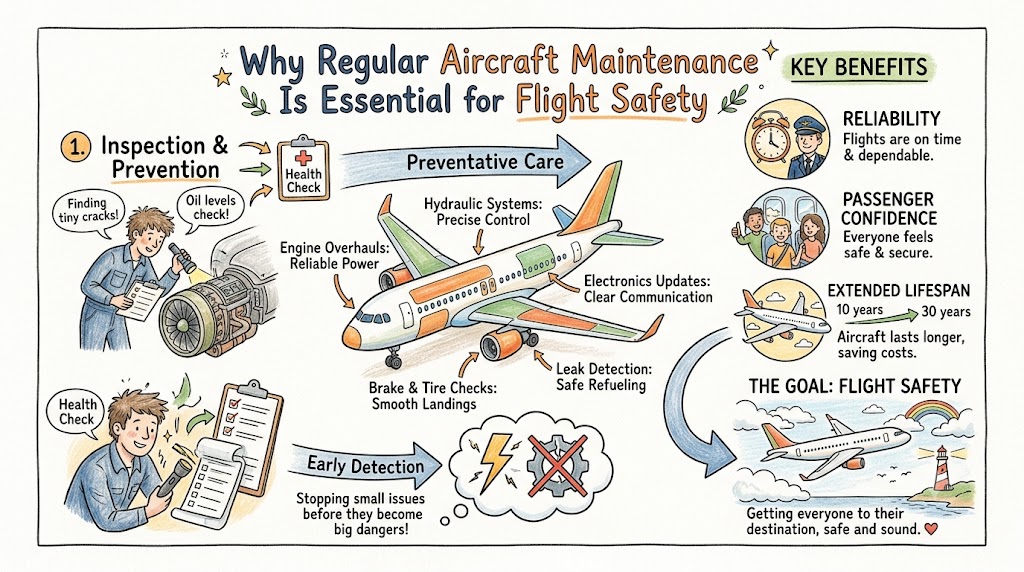
Regular aircraft maintenance is one of the most important responsibilities of aircraft ownership and operation. Whether an aircraft is used for private travel, corporate aviation, charter service, training, or aircraft management, its safety depends on consistent inspections, timely repairs, accurate records, and professional maintenance support. Every system in an aircraft works together, from the engine and airframe to avionics, landing gear, brakes, fuel systems, hydraulics, and safety equipment. If one area is ignored, the risk to flight safety can increase.
Unlike ordinary vehicles, aircraft operate in demanding environments where vibration, pressure changes, temperature variations, weather exposure, and repeated flight cycles affect performance over time. Even small issues such as fluid leaks, worn tires, electrical faults, corrosion, or unusual engine readings can become serious problems if they are not addressed early. Regular aircraft maintenance helps identify these concerns before they lead to unexpected failures, expensive repairs, or aircraft downtime.
For private aircraft owners, corporate flight departments, pilots, and charter operators, maintenance is not just about meeting inspection requirements. It is about protecting passengers, improving reliability, reducing operational risk, controlling long-term costs, and maintaining confidence every time the aircraft leaves the ground. A proactive maintenance plan keeps the aircraft safer, more dependable, and better prepared for every flight.
Real-World Use Cases
Regular aircraft maintenance supports safer and more reliable aviation operations in many practical situations.
- Private aircraft owners reduce unexpected repair risks by identifying small issues early and keeping the aircraft ready for personal or business travel.
- Corporate jet operators maintain reliable executive travel schedules by preventing last-minute cancellations caused by mechanical problems.
- Pilots use maintenance history and inspection results to identify safety concerns before flight.
- Charter operators reduce aircraft downtime and improve fleet availability through planned inspections and preventive maintenance.
- Aircraft management companies stay inspection-ready by tracking service intervals, repair records, and compliance requirements.
- Flight schools keep training aircraft reliable by maintaining engines, landing gear, avionics, and safety equipment on a consistent schedule.
- Aircraft sellers protect resale value by maintaining strong service records and proving responsible ownership history.
Evaluation Criteria for Aircraft Owners
Aircraft owners should evaluate maintenance as a long-term safety and ownership strategy, not just a repair activity. A strong maintenance plan should match the aircraft type, usage pattern, regulatory requirements, and owner expectations.
Important criteria include:
- Aircraft type and usage frequency: A heavily used aircraft may need more frequent inspections than one flown occasionally.
- Manufacturer maintenance recommendations: Aircraft manuals and service guidance provide important inspection and maintenance intervals.
- FAA or aviation authority requirements: Owners must follow applicable inspection, repair, and airworthiness requirements.
- Engine hours and flight cycles: Engine use affects overhaul planning, trend monitoring, and component inspections.
- Airframe condition: Structural health, corrosion, cracks, dents, and fastener condition must be checked regularly.
- Avionics reliability: Communication, navigation, cockpit displays, and electrical systems must remain dependable.
- Landing gear and brake condition: These systems carry heavy operational stress during taxi, takeoff, and landing.
- Fuel and hydraulic system health: Fuel contamination, leaks, pressure issues, and hose wear can create serious safety risks.
- Maintenance documentation: Accurate records support compliance, troubleshooting, resale value, and long-term aircraft planning.
- Repair provider certification: Maintenance should be completed by qualified aviation professionals.
- Emergency repair support: Aircraft-on-ground support can reduce downtime when unexpected issues occur.
- Long-term maintenance cost planning: A maintenance budget helps owners avoid delaying essential repairs.
Best for
This guide is best for private aircraft owners, corporate aviation teams, pilots, aircraft managers, flight schools, and charter operators who want safer and more reliable aircraft operations. It is especially useful for owners who want better documentation, fewer unexpected failures, and stronger long-term maintenance planning. It also supports aviation teams that want to improve safety culture and operational readiness.
Not Ideal for
This guide is not a replacement for certified aircraft mechanics, official maintenance manuals, manufacturer instructions, FAA regulations, or professional inspection requirements. It should be used as an educational and planning guide. All technical inspections, repairs, and compliance-related maintenance should be handled by qualified aviation professionals.
Why Regular Aircraft Maintenance Matters
Regular aircraft maintenance is essential because safety depends on reliability, and reliability depends on consistent care. Aircraft systems must work correctly before, during, and after every flight.
Flight Safety
Flight safety is the primary reason for maintenance. Engines, controls, avionics, fuel systems, brakes, tires, and emergency equipment must function properly. Regular inspections help detect problems before they become dangerous in flight.
Aircraft Airworthiness
An aircraft must be airworthy to fly safely and legally. Maintenance confirms that the aircraft meets operational standards and is suitable for flight.
Mechanical Reliability
Mechanical systems wear over time. Routine checks help ensure that parts, systems, and components continue performing as expected.
Regulatory Compliance
Aircraft owners and operators must follow aviation authority requirements. Regular maintenance and accurate records help demonstrate compliance.
Reduced Downtime
Planned maintenance reduces the chance of unexpected grounding. When inspections are scheduled properly, aircraft availability improves.
Lower Long-Term Repair Costs
Minor issues are often cheaper to fix than major failures. Regular maintenance prevents small defects from turning into expensive repairs.
Better Fuel Efficiency
A properly maintained engine, clean airframe, correct tire pressure, and efficient systems can support better fuel performance.
Improved Aircraft Performance
Aircraft performance depends on healthy engines, accurate avionics, smooth controls, reliable landing gear, and proper structural condition.
Stronger Resale Value
Aircraft with complete maintenance records and consistent service history are usually more attractive to buyers.
Passenger and Pilot Confidence
A well-maintained aircraft gives pilots and passengers greater confidence. Knowing that systems have been inspected and documented creates peace of mind.
Key Areas of Aircraft Maintenance That Support Flight Safety
Aircraft maintenance includes many systems, each with a direct or indirect impact on flight safety. Owners should understand these areas even when certified professionals perform the actual work.
1- Engine Maintenance
The engine is one of the most critical systems in any aircraft. Regular engine maintenance helps protect performance, reliability, and safety.
Important Engine Maintenance Areas
- Oil level and oil condition checks
- Engine inspections
- Fuel system condition
- Spark plugs or turbine components
- Exhaust system
- Seals and hoses
- Engine mounts
- Cooling systems
- Vibration monitoring
- Engine trend monitoring
- Overhaul planning
Why It Supports Flight Safety
An engine issue can quickly become a serious flight risk. Regular oil checks, fuel system inspections, vibration analysis, and performance monitoring help detect problems early. Worn hoses, loose mounts, exhaust leaks, poor ignition, or abnormal temperature trends should never be ignored.
Best Practice
Aircraft owners should track engine hours, monitor performance data, review maintenance reports, and address abnormal engine behavior immediately. Overhaul planning should begin well before service limits create scheduling pressure.
2- Airframe and Structural Inspections
The airframe provides the aircraft’s structural foundation. It must remain strong, aligned, corrosion-free, and free from hidden damage.
Important Airframe Inspection Areas
- Corrosion checks
- Cracks and dents
- Panels and access covers
- Fasteners and rivets
- Composite or aluminum structure
- Doors and windows
- Wing structure
- Tail section
- Surface protection
- Paint condition
Why It Supports Flight Safety
Structural damage can affect strength, aerodynamics, pressurization, and long-term durability. Corrosion is especially important because it can spread quietly and weaken components over time. Regular inspections help prevent hidden structural problems from becoming major safety concerns.
Best Practice
Inspect the aircraft frequently, especially after harsh weather exposure, hard landings, hangar movement, or suspected impact. Any visible crack, dent, corrosion spot, loose panel, or unusual vibration should be reviewed by a qualified technician.
3- Avionics and Electrical System Checks
Avionics and electrical systems help pilots communicate, navigate, monitor aircraft performance, and manage flight operations.
Important Avionics and Electrical Areas
- Communication radios
- Navigation systems
- GPS and flight management systems
- Transponder
- Cockpit displays
- Batteries
- Wiring
- Circuit breakers
- Lighting systems
- Software or database updates
Why It Supports Flight Safety
Faulty avionics can affect navigation, communication, situational awareness, and emergency response. Weak batteries, damaged wiring, failed displays, outdated databases, or unreliable radios can create operational risk.
Best Practice
Pilots and owners should test avionics regularly, keep databases updated where applicable, monitor battery condition, and address intermittent electrical issues before they become complete failures.
4- Landing Gear and Brake Maintenance
Landing gear and brakes are exposed to heavy stress during every takeoff, landing, and taxi operation.
Important Landing Gear and Brake Areas
- Tires
- Brakes
- Struts
- Hydraulic leaks
- Bearings
- Wheels
- Landing gear doors
- Retraction systems
- Shock absorption
- Ground handling components
Why It Supports Flight Safety
Tire failures, weak brakes, hydraulic leaks, or landing gear problems can create serious risk during takeoff and landing. These phases of flight require strong, predictable ground handling and stopping performance.
Best Practice
Check tire condition and pressure often, inspect brakes for wear, monitor hydraulic leaks, and ensure retractable gear systems are serviced according to manufacturer recommendations.
5- Fuel and Hydraulic System Maintenance
Fuel and hydraulic systems must be clean, leak-free, and properly pressurized. These systems support engine operation, braking, landing gear, and flight controls in many aircraft.
Important Fuel and Hydraulic Areas
- Fuel contamination checks
- Fuel lines
- Fuel pumps
- Fuel filters
- Fuel tanks
- Valves and fittings
- Hydraulic pressure
- Hoses and seals
- Fluid quality
- Leak inspection
Why It Supports Flight Safety
Fuel contamination can affect engine performance. Hydraulic leaks can affect brakes, landing gear, and flight control systems. Worn hoses, poor seals, or contaminated fluids can lead to system failure.
Best Practice
Fuel should be checked for contamination before flight where applicable. Hydraulic fluid levels, pressure readings, and leak signs should be monitored regularly. Any unexplained fuel or hydraulic smell, stain, or pressure change should be investigated.
6- Flight Control System Inspections
Flight controls allow pilots to manage pitch, roll, yaw, trim, and aircraft attitude. These systems must move smoothly and respond correctly.
Important Flight Control Areas
- Control cables
- Pulleys
- Hinges
- Rods
- Linkages
- Bearings
- Control surfaces
- Trim systems
- Smooth movement
- Correct response
Why It Supports Flight Safety
Flight control problems can affect handling and pilot control. Stiff controls, loose linkages, worn bearings, cable fraying, or trim issues can create unsafe conditions.
Best Practice
Flight controls should be checked during pre-flight inspections and scheduled maintenance. Any unusual stiffness, looseness, vibration, or control response should be inspected immediately.
7- Cabin and Safety Equipment Checks
Cabin and safety equipment protect passengers and support emergency readiness.
Important Cabin and Safety Areas
- Seat belts
- Harnesses
- Emergency locator transmitter
- Fire extinguisher
- Oxygen systems
- First aid kit
- Emergency exits
- Cabin lighting
- Safety placards
- Passenger briefing materials
Why It Supports Flight Safety
Emergency equipment must work when needed. Seat belts, oxygen systems, fire extinguishers, emergency exits, and safety placards all play important roles in passenger protection.
Best Practice
Safety equipment should be inspected regularly for condition, accessibility, expiration status, and secure mounting. Cabin items should be properly secured to prevent loose objects during flight.
8- Maintenance Records and Documentation
Maintenance records are a critical part of aircraft safety and ownership. Good records show what has been inspected, repaired, replaced, and approved.
Important Documentation Areas
- Inspection logs
- Repair records
- Part replacement history
- Service bulletins
- Airworthiness directives
- Compliance tracking
- Engine hours
- Flight cycles
- Avionics updates
- Maintenance invoices
Why It Supports Flight Safety
Records help technicians understand the aircraft’s history. They also support compliance, troubleshooting, resale value, and maintenance planning. Poor records can hide recurring issues or create uncertainty during inspections.
Best Practice
Keep digital and physical copies of important maintenance records. Update logs after every inspection, repair, replacement, or compliance action.
Scheduled vs Preventive vs Unscheduled Maintenance
Aircraft maintenance can be grouped into several types. Each plays a role in safety and reliability.
| Maintenance Type | What It Means | Examples | Why It Matters for Safety |
|---|---|---|---|
| Scheduled Maintenance | Planned inspections or service at required intervals | Annual inspections, phase inspections, engine service intervals | Ensures required checks are completed before safety risks increase |
| Preventive Maintenance | Routine care designed to reduce future failures | Cleaning, lubrication, tire checks, corrosion prevention, minor servicing | Helps identify and prevent problems before they become serious |
| Condition-Based Maintenance | Maintenance based on actual aircraft condition or performance data | Engine trend monitoring, vibration analysis, oil analysis, component wear tracking | Allows early detection of developing failures |
| Unscheduled Maintenance | Repairs needed after unexpected problems appear | Fluid leaks, avionics failures, tire damage, engine irregularities | Restores safety after unexpected issues are found |
Aircraft Maintenance Safety Checklist
A practical maintenance checklist helps owners stay organized and safety-focused.
- Review maintenance logs before major flights
- Complete pre-flight inspections
- Monitor engine performance trends
- Check fuel quality and contamination
- Inspect tires and brakes regularly
- Track avionics updates
- Watch for fluid leaks
- Schedule inspections early
- Follow manufacturer recommendations
- Use certified maintenance professionals
- Keep repair documentation organized
- Address minor issues before they become major problems
- Inspect for corrosion after environmental exposure
- Plan maintenance around flight schedules
- Review service bulletins and airworthiness directives
- Confirm emergency equipment condition
- Check battery and electrical system health
- Document every repair and replacement
- Avoid flying with unresolved safety concerns
- Build a long-term maintenance budget
Aircraft Maintenance Comparison Table
| Maintenance Area | What to Check | Safety Risk if Ignored | Best Practice |
| Engine | Oil, fuel system, exhaust, mounts, hoses, trend data | Power loss, overheating, vibration, failure risk | Track engine hours and inspect regularly |
| Airframe | Corrosion, cracks, dents, panels, fasteners | Structural weakness or aerodynamic issues | Inspect frequently and repair damage early |
| Avionics | Radios, GPS, displays, transponder, batteries | Poor navigation, communication failure, reduced awareness | Test systems and keep updates current |
| Landing Gear | Tires, brakes, struts, wheels, retraction systems | Landing difficulty, braking issues, ground handling risk | Check wear, leaks, and function often |
| Fuel System | Contamination, pumps, filters, lines, tanks | Engine performance problems or fuel starvation | Sample fuel and inspect lines regularly |
| Hydraulic System | Pressure, hoses, seals, leaks, fluid condition | Brake, gear, or control system problems | Monitor leaks and service fluid systems |
| Flight Controls | Cables, pulleys, hinges, linkages, trim | Poor handling or control restriction | Inspect movement and response carefully |
| Cabin Safety | Seat belts, oxygen, fire extinguisher, exits | Reduced emergency readiness | Check equipment condition and access |
| Records | Logs, repairs, inspections, directives | Compliance issues and poor troubleshooting | Keep complete and organized records |
Common Aircraft Maintenance Mistakes Owners Should Avoid
Even experienced aircraft owners can make maintenance mistakes when schedules are busy or costs increase. Avoiding these mistakes protects safety and aircraft value.
Delaying Required Inspections
Required inspections should never be postponed without proper guidance. Delays can create compliance problems and allow small issues to become serious.
Ignoring Small Leaks
A small oil, fuel, or hydraulic leak can point to a larger system problem. Leaks should be investigated promptly.
Poor Maintenance Documentation
Incomplete records can create confusion, reduce resale value, and make troubleshooting harder. Every maintenance event should be recorded accurately.
Choosing Low-Cost Uncertified Repair Providers
Aircraft maintenance should be handled by qualified aviation professionals. Choosing based only on cost can increase safety and compliance risks.
Skipping Corrosion Inspections
Corrosion can weaken structures and spread over time. Aircraft stored or operated in humid, coastal, or outdoor environments need extra attention.
Ignoring Engine Performance Data
Unusual engine temperature, pressure, fuel flow, vibration, or oil consumption trends should be reviewed early.
Overlooking Tire and Brake Wear
Tires and brakes are safety-critical. Worn tires, weak brakes, or leaking hydraulic systems can create serious landing and taxi risks.
Delaying Avionics Updates
Outdated or unreliable avionics can affect navigation, communication, and situational awareness.
Not Planning for Scheduled Maintenance
Last-minute maintenance planning can disrupt travel and increase downtime. Owners should schedule inspections early.
Focusing Only on Short-Term Repair Cost
The cheapest repair decision is not always the safest or most cost-effective. Long-term reliability should guide maintenance choices.
How to Choose the Right Aircraft Maintenance Provider
The right maintenance provider helps aircraft owners maintain safety, compliance, and operational reliability. Choosing carefully is essential.
Certified Aviation Technicians
Work with technicians who have proper aviation qualifications and relevant aircraft experience.
FAA Repair Station or Applicable Certification
For many services, owners should look for providers with appropriate regulatory approval or repair station capability.
Aircraft Type Experience
A provider familiar with your aircraft model can troubleshoot faster and understand common issues.
Strong Safety Culture
A good maintenance provider prioritizes safety, clear procedures, and careful inspections over rushed repairs.
Transparent Inspection Reports
Owners should receive clear reports explaining findings, repair priorities, and recommended actions.
Hangar Facilities
Proper facilities help protect the aircraft during inspection and repair work.
Parts Sourcing Capability
Reliable parts sourcing reduces downtime and supports better maintenance quality.
Avionics Expertise
Modern aircraft rely heavily on avionics. Providers with avionics capability can support navigation, communication, and display systems.
Emergency Repair Support
Aircraft-on-ground support can be important when unexpected mechanical problems disrupt travel.
Clear Communication
Good providers explain repair needs, timelines, costs, and safety concerns in a way owners can understand.
Preventive Maintenance Planning Support
A proactive provider helps owners build maintenance calendars and avoid preventable issues.
Reputation and Client Trust
Choose providers with a strong service history, professional communication, and client confidence.
Preventive Maintenance Tips for Aircraft Owners
Preventive maintenance helps owners reduce risk, improve reliability, and control long-term costs.
- Build a maintenance calendar: Track inspections, service intervals, and upcoming maintenance needs.
- Track engine hours and flight cycles: Engine usage affects inspections and overhaul planning.
- Store aircraft properly: Hangar storage helps reduce weather damage, corrosion, and paint deterioration.
- Keep digital and physical maintenance records: Backup records protect ownership history.
- Clean aircraft regularly: Cleaning helps reveal leaks, cracks, corrosion, and surface damage.
- Inspect for corrosion: Pay extra attention to hidden areas, seams, fasteners, and moisture-prone zones.
- Review maintenance reports carefully: Understand what was inspected, repaired, or recommended.
- Address minor defects early: Small problems are easier and cheaper to fix when handled promptly.
- Schedule maintenance around travel plans: Avoid grounding the aircraft during important trips.
- Work with qualified aviation professionals: Certified support helps protect safety and compliance.
- Monitor avionics performance: Intermittent faults should be investigated before they become failures.
- Review fuel and fluid quality: Contaminants or leaks should be addressed immediately.
- Plan for parts availability: Some components require lead time, so plan ahead.
- Budget for preventive care: A maintenance reserve helps avoid delaying important work.
- Communicate clearly with pilots and technicians: Shared information improves safety decisions.
Frequently Asked Questions
1. Why is regular aircraft maintenance important for flight safety?
Regular aircraft maintenance helps identify mechanical, structural, electrical, and system issues before they create flight risk. It ensures that engines, controls, avionics, landing gear, brakes, and safety equipment remain reliable. Consistent maintenance gives pilots and passengers greater confidence in every flight.
2. How often should aircraft maintenance be performed?
Maintenance frequency depends on aircraft type, usage, manufacturer recommendations, and aviation authority requirements. Some checks happen before every flight, while deeper inspections follow scheduled intervals. Owners should work with certified maintenance professionals to build a proper maintenance plan.
3. What happens if aircraft maintenance is delayed?
Delayed maintenance can increase the risk of mechanical failures, compliance problems, expensive repairs, and unexpected aircraft grounding. Small issues may become major problems when ignored. Delaying inspections can also reduce aircraft reliability and resale value.
4. What is included in regular aircraft maintenance?
Regular maintenance may include engine checks, airframe inspections, avionics testing, landing gear service, fuel system checks, hydraulic inspections, flight control reviews, and safety equipment checks. It also includes documentation updates and compliance tracking. The exact scope depends on the aircraft and inspection type.
5. How does preventive maintenance reduce flight risk?
Preventive maintenance finds early warning signs before they become failures. It helps detect leaks, corrosion, worn tires, abnormal engine trends, electrical issues, and control system problems. This reduces the chance of surprise failures during operation.
6. Why are aircraft maintenance records important?
Maintenance records show the aircraft’s inspection, repair, replacement, and compliance history. They help technicians troubleshoot problems and support regulatory requirements. Complete records also improve buyer confidence and resale value.
7. Can aircraft owners perform maintenance themselves?
Some limited owner-permitted maintenance may be allowed depending on regulations and aircraft type, but technical repairs and inspections must be handled by qualified professionals. Owners should never attempt complex maintenance without proper authorization and knowledge. Safety-critical work should always be professionally reviewed.
8. What are signs an aircraft needs immediate inspection?
Warning signs include fluid leaks, unusual engine noise, abnormal vibration, avionics failures, warning lights, brake issues, tire damage, fuel contamination, or visible structural damage. Any unexpected change in aircraft behavior should be treated seriously. The aircraft should be inspected before further operation when safety is uncertain.
9. How does maintenance affect aircraft resale value?
A well-maintained aircraft with complete records is usually more attractive to buyers. Strong maintenance history shows responsible ownership and reduces uncertainty. Poor documentation or delayed maintenance can lower confidence and reduce resale value.
10. How do I choose a reliable aircraft maintenance provider?
Look for certified aviation technicians, aircraft type experience, transparent reporting, strong safety practices, proper facilities, avionics capability, and emergency support. A reliable provider communicates clearly and helps with preventive maintenance planning. Reputation and trust are also important factors.
Conclusion
Regular aircraft maintenance is essential for flight safety, regulatory compliance, aircraft reliability, performance, and long-term ownership value. Every aircraft system, from the engine and airframe to avionics, landing gear, fuel systems, flight controls, and emergency equipment, must be inspected and maintained consistently to reduce risk. Aircraft owners and operators should follow scheduled inspections, monitor aircraft condition, keep detailed maintenance records, and address minor issues before they become major problems. Most importantly, they should work with certified aviation maintenance professionals who understand the aircraft type, safety requirements, and long-term maintenance needs. A proactive maintenance approach protects passengers, supports pilot confidence, reduces downtime, and helps keep every flight safer and more dependable.

