
Introduction
Owning an aircraft is a significant investment that comes with ongoing responsibilities. Whether you operate a private jet, turboprop, helicopter, or business aircraft, proper maintenance is essential for ensuring flight safety, regulatory compliance, operational reliability, and long-term asset value. While most aircraft owners understand the importance of maintenance, many unintentionally make mistakes that lead to higher costs, unexpected downtime, and safety concerns.
Aircraft maintenance is not simply about fixing problems when they occur. It involves preventive care, scheduled inspections, proper documentation, and proactive monitoring of aircraft systems. Small maintenance oversights can quickly become major repairs, resulting in aircraft grounding, expensive component replacements, or regulatory issues.
This guide explores the most common aircraft maintenance mistakes owners should avoid and explains how proper maintenance planning can improve safety, reliability, and aircraft longevity.
Real-World Use Cases
Proper maintenance management benefits aircraft owners in numerous ways:
- Private jet owners reducing unexpected repair expenses
- Corporate aviation departments maintaining reliable executive transportation
- Charter operators maximizing aircraft availability
- Aircraft management companies improving operational efficiency
- Pilots ensuring safer flight operations
- Owners preparing aircraft for resale
- Fleet managers tracking maintenance schedules
- Operators reducing aircraft downtime
- Aviation businesses improving compliance management
- Aircraft owners protecting long-term investments
Evaluation Criteria for Effective Aircraft Maintenance
When evaluating an aircraft maintenance program, owners should focus on:
- FAA compliance requirements
- Scheduled inspection management
- Preventive maintenance programs
- Maintenance documentation quality
- Engine health monitoring
- Avionics maintenance practices
- Corrosion prevention programs
- Certified replacement parts
- Technician qualifications
- Digital maintenance tracking systems
Best For
This guide is ideal for private aircraft owners, business jet operators, charter companies, fleet managers, and aviation professionals seeking to improve maintenance practices and reduce operational risks.
Not Ideal For
This guide is not intended for military aviation maintenance operations or large commercial airline fleet maintenance programs, which follow different operational structures and regulatory requirements.
Why Proper Aircraft Maintenance Matters
Flight Safety
Aircraft maintenance directly impacts passenger and crew safety. Proper inspections help identify issues before they become serious hazards.
Regulatory Compliance
FAA regulations require specific inspections, documentation, and maintenance procedures to maintain airworthiness.
Aircraft Reliability
Well-maintained aircraft experience fewer mechanical issues and operational disruptions.
Operational Efficiency
Preventive maintenance minimizes downtime and improves scheduling reliability.
Cost Reduction
Addressing small issues early prevents costly repairs later.
Higher Resale Value
Aircraft with complete maintenance records generally command higher resale prices.
Longer Aircraft Lifespan
Consistent maintenance extends the useful life of engines, avionics, airframes, and other critical systems.
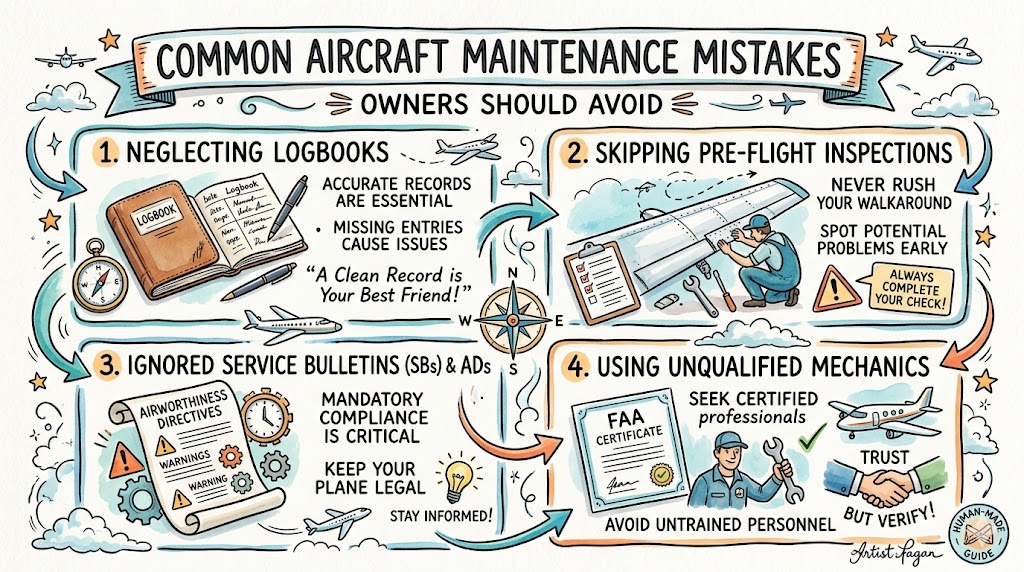
Common Aircraft Maintenance Mistakes Owners Should Avoid
1- Delaying Scheduled Inspections
One of the most common mistakes is postponing required inspections.
These inspections include:
- Annual inspections
- Manufacturer-recommended inspections
- Hour-based inspections
- Component-specific inspections
Delaying inspections can lead to:
- Regulatory violations
- Safety risks
- Expensive repair bills
- Aircraft grounding
2- Ignoring Small Maintenance Issues
Minor problems often become major repairs when ignored.
Examples include:
- Small fluid leaks
- Corrosion spots
- Electrical faults
- Unusual vibrations
- Minor hydraulic issues
Addressing these problems early is usually less expensive and less disruptive.
3- Choosing Repair Providers Based Only on Price
Low-cost maintenance providers may not always provide the highest quality service.
Potential risks include:
- Inexperienced technicians
- Improper repairs
- Poor documentation
- Delayed turnaround times
Aircraft owners should prioritize quality, certification, and experience rather than focusing solely on cost.
4- Poor Maintenance Documentation
Accurate maintenance records are critical.
Important documentation includes:
- Inspection reports
- Repair records
- Component replacement history
- Airworthiness compliance records
Poor documentation can create compliance problems and negatively affect resale value.
5- Neglecting Corrosion Prevention
Corrosion remains one of the most common aircraft maintenance challenges.
Factors contributing to corrosion include:
- Coastal environments
- Humidity
- Improper storage
- Environmental contamination
Regular inspections and preventive treatments help minimize corrosion damage.
6- Skipping Preventive Maintenance
Some owners focus only on fixing problems after they occur.
Preventive maintenance helps:
- Detect issues early
- Improve reliability
- Reduce downtime
- Extend component lifespan
A proactive approach is usually more cost-effective than reactive repairs.
7- Ignoring Engine Monitoring Data
Modern aircraft provide valuable engine performance information.
Engine monitoring can reveal:
- Temperature abnormalities
- Fuel system issues
- Wear patterns
- Performance degradation
Ignoring these warning signs may lead to major engine repairs or overhauls.
8- Using Non-Certified Parts
Using uncertified components can create serious problems.
Potential consequences include:
- Regulatory violations
- Reduced reliability
- Airworthiness concerns
- Safety risks
Always verify part certification and traceability before installation.
9- Delaying Avionics Upgrades
Outdated avionics systems can impact both safety and operational efficiency.
Benefits of modern avionics include:
- Improved navigation accuracy
- Better situational awareness
- Enhanced communication
- Regulatory compliance
Delaying upgrades may increase operational risks and maintenance challenges.
10- Improper Aircraft Storage
Storage conditions directly affect aircraft condition.
Poor storage can cause:
- Corrosion
- Paint damage
- Interior deterioration
- Electrical problems
Whenever possible, aircraft should be stored in suitable hangar facilities.
11- Overlooking Tire and Brake Inspections
Landing gear systems experience significant stress during operations.
Regular inspection helps identify:
- Tire wear
- Brake deterioration
- Hydraulic leaks
- Structural issues
Neglecting these components can affect safety during takeoff and landing.
12- Ignoring Manufacturer Maintenance Guidance
Manufacturers issue important recommendations regarding maintenance procedures and service intervals.
Ignoring:
- Service bulletins
- Maintenance schedules
- Component replacement recommendations
can increase risk and reduce aircraft reliability.
Comparison Table
| Maintenance Mistake | Potential Consequence | Cost Impact | Safety Impact |
|---|---|---|---|
| Delayed Inspections | Regulatory issues | High | High |
| Ignoring Minor Issues | Major repairs | High | Medium |
| Choosing Cheapest Provider | Poor repairs | Medium | High |
| Poor Documentation | Compliance problems | Medium | Medium |
| Ignoring Corrosion | Structural damage | High | High |
| Skipping Preventive Maintenance | Unexpected failures | High | High |
| Ignoring Engine Data | Engine damage | Very High | High |
| Using Non-Certified Parts | Airworthiness concerns | High | High |
| Delaying Avionics Updates | Reduced capability | Medium | Medium |
| Improper Storage | Component deterioration | Medium | Medium |
| Neglecting Tires and Brakes | Landing issues | High | High |
| Ignoring Manufacturer Guidance | Reduced reliability | Medium | High |
How to Build a Better Aircraft Maintenance Program
Create a Maintenance Calendar
Track inspections, servicing requirements, and component replacement schedules.
Track Inspection Deadlines
Use reminders to ensure inspections are never missed.
Use Digital Maintenance Records
Digital systems improve accuracy and accessibility.
Schedule Preventive Maintenance
Identify and address problems before failures occur.
Monitor Engine Health
Review engine data regularly to identify developing issues.
Conduct Corrosion Inspections
Regular inspections help prevent structural damage.
Work With Certified Repair Stations
Experienced maintenance providers improve quality and reliability.
Maintain Parts Traceability
Keep records of all installed components and certifications.
Review Aircraft Performance Data
Performance trends often reveal hidden maintenance concerns.
Train Operational Personnel
Pilots and maintenance staff should understand aircraft-specific maintenance requirements.
Signs Your Aircraft Needs Immediate Maintenance Attention
Watch for these warning signs:
- Unusual engine readings
- Abnormal vibrations
- Fluid leaks
- Electrical system failures
- Avionics malfunctions
- Brake performance issues
- Visible corrosion
- Unusual noises
- Warning lights or indicators
- Changes in aircraft performance
Immediate investigation can prevent more serious problems.
Future Trends in Aircraft Maintenance
Predictive Maintenance
Advanced monitoring systems identify issues before failures occur.
AI-Based Diagnostics
Artificial intelligence helps detect abnormalities and improve maintenance planning.
Digital Maintenance Records
Electronic record systems improve compliance and operational efficiency.
Aircraft Health Monitoring Systems
Real-time monitoring improves reliability and decision-making.
Remote Diagnostics
Remote analysis helps maintenance teams troubleshoot issues more quickly.
Advanced Corrosion Detection
New technologies improve early detection and prevention.
Smart Maintenance Planning
Data-driven scheduling improves maintenance efficiency and reduces downtime.
Frequently Asked Questions
1- What is the most common aircraft maintenance mistake?
Delaying inspections and ignoring small maintenance issues are among the most common mistakes. These problems often grow into larger and more expensive repairs.
2- Why are annual inspections important?
Annual inspections help ensure the aircraft remains airworthy, compliant with regulations, and safe for operation. They also identify developing maintenance issues early.
3- Can preventive maintenance reduce operating costs?
Yes. Preventive maintenance helps avoid expensive emergency repairs, reduces downtime, and improves aircraft reliability.
4- How does corrosion affect aircraft safety?
Corrosion weakens structural components and can compromise aircraft integrity if not detected and treated promptly.
5- Why is maintenance documentation important?
Documentation supports regulatory compliance, simplifies inspections, improves maintenance planning, and increases resale value.
6- What are the risks of using uncertified parts?
Uncertified parts may fail unexpectedly, create compliance issues, and compromise flight safety.
7- How often should avionics systems be inspected?
Inspection frequency depends on aircraft type and equipment, but regular testing and maintenance are essential for reliability and compliance.
8- What role does engine monitoring play?
Engine monitoring helps detect abnormalities early, reducing the risk of major engine damage and unexpected failures.
9- How can owners reduce aircraft downtime?
By following preventive maintenance schedules, tracking inspections, and addressing issues before they become serious.
10- How do maintenance records affect aircraft resale value?
Buyers generally prefer aircraft with complete maintenance histories because they provide confidence in the aircraft’s condition and compliance status.
Conclusion
Aircraft maintenance is one of the most important responsibilities of aircraft ownership. Many costly repairs, operational disruptions, and safety concerns result from maintenance mistakes that could have been avoided through better planning and proactive management. Delaying inspections, ignoring minor issues, neglecting documentation, and postponing preventive maintenance often create larger problems over time. By working with certified maintenance providers, maintaining accurate records, monitoring aircraft systems, and following manufacturer recommendations, owners can improve safety, reduce operating costs, maximize reliability, and protect the long-term value of their aircraft. A proactive maintenance strategy is not simply a regulatory requirement—it is a critical investment in flight safety and operational success.

