
Introduction
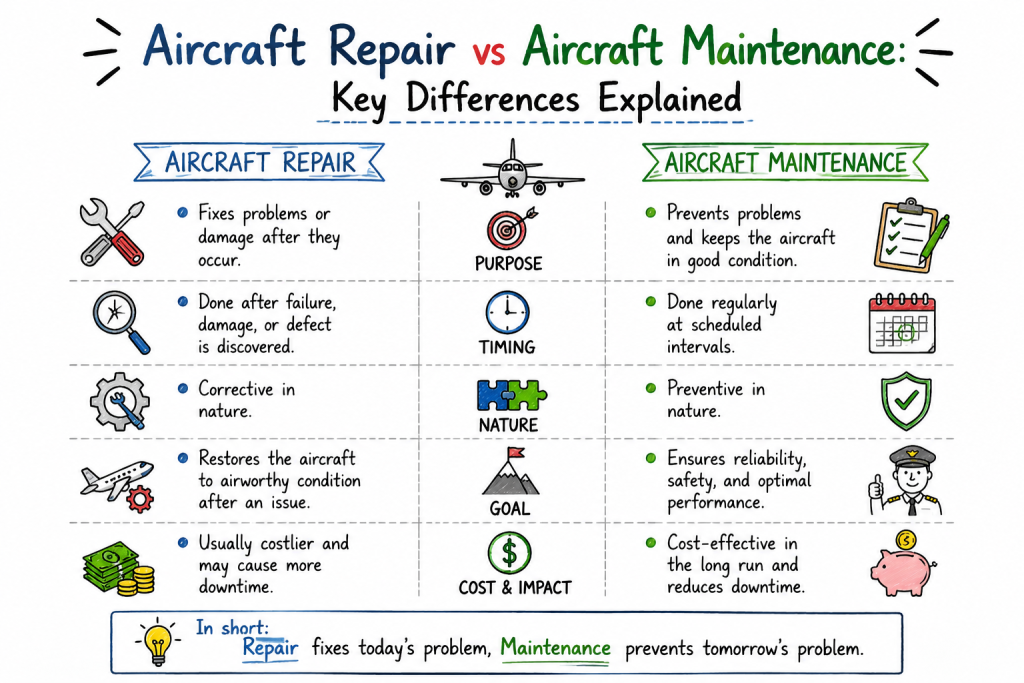
Understanding the distinction between aircraft repair and aircraft maintenance is critical for aircraft owners, operators, and aviation professionals. While both are essential for ensuring airworthiness and safety, they serve different purposes and are applied under different circumstances. Maintenance focuses on preventing problems before they occur, ensuring compliance with regulations and operational readiness, whereas repair addresses specific faults or failures after they arise. Recognizing these differences helps reduce costs, avoid downtime, and maintain the highest safety standards in aviation operations.
Real-world Use Cases
For a commercial flight operator, routine maintenance includes scheduled inspections, oil changes, and avionics updates to prevent unexpected malfunctions. In contrast, aircraft repair may be needed after a component failure, such as fixing a hydraulic leak, replacing a damaged propeller, or repairing structural damage from wear or impact. Private aircraft owners also rely on this distinction to plan budgets: routine maintenance is planned and recurring, while repairs are unplanned and often more urgent.
Evaluation Criteria for Aircraft Services
When deciding between repair and maintenance, evaluate factors such as the aircraft’s age, operational hours, upcoming flights, component condition, and regulatory requirements. Choosing certified service providers and following manufacturer guidelines ensures that both repair and maintenance work meet FAA or equivalent aviation authority standards.
Key Differences Between Aircraft Repair and Maintenance
1- Purpose
- Maintenance: Preventive in nature; keeps the aircraft operating safely and efficiently.
- Repair: Corrective; fixes problems that have already occurred to restore functionality.
2- Timing and Frequency
- Maintenance: Scheduled at regular intervals based on flight hours, calendar time, or cycles.
- Repair: Occurs as needed when a defect, failure, or malfunction is detected.
3- Regulatory Requirements
- Maintenance: Often mandated by law and manufacturer recommendations, such as 100-hour inspections or annual checks.
- Repair: Must comply with regulatory standards but is typically initiated by detected issues rather than scheduled requirements.
4- Complexity
- Maintenance: Can include simple tasks like oil changes or filter replacement, as well as complex system checks.
- Repair: Often more complex and urgent, potentially involving structural, avionics, or engine work.
5- Cost Implications
- Maintenance: Predictable recurring costs that can be budgeted annually.
- Repair: Can be expensive and unpredictable, depending on the severity and part availability.
6- Safety and Risk
- Maintenance: Reduces the risk of unexpected failures and extends aircraft lifespan.
- Repair: Restores safety and airworthiness after an issue occurs; delays can impact operational safety.
7- Planning and Scheduling
- Maintenance: Planned in advance and integrated into flight schedules.
- Repair: Often urgent and must be addressed immediately to return the aircraft to service.
8- Examples
- Maintenance: Engine oil changes, avionics software updates, tire inspections.
- Repair: Replacing a cracked windscreen, fixing a fuel leak, repairing a damaged landing gear strut.
Practical Tips for Aircraft Owners
- Follow the aircraft manufacturer’s recommended maintenance schedule.
- Keep detailed records of all maintenance and repairs.
- Address issues promptly to avoid escalation and higher repair costs.
- Use certified and experienced service providers for both maintenance and repair.
- Budget separately for maintenance (predictable) and repair (unplanned).
Comparison Notes
While both repair and maintenance are essential for airworthiness, maintenance is preventive and ongoing, whereas repair is corrective and reactive. Effective aviation operations rely on a combination of both, ensuring safety, reliability, and efficiency. Neglecting maintenance can lead to more frequent and costly repairs, while timely repairs restore functionality and prevent further damage.
FAQs
1- What is the main difference between maintenance and repair?
Maintenance is preventive, aimed at avoiding issues, while repair fixes problems that have already occurred.
2- How often should aircraft maintenance be performed?
It depends on flight hours, cycles, and regulatory requirements, often including 100-hour or annual inspections.
3- Are repairs more expensive than maintenance?
Typically yes, because repairs are often urgent and may involve replacement of critical components.
4- Do maintenance and repairs require certified technicians?
Yes. FAA or equivalent certified professionals ensure work meets safety and regulatory standards.
5- Can regular maintenance reduce repair costs?
Absolutely. Preventive maintenance reduces the likelihood of unexpected failures and costly repairs.
6- Is maintenance required by law?
Yes. Certain inspections and checks are legally mandated to maintain aircraft airworthiness.
7- Can I perform maintenance or repair myself?
Minor maintenance tasks may be performed by qualified owners, but most repairs require certified technicians.
8- What happens if repairs are delayed?
Delays can compromise safety, lead to additional damage, and cause operational downtime.
9- Should I track maintenance and repairs separately?
Yes. Maintaining separate records helps with budgeting, compliance, and resale value.
10- Are there different types of aircraft repair?
Yes. Repairs can be structural, mechanical, avionics-related, or cosmetic, depending on the issue.
Conclusion
Understanding the difference between aircraft repair and maintenance is essential for safety, regulatory compliance, and cost management. Maintenance keeps the aircraft operating smoothly and prevents failures, while repairs address problems that arise, restoring airworthiness. Both are integral to aircraft operations, and careful planning, regular inspections, and timely repairs ensure the aircraft remains safe, reliable, and efficient. For aircraft owners and operators, prioritizing both preventive maintenance and prompt repairs is key to successful aviation management.

