
Introduction
Preventive aircraft maintenance is a proactive approach to keeping aircraft in optimal condition before problems arise. For aircraft owners and operators, investing in routine inspections, component servicing, and system checks may seem like an upfront cost, but it significantly reduces long-term expenses. By addressing potential issues early, preventive maintenance helps avoid costly repairs, unplanned downtime, and safety hazards. Understanding the financial and operational benefits of regular maintenance allows owners to optimize aircraft longevity, efficiency, and reliability while minimizing unexpected expenditures.
Real-world Use Cases
Commercial operators who schedule routine engine checks and avionics inspections often avoid sudden failures that could ground aircraft for weeks. Private aircraft owners who regularly replace filters, check landing gear, and inspect structural components find that costly repairs and emergency part replacements are much less frequent. Maintenance teams applying predictive and preventive strategies across fleets report fewer unscheduled repairs, lower labor costs, and improved operational efficiency. These examples highlight the tangible benefits of a disciplined preventive maintenance program.
Evaluation Criteria for Preventive Maintenance
Before implementing preventive maintenance, consider the aircraft type, age, operational hours, and manufacturer recommendations. Evaluate service provider expertise, availability of certified parts, cost-effectiveness, and compliance with regulatory requirements. Planning maintenance schedules according to these criteria ensures that aircraft remain airworthy and cost-efficient over the long term.
Key Ways Preventive Maintenance Reduces Long-Term Costs
1- Avoiding Major Repairs
Routine checks catch minor issues before they escalate, preventing expensive engine overhauls, structural repairs, or system replacements.
2- Extending Component Lifespan
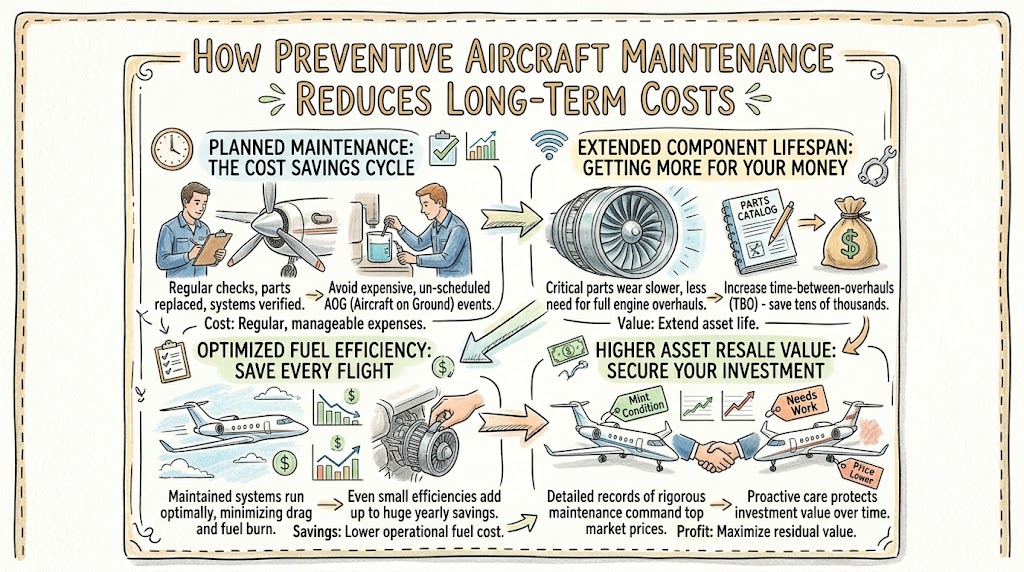
Regular servicing and timely part replacement prolong the life of engines, avionics, landing gear, and other critical systems, reducing the frequency of costly replacements.
3- Minimizing Unplanned Downtime
Preventive maintenance allows operators to schedule inspections during low-activity periods, avoiding revenue loss caused by unscheduled aircraft grounding.
4- Improving Fuel Efficiency
Well-maintained engines and airframes operate efficiently, reducing fuel consumption and lowering operational costs over time.
5- Reducing Safety Risks and Liability
Maintaining systems proactively prevents accidents caused by mechanical failures, mitigating liability costs and protecting passenger and crew safety.
6- Maintaining Resale Value
Aircraft with documented preventive maintenance histories retain higher market value and attract buyers more easily, protecting long-term investment.
7- Simplifying Budget Planning
Predictable maintenance costs allow operators to allocate funds effectively, preventing unexpected financial burdens from emergency repairs.
8- Supporting Regulatory Compliance
Consistent maintenance ensures adherence to FAA or equivalent regulations, avoiding fines, grounding, or other penalties.
Practical Tips for Aircraft Owners
- Establish a maintenance schedule based on manufacturer recommendations and operational hours.
- Use certified providers for inspections, servicing, and part replacement.
- Keep detailed records of all maintenance activities for reference, resale, and compliance purposes.
- Monitor critical systems proactively to detect wear or performance changes early.
- Budget for preventive care annually to avoid last-minute financial strain.
Comparison Notes
Reactive or corrective maintenance addresses issues only after they occur, often at higher costs and with operational disruptions. Preventive maintenance, in contrast, mitigates risk, optimizes performance, and reduces the likelihood of unexpected repairs, providing a more predictable and cost-efficient approach to aircraft ownership.
FAQs
1- What is preventive aircraft maintenance?
Routine servicing, inspections, and checks designed to prevent failures and maintain optimal aircraft performance.
2- How often should preventive maintenance be performed?
Frequency depends on aircraft type, age, flight hours, and manufacturer recommendations, often including daily, monthly, and annual inspections.
3- Does preventive maintenance save money?
Yes. Early detection of issues prevents major repairs and reduces operational downtime, lowering long-term costs.
4- Are preventive checks required by law?
Many inspections are mandated by FAA or equivalent authorities to maintain airworthiness.
5- Can I perform preventive maintenance myself?
Some minor tasks may be performed by qualified owners, but most inspections and servicing require certified technicians.
6- How does preventive maintenance affect safety?
It reduces the risk of mechanical failure, ensuring aircraft remain safe for flight operations.
7- Does preventive maintenance include engine servicing?
Yes. Engines, avionics, landing gear, and critical systems are regularly inspected and serviced.
8- What happens if preventive maintenance is neglected?
Neglecting maintenance increases the risk of expensive repairs, system failures, operational downtime, and liability issues.
9- Can preventive maintenance improve fuel efficiency?
Yes. Properly maintained engines and airframes operate more efficiently, reducing fuel consumption.
10- How does preventive maintenance impact resale value?
Aircraft with documented preventive maintenance histories maintain higher market value and attract buyers more easily.
Conclusion
Preventive aircraft maintenance is a strategic investment that safeguards both the aircraft and the owner’s finances. By addressing issues before they become critical, maintaining systems proactively, and adhering to scheduled inspections, operators minimize long-term costs, reduce downtime, and maintain peak performance. From improving fuel efficiency to preserving resale value and ensuring regulatory compliance, preventive maintenance transforms routine care into a cost-saving strategy that ensures safety, reliability, and longevity for any aircraft.

